
Review · WALKING TOURS
The Reykjavik Cat Walking Tour
The best part of this Reykjavík tour is that cats provide the thread, but the city supplies the bigger story. You walk from Ingólfstorg through central streets, look for famous shop cats, hear about Icelandic folklore such as the Yule Cat, and finish with cocoa or coffee and an Icelandic pastry at Kattakaffihúsið.
I especially like the six-person limit, which lets guides such as Barði, Einar, Robyn, and Stefán keep the walk personal and answer questions. I also like the cozy café stop and the easy mix of cat culture, Reykjavík history, local shops, and quiet side streets. The main caution is simple: cats are independent creatures, and wet weather or the time of day can mean fewer sightings. The walk also includes hills, so it may be tiring for anyone with limited mobility.
In This Review
- Key points to know before you book
- Why cats make a surprisingly good way to see Reykjavík
- Starting at Ingólfstorg and the settlement story
- Lake Tjörnin brings a quiet pause
- Hallgrímskirkja and the route toward local art
- Kattakaffihúsið is the warm center of the tour
- The final sculpture garden stop
- How much cat-spotting should you expect?
- The guides shape the experience
- Price, pace, and practical value
- Who should book this Reykjavík cat walk?
- My verdict: book it for the stories, not a guaranteed cat count
- FAQ
- How long does the Reykjavík Cat Walking Tour last?
- Where does the tour start?
- Where does the tour end?
- What is included in the price?
- How many people can join the tour?
- Is the tour offered in English?
- Is the tour suitable for someone with a cat allergy?
- Can I cancel for a full refund?
Key points to know before you book
- Six people maximum: This is a genuinely small walking group, not a crowd following a flag.
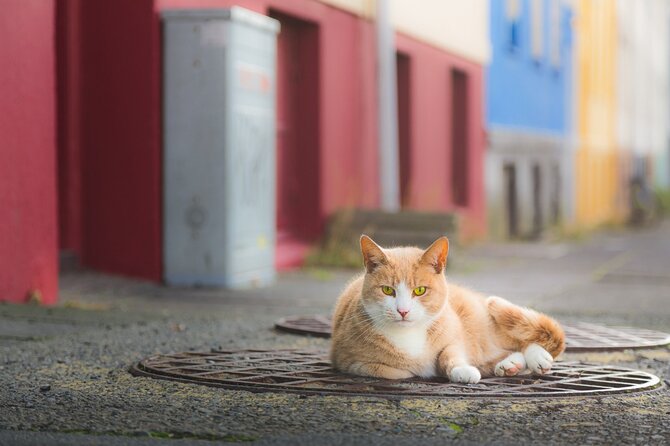
- Cats are the focus, not a guarantee: You may meet shop cats and street cats, but some may be indoors, asleep, or hiding from rain.
- A warm café break is included: Coffee, hot chocolate, and an Icelandic pastry are part of the visit to Kattakaffihúsið.
- You get a city walk with folklore: Expect stories about Icelandic cats, Reykjavík, and the Yule Cat, plus local history along the way.
- The route includes well-known sights: Ingólfstorg, Lake Tjörnin, Hallgrímskirkja, and the Einar Jónsson Sculpture Garden.
- Plan for hills and weather: The tour takes about two hours and works best with warm layers and comfortable shoes.
Why cats make a surprisingly good way to see Reykjavík
Reykjavík is compact enough to explore on foot, but a themed walk gives you a reason to look beyond the main sights. Here, you are not simply ticking off a church, a pond, and a museum garden. You are following the city’s feline residents and learning how cats fit into Icelandic stories, shops, art, and daily life.
The guides bring much of the personality. Barði is praised for knowing the cats in central Reykjavík and for being recognized by shop workers around town. Einar brings personal local insight and can make a very small group feel almost like a walk with a friend. Robyn and Stefán are also noted for combining humor, cat facts, and wider information about Reykjavík and Iceland.
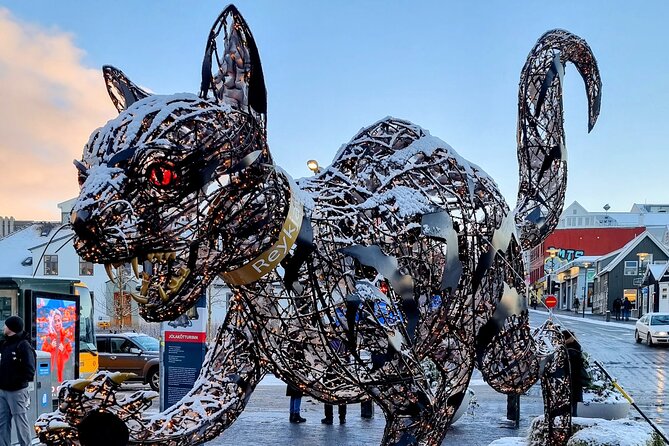
The tone is light, but the content is not empty. You hear about Icelandic cat culture, local folklore, and the famous Yule Cat, a large creature from Christmas tradition. Along the way, the guide also explains pieces of Reykjavík’s past and points out cat images in local art and shops.
I would not choose this as your only city sightseeing tour if you want major museums, detailed architecture, or a long visit inside a landmark. I would choose it if you want a gentle introduction to central Reykjavík with a strong local angle and plenty of chances to stop, chat, and take pictures.
More walking tours in Reykjavik:
- Reykjavik Food Walk – Local Foodie Adventure in Iceland
★ 5.0 · 18,952 reviews - Reykjavík Small group Walking Tour – by CityWalk
★ 5.0 · 5,076 reviews - Reykjavik: Guided Foodie Walking Tour with 6 Tastings
★ 4.9 · 1,645 reviews
Starting at Ingólfstorg and the settlement story
The meeting point is at Ingólfstorg, beside Hlöllabátar at Ingólfstorgi 1. The square is marked by two stone pillars, a monument connected with the beginning of Iceland’s settlement. That makes a fitting place to begin a tour about how cats arrived and became part of life in Iceland.
The first stop lasts about 10 minutes and has no admission charge. Do not expect a formal museum-style presentation here. Instead, the guide uses the square as a starting point for stories about Iceland’s early settlement and the origins of Icelandic cats.
This opening gives the walk a useful shape. You start with a broad question, where did the cats of Iceland come from, then move into the present-day city in search of their descendants and local celebrity relatives. It is a small detail, but it keeps the tour from feeling like a string of random cat sightings.
Ingólfstorg is central and close to public transportation. You should still arrive ready to walk, since the route continues through several parts of central Reykjavík and ends uphill near Hallgrímskirkja.
Lake Tjörnin brings a quiet pause

The walk continues to Lake Tjörnin, Reykjavík’s central pond. The stop is brief, about five minutes, but it changes the pace. You pause to look at the water and birdlife, then consider what it might be like for a cat to operate around such a busy patch of town.
This is not a long wildlife stop, and the tour is not built around birdwatching. The value is the setting. Lake Tjörnin gives you a calm view within the city and a chance to see how Reykjavík’s public spaces connect to its animal life.
I like this part because it prevents the tour from becoming too focused on shop windows. You get a little open space, a few minutes to take photographs, and a reminder that Reykjavík’s cats live in a real urban environment, not only in cafés made for visitors.
Hallgrímskirkja and the route toward local art
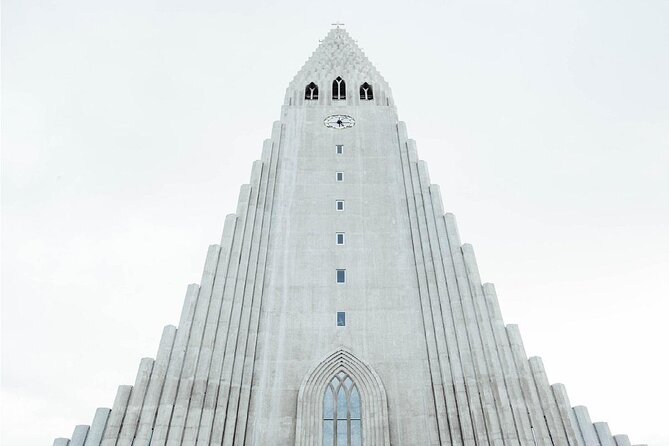
The route passes Hallgrímskirkja on the way to the Einar Jónsson Sculpture Garden. Hallgrímskirkja is one of Reykjavík’s most recognizable buildings, so even a short pass-by helps you place the walk on the city map.
The tour does not include admission to the church, and the provided schedule does not promise an interior visit. Think of it as a landmark you see along the route, not a church tour. If you want to go inside or visit the tower, plan that for another time.
The walk then heads toward the sculpture garden associated with Einar Jónsson. The route’s mixture of major sights, side streets, shops, and cats is one of its strongest features. You see Reykjavík as a lived-in city rather than only as a list of postcard stops.
Several people who enjoyed the walk also liked discovering streets and shops they might otherwise have missed. That is where the tour earns its keep for non-cat enthusiasts. Your companion may not care about every feline name, but the city walk, local stories, and art-related stops can still make the outing worthwhile.
Different weather plan, same pickup point:
- Reykjavik: Golden Circle Full-Day Tour with Kerid Crater
★ 4.8 · 24,485 reviews - Iceland: Northern Lights Bus Tour from Reykjavik
★ 4.1 · 11,161 reviews - Reykjavík: South Coast Waterfalls, Black Sand & Glacier Tour
★ 4.8 · 11,030 reviews - Reykjavík: Whale Watching and Marine Life Cruise
★ 4.6 · 9,838 reviews
Kattakaffihúsið is the warm center of the tour

The 30-minute stop at Kattakaffihúsið is the heart of the experience. Your included drink is coffee or hot cocoa, and you also receive an Icelandic pastry. The pastry is described as a kleina, a traditional doughnut-like treat, and it gives the break a clear local flavor.
You then spend time with the cats at the café. Some groups have enjoyed several cats and plenty of petting, while one visit found only two cats present. That difference is important. The café is a reliable warm indoor stop, but you should not expect a room filled with dozens of cats every time.
The café’s cats are adoptable, which adds a meaningful purpose to the visit. You can enjoy the cuddles while supporting a place that helps cats find homes. It also makes the stop more than a novelty café built only for photographs.
I would save your appetite for this break, especially if you like trying local sweets. The hot drink and pastry are included, so the $76.22 price is not only paying for two hours of guiding. You are also receiving a seated refreshment stop and access to a distinctive local venue.
The café can be the best part of the day if the weather is poor. Reykjavík rain may keep street cats indoors, but it does not cancel the chance to warm up, talk about your own pets, and spend time with the café cats.
The final sculpture garden stop
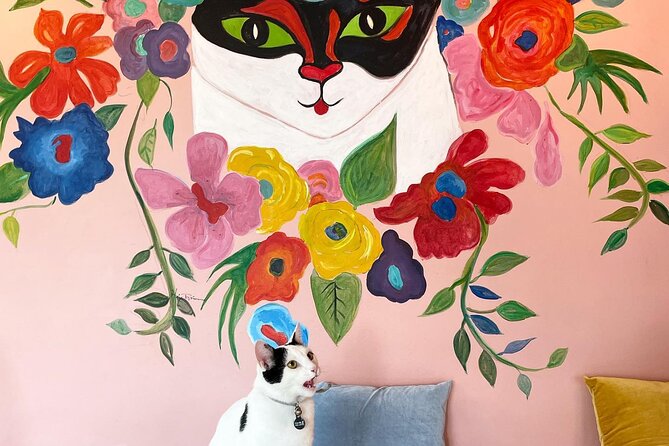
The walk ends at the Einar Jónsson Sculpture Garden, beside the Einar Jónsson Museum at Hallgrímstorg 3, near Njarðargata 51. The garden stop lasts about 10 minutes and has no admission charge.
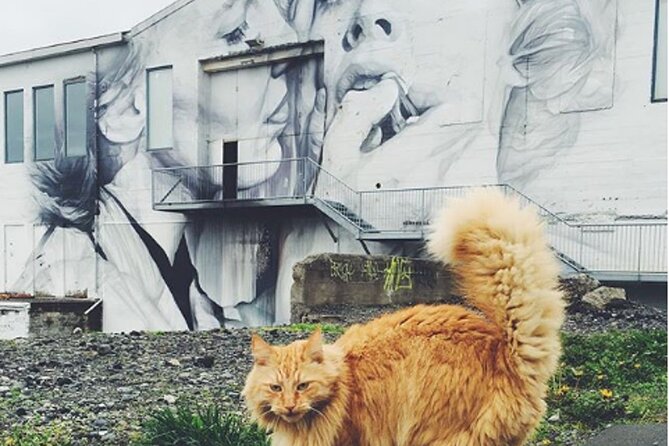
This is a pleasant final setting because it gives the tour a visual finish. You have moved from settlement stories and public streets to sculpture and artistic depictions. The cat theme also appears through local art, including cat images in paintings and creative spaces encountered during the walk.
The museum itself is listed as the end point, but admission to the museum is not included. You finish in a useful location near Hallgrímskirkja, so you can continue sightseeing in that area afterward.
Keep the uphill ending in mind. The walk is not described as strenuous, and there are opportunities to sit and take breaks, but Reykjavík’s slopes can be difficult for people in their 80s or anyone who finds hills uncomfortable. A taxi to the starting point does not remove the uphill portion at the end, so ask yourself how comfortable you are walking between these central areas.
How much cat-spotting should you expect?
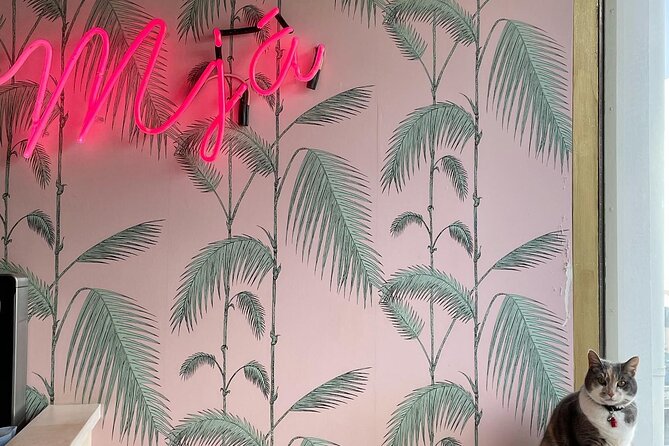
This is the question to settle before booking. The tour is built around finding cats, but it cannot control when a cat comes outside. A wet day may send local cats indoors, and an 11 a.m. departure may be quieter than a later walk.
If seeing many cats is your top goal, a time closer to dusk may give you better odds, based on the practical experience shared by people who took the morning outing. Even then, you should treat each sighting as a bonus rather than a scheduled performance.
Some cats live in shops, and shop staff may know the guide by name. That local connection is one of the tour’s special touches. You may see a famous Reykjavík cat lounging in a store, sitting near a doorway, or appearing at a familiar spot around town.
The guide can also point out places to revisit later. One useful approach is to note the cat names and locations, then keep your eyes open as you explore downtown during the rest of your stay. You may find a cat that was absent during the tour on a later walk.
The tour works best when you enjoy the search itself. If every minute without a cat feels like wasted time, you may find the experience frustrating. If you like wandering, stories, and the possibility of a surprise appearance, the uncertainty is part of the fun.
The guides shape the experience
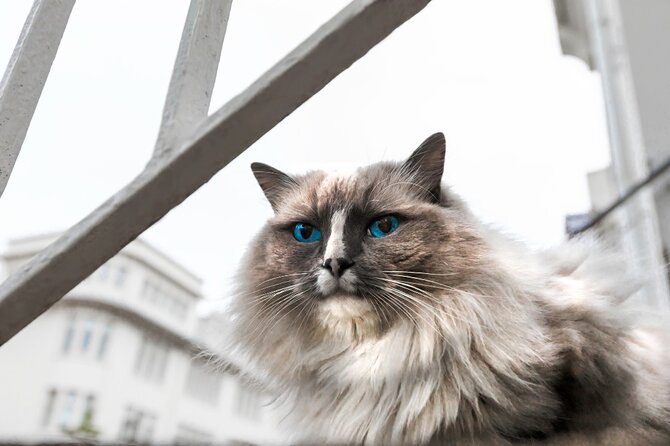
The guide is more important here than on a standard point-to-point city walk. You are spending time with stories, local connections, and the guide’s own enthusiasm for Reykjavík’s cats.
Barði receives especially strong praise for his humor, local cat knowledge, and relationships with shop workers. He also knows the popular cat hangouts in central Reykjavík. Einar has led very small groups, including a walk with only two people, and brings a personal connection to the city and its artists.
Robyn is described as funny, friendly, and particularly good at tying cat stories to Icelandic folklore. Stefán combines cat information with broader facts about Reykjavík and Iceland. Ester, Inga, and Stephen have also led walks that included patient answers, cultural background, and a relaxed pace.
The lineup may vary, so you cannot book a particular personality unless the operator confirms it. What you can expect is a guide-led walk in English with commentary throughout.
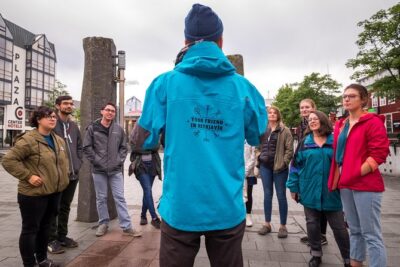
I like the fact that the group is capped at six. A small group makes it easier to stop at a shop without blocking the pavement, ask about a particular cat, and keep the conversation moving. It also helps if you want photographs or need a short pause.
Price, pace, and practical value
At $76.22 per person, this is not the cheapest way to walk around Reykjavík. You are paying for a two-hour guided experience, a maximum group of six, commentary, and coffee or hot chocolate with an Icelandic pastry.
The value depends on what you want from a city activity. For a cat lover, the café visit alone may justify part of the cost, while the guide adds access to local stories and cat locations you would be unlikely to identify on your own. For a general sightseer, the price is harder to justify if you are mainly looking for major landmarks.
The small group improves the value. A six-person cap means you are not paying for a large, impersonal procession. You can ask questions about Icelandic culture, cat care, local businesses, or the city itself.
The pace is generally easy, with chances to sit and rest. Still, it is a walking tour over roughly two hours, and one person found it longer than expected. Wear shoes suited to Reykjavík’s streets and bring waterproof layers.
The activity is offered in English, and a mobile ticket is provided. It is near public transportation, and service animals are allowed. It is not recommended for people with a cat allergy, which is obvious but worth taking seriously because the café portion involves close contact with cats.
You receive confirmation at booking. Free cancellation is available up to 24 hours before the start time, while later cancellations and changes are not accepted. The tour also needs a minimum number of people to operate, and if that minimum is not met, you are offered another date or experience, or a full refund.
Who should book this Reykjavík cat walk?
I would put this high on the list for dedicated cat lovers, families, and anyone who wants a playful way to get oriented in central Reykjavík. Children can enjoy the hunt for cats, and guides have shown patience with young people’s questions.
It also suits couples or friends who want something less formal than a museum visit. You can learn about Icelandic folklore, stop for a pastry, and see parts of town that are easy to miss when you follow only the main sightseeing route.
A non-cat person can still enjoy the city history, art, streets, and café break, but I would check that they are happy with a tour whose main subject is cats. This is not a conventional Reykjavík highlights walk with a few animals added.
I would be cautious if you have a cat allergy, dislike uncertain schedules, or struggle with hills. The walk is also less suitable if your priority is seeing a large number of animals. The café may have only a few cats on a given day, and outdoor cats may stay hidden.
My verdict: book it for the stories, not a guaranteed cat count
The Reykjavík Cat Walking Tour is a warm, oddball, highly local way to see the city. Its strongest features are the tiny group, guides who know the shop cats by name, the mix of folklore and city history, and the café break with cocoa or coffee and kleina.
I would book it if you like cats and want an experience with personality. I would also consider it early in your Reykjavík stay because it helps you learn the downtown layout and gives you cat spots to revisit later.
Go with realistic expectations. You may meet several famous cats, or you may spend part of the walk searching while they shelter from the weather. That uncertainty is not a flaw in the city or the guide. It is simply how cats work.
FAQ
How long does the Reykjavík Cat Walking Tour last?
The tour lasts approximately two hours.
Where does the tour start?
It starts at Hlöllabátar, Ingólfstorgi 1, 101 Reykjavík, Iceland, near the two stone pillars in Ingólfstorg.
Where does the tour end?
The walk ends at the Einar Jónsson Sculpture Garden, beside the Einar Jónsson Museum at Hallgrímstorg 3, near Njarðargata 51.
What is included in the price?
The tour includes guided commentary, plus coffee or hot cocoa and an Icelandic pastry at Kattakaffihúsið.
How many people can join the tour?
The group has a maximum of six people.
Is the tour offered in English?
Yes. The experience is offered in English.
Is the tour suitable for someone with a cat allergy?
No. It is not recommended for people with a cat allergy because the experience includes close contact with cats at a cat café and other locations.
Can I cancel for a full refund?
Yes. You can cancel at least 24 hours before the local start time for a full refund. Cancellations or changes made less than 24 hours before the start time are not accepted for a refund.
Newest write-ups around Reykjavik
- Private Snæfellsnes National Park★ 5.0 · 3 reviews
- Private South Coast tour with Glacier walk★ 5.0 · 3 reviews
- Exclusive Westman Islands Adventure – A Private Day Tour★ 5.0 · 3 reviews
- Blue lagoon Premium and Private Golden circle tour★ 5.0 · 3 reviews
- Private Superjeep Tour To Landmannalaugar and Hekla Volcano★ 5.0 · 3 reviews
- Private South Coast Tour: A Journey to Iceland’s Stunning Shore★ 4.5 · 3 reviews
- Reykjavik: PRIVATE Golden Circle tour with 5 TOP stops★ 5.0 · 3 reviews
- Sólheimajökull Glacier Hiking Tour★ 3.7 · 3 reviews
Walking Tours, compared.

Reykjavik Food Walk – Local Foodie Adventure in Iceland
Read our review →
Reykjavík Small group Walking Tour – by CityWalk
Read our review →
Reykjavik Folklore Walking Tour: Meet the Elves, Trolls & Ghosts of Iceland
Read our review →
Funky History Walking Tour in Reykjavik – With local storyteller
Read our review →Browse the lists this tour appears in