
Review · MUSEUMS
Reykjavik: Saga Museum Entry Ticket
Iceland’s Saga Museum turns old stories into a walk through 20 lifelike wax scenes. You follow the first settlers, the Viking age, the founding of Iceland’s Parliament, and the country’s religious upheaval while an audio guide supplies the story. The final costume area lets you trade quiet listening for Viking dress-up.
I like the clear historical route, which gives you a useful backbone for understanding Iceland before you visit its archaeological sites. I also like the realistic figures and the choice of seven audio languages, plus Polish and Italian text guides. The main drawback is scale: at $33, the museum can feel expensive if you expect a large attraction, and one recent visit found too much waiting between scenes.
In This Review
- Key points
- A waxwork walk through Iceland’s first chapters
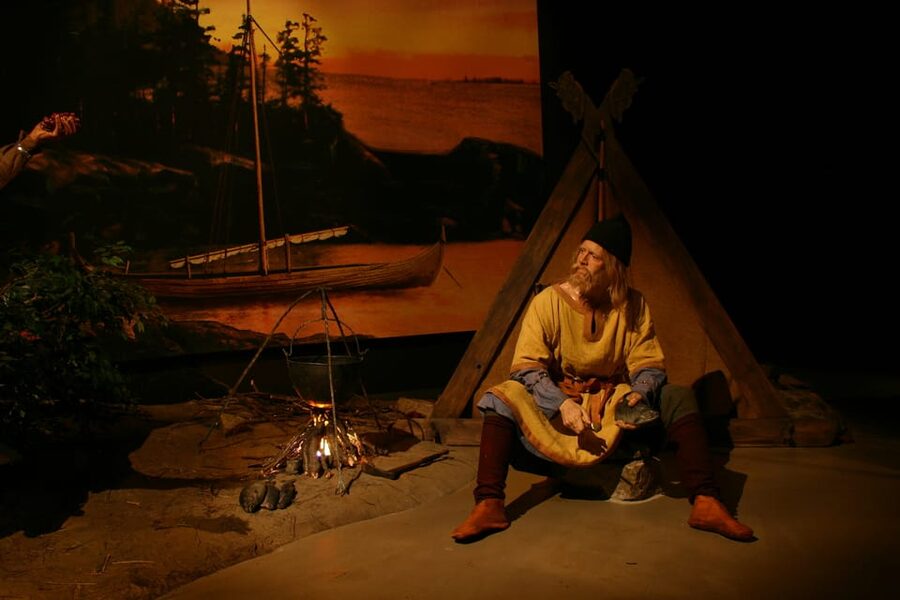
- Starting with the Papar and the first settlers
- Leif the Lucky and the reach across the Atlantic
- The Althing and the making of a nation
- The Saga Age, civil war, and stories put into writing
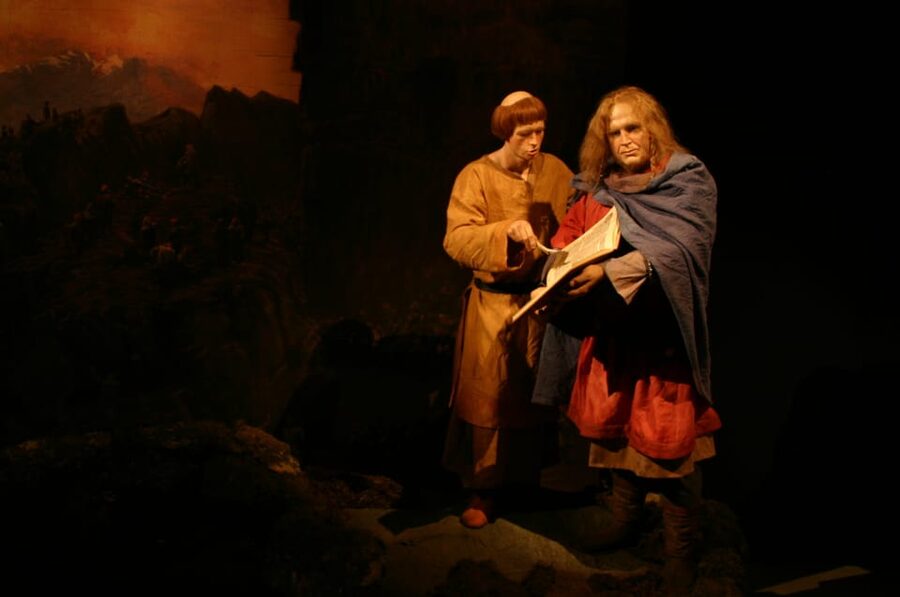
- The Reformation and Iceland’s last Catholic bishop
- The Viking costume area brings the mood back up
- Is $33 a fair price for a small museum?
- Finding the museum at Grandagarður 2
- Who will enjoy this most?
- Audio languages, timing, and practical value
- Should you book the Saga Museum?
- FAQ
- Where is the Saga Museum located?
- How long does the museum visit take?
- How many exhibits are included?
- Which languages are available for the audio guide?
- Are other language options available?
- Is the museum suitable for young children?
- Is the Saga Museum wheelchair accessible?
Key points
- Twenty wax scenes: Follow major moments in Icelandic history through highly detailed figures and staged settings.
- A 35-minute audio route: Hear the story in English, French, German, Icelandic, Russian, Spanish, or Swedish.
- A compact introduction to Iceland: The route moves from the Papar and early settlers to the Reformation.
- A hands-on ending: Put on Viking clothing and handle the supplied costume-area weapons for photos and fun.
- Central harbor location: Find the museum at Grandagarður 2, beside Matur og Drykkur, with a Viking statue outside.
- Flexible booking: Your ticket is valid for one day from first activation, and cancellation is free up to 24 hours before the visit.
A waxwork walk through Iceland’s first chapters
The Saga Museum is not a conventional art museum. It is a staged history attraction, built around wax figures that recreate people and moments from Iceland’s past. You move from display to display, listening through a headset rather than reading long panels.
That format works well if you want the broad story without spending half a day in a library. Icelandic history can feel scattered when you encounter it one place at a time: a settlement site here, an old church there, a saga reference in a town name. This museum links those pieces in one short visit.
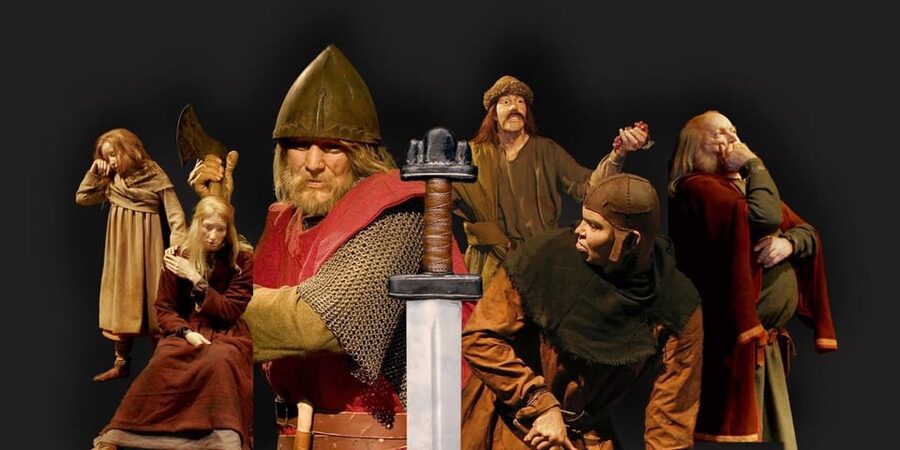
The figures are the main draw. They are designed to look like real people in tense, ordinary, or dramatic situations. The effect is more theatrical than scholarly, but it helps put faces and bodies into stories that can otherwise seem distant.
The attraction is also quite small. That is useful when your Reykjavik schedule is crowded, but it limits how much detail each period can receive. You will get a guided outline, not a full history course.
More museums and exhibitions in Reykjavik:
- Reykjavik: Perlan Museum Wonders of Iceland Entrance Ticket
★ 4.7 · 2,575 reviews - Reykjavík: Hop-On Hop-Off Bus and Perlan Museum Entry Ticket
★ 4.3 · 719 reviews - Reykjavik: Whales of Iceland Museum Entrance Ticket
★ 4.4 · 493 reviews
Starting with the Papar and the first settlers
Your route begins before the famous Viking sagas. The audio introduces the Papar, the early Christian monks associated with Iceland before the Norse settlement. It then moves to the first Vikings who settled on the island.
This opening matters because it avoids presenting Iceland as an empty place waiting for Viking arrival. The settlement story is more interesting when you understand that people may have reached the island before the main Norse migration. The museum gives that early stage a place at the beginning of the visit.
You also hear how Reykjavik received its name. That small detail adds a direct connection between the display and the city outside. After the museum, you can walk through Reykjavik with a better sense of what its name and founding story represent.
The audio format keeps you moving through a fixed sequence. You are not left to guess which scene comes first or how the pieces fit together. On the other hand, the next section may not always be ready the moment you arrive, so allow for a little waiting if the museum is busy.
Leif the Lucky and the reach across the Atlantic
The next part brings in Leif the Lucky and the Norse discovery of America. The museum presents this as part of the wider story of Icelandic seafaring and settlement.
This is one of the strongest moments for first-time visitors because it places Iceland in a much larger North Atlantic world. The island was remote, but its people were not cut off from exploration, trade, or new routes. The wax figures give the story a human scale, even though the display itself cannot recreate the full complexity of those voyages.
Keep your expectations measured. You are not receiving a long treatment of Norse navigation or a detailed account of every voyage. Instead, the scene marks a major point in the story and helps explain why Icelandic history reaches far beyond the island itself.
The audio guide is included in the ticket, so you do not need to pay extra for the main explanatory layer. English, German, French, Spanish, Russian, Swedish, and Icelandic are available through headsets. Polish and Italian are covered by text guides.
The Althing and the making of a nation
The route then turns to the founding of the Parliament, known in Iceland as the Althing. This is a key change in the story. The early settlement period gives way to the creation of political structures that helped organize the growing community.
For you, this scene provides useful context for later visits to historic sites connected with Iceland’s government and law. It also shows that the sagas are not only tales of battles and voyages. They preserve arguments about power, law, family, and public order.
The museum’s strength here is sequence. Each exhibit marks a step in the development of the country, so you can see how settlement leads to government and how government later struggles under pressure. The drawback is that the presentation remains brief. If you already know the history, you may want more dates, names, and competing viewpoints.
Still, the Althing section gives the visit a solid middle point. It shifts your attention from individual adventurers to the society they helped create.
More Reykjavik departures worth comparing
- Small-Group Golden Circle, Blue Lagoon with Ticket & Kerid Crater
★ 5.0 · 5,631 reviews - Reykjavik: FlyOver Iceland Entry Ticket
★ 4.7 · 3,499 reviews - Reykjavik: LAVA SHOW – Immersive Experience Entry Ticket
★ 4.8 · 3,360 reviews - Lava Show Reykjavik Admission Ticket – Optional Premium Upgrade
★ 5.0 · 3,278 reviews
The Saga Age, civil war, and stories put into writing
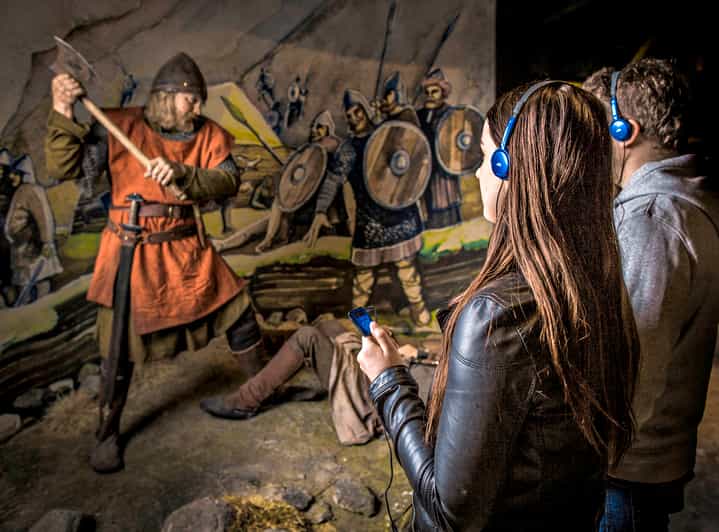
The next stage covers the Saga age, when many of these stories were written down. This is an important distinction. The events and the written accounts are not the same thing, and the museum places the recording of the sagas within the broader history of Iceland.
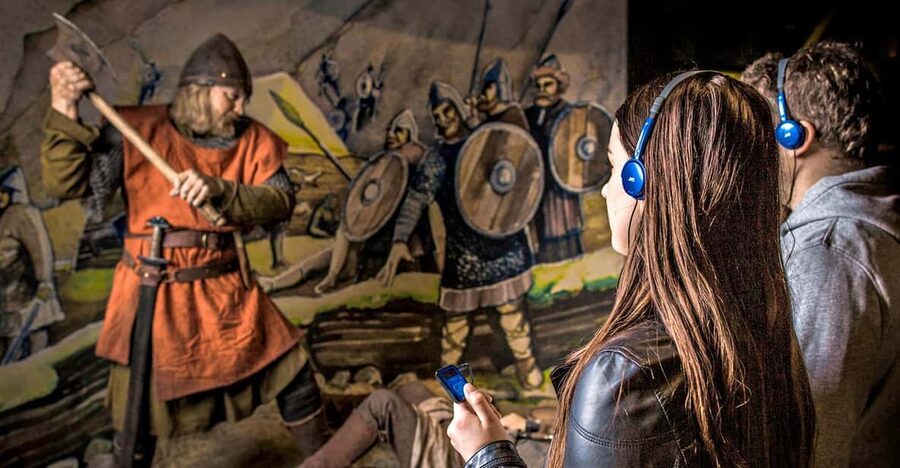
You hear about the civil war in Iceland as the political order begins to fracture. The subject brings more tension to the route. Earlier scenes focus on arrival and growth, while this part shows how family power, rivalry, and political conflict can unsettle a society.
The wax scenes help here because conflict is easier to understand when you can see people arranged in a charged moment. The audio gives you the basic narrative, while the figures supply the mood. The approach is accessible for someone who knows little about the sagas.
This is also where the museum may feel too compact for serious history fans. The civil war was complex, and a short audio segment cannot explain every faction or cause. I would treat this section as an introduction, then use it to decide which saga or historical site you want to explore further.
Families should think about tone. The museum itself warns that some scenes may not suit sensitive children, and children under four are not allowed. The violent or serious subject matter is part of the historical story, so this is not a purely lighthearted children’s attraction.
The Reformation and Iceland’s last Catholic bishop
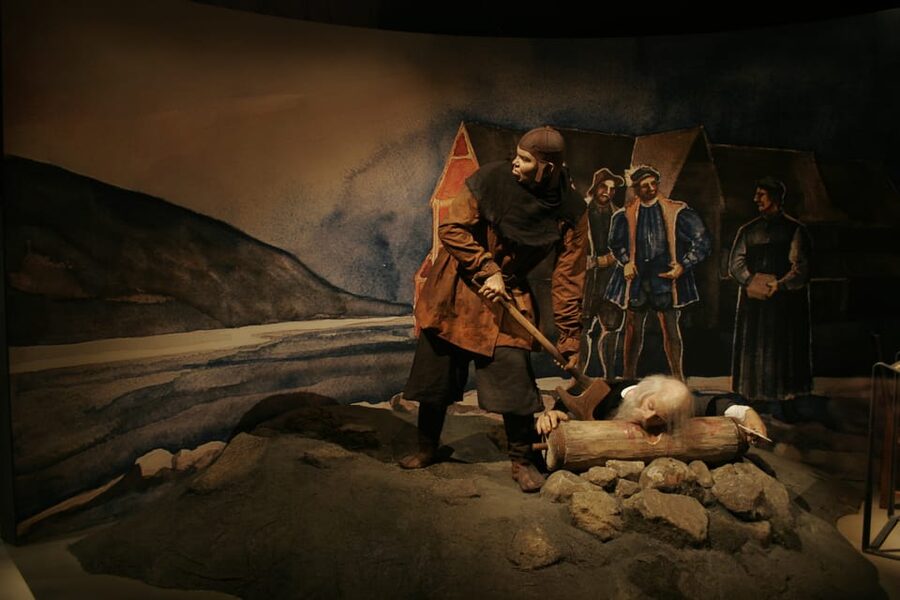
Near the end, the route moves toward the Reformation and the story of Iceland’s last Catholic bishop. This section brings religious change into the museum’s timeline.
It is a useful final chapter because it shows that Icelandic history did not stop with the Viking age. The country continued to change through political pressure, religious decisions, and the movement of power. If you arrive expecting only helmets and longships, this part broadens the visit.
The subject can feel less immediately playful than the settlement scenes, but it gives the museum a proper ending. You see Iceland move from early settlement through political formation, conflict, written tradition, and religious transformation.
The audio guide is especially helpful here because the names and events may be unfamiliar. You can listen at your own pace, though the staged route means you may need to follow the museum’s timing rather than linger indefinitely at one figure.
The Viking costume area brings the mood back up
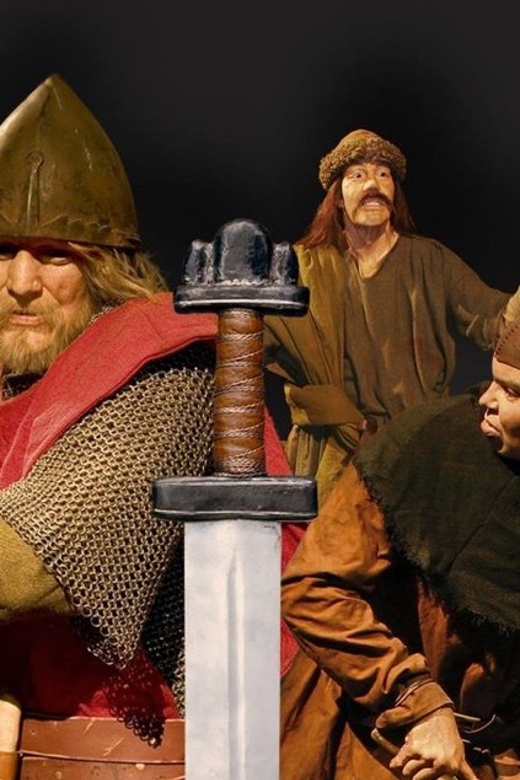
After the historical route, you can dress as a Viking. The museum provides authentic clothes and weapons for this part of the visit. It is a simple idea, but it changes the experience from passive listening to something you can take part in.
I would save a few minutes for this even if you are visiting without children. The costume area gives you a chance to relax after the serious history and makes the museum more memorable. It also provides an easy photo opportunity.
Do not confuse this with a full reenactment session. The supplied information does not promise a performance, craft lesson, or weapons demonstration. You are using the costume area on your own after the audio tour.
The contrast works well: first you listen to stories about people from Iceland’s past, then you get to pose in the clothing associated with that world. It adds humor without replacing the historical content.
Is $33 a fair price for a small museum?
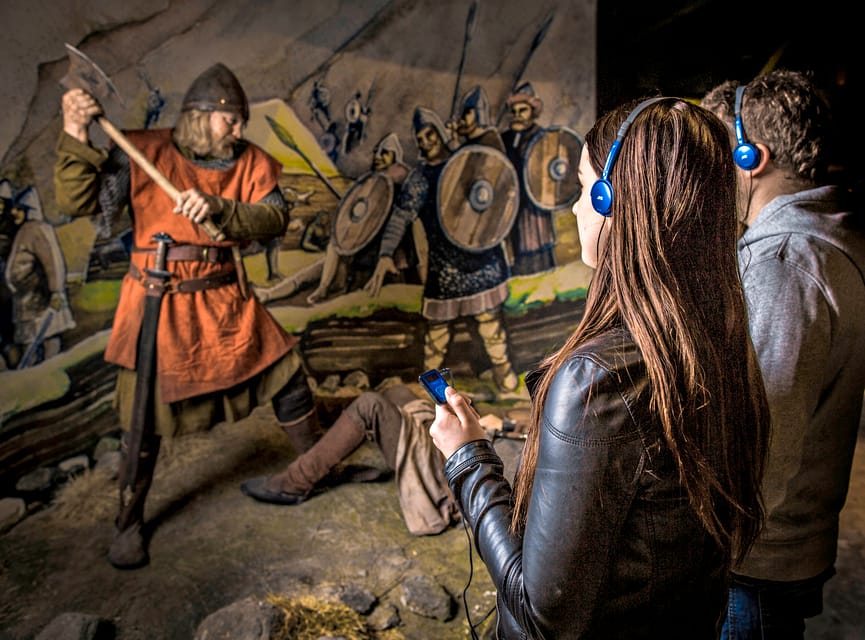
The ticket costs $33 per person, which is a serious price for a visit lasting about 35 minutes. One positive assessment praised the friendly, helpful staff and found the museum informative, while another judged it too small and expensive compared with attractions in Europe and the United States.
I think the value depends on your expectations. If you want a quick, organized introduction to Icelandic history in English or another supported language, the price may be reasonable. You receive admission, the audio headset, access to the costume area, parking, and lockers.
If you measure value by hours inside a museum, this is not a bargain. The main audio route is short, and the building does not offer a large collection that you can explore for an afternoon. You are paying for the presentation, the wax figures, and the convenience of a single chronological story.
The museum makes the most sense as part of a harbor-area day. You can combine it with lunch nearby, then continue exploring central Reykjavik. Since pickup and drop-off are not included, you need to make your own way there, but the location is straightforward.
Finding the museum at Grandagarður 2
The meeting point is Saga Museum at Grandagarður 2 in Reykjavik’s Capital Region. Look for the white building with a Viking statue on horseback directly outside.
The entrance shares a door with the restaurant Matur og Drykkur. That detail matters because the museum may be easy to miss if you are looking for a large standalone facade. Use the statue and restaurant as your visual markers.
Parking is included, and lockers are available. Those are practical additions if you are carrying day bags or visiting by car. Pickup and drop-off are not part of the ticket, so plan your route before arriving.
The museum is wheelchair accessible. The ticket is valid for one day from first activation, which gives you some flexibility if you are building a full day around the area.
Who will enjoy this most?
I would recommend the Saga Museum to you if you want a clear first look at Iceland’s past, especially before visiting sites tied to settlement, law, or the sagas. It suits adults who like history but do not want a long academic presentation, and it can work for older children who are comfortable with serious scenes.
It is also useful for a rainy day. The visit is indoors, short, and structured. You do not need to commit an entire morning, and the audio guide lets you follow the story without reading every label.
The museum may disappoint you if you want a large institution with many rooms, extensive artifacts, or long-form historical analysis. The exhibits are wax reconstructions rather than original archaeological objects. The realistic figures carry the visual experience, while the audio carries most of the explanation.
Sensitive children may find some scenes uncomfortable. Children under four are not suitable for the activity, according to the stated restrictions. The costume area adds fun, but it does not erase the serious and sometimes violent material earlier in the route.
Audio languages, timing, and practical value
The audio guide is available in English, French, German, Icelandic, Russian, Spanish, and Swedish. Text guides are available in Polish and Italian. This makes the museum accessible to a wide range of visitors, but check that your preferred language is covered before booking.
The stated audio tour lasts 35 minutes. Build in extra time for moving between scenes, listening, and using the costume area. One recent visit found a lot of waiting for the next step, so do not schedule a tight connection immediately afterward.
Staff service has been praised as warm and helpful, which matters in a small attraction where the arrival and transition into the audio route shape much of the visit. No individual guide names are provided because this is an audio-guided experience rather than a tour led by a named historian.
The overall rating is 4.3 from 53 reviews, with strong praise for the realistic scenes, informative content, friendly welcome, and Viking dress-up. The lower marks focus on price, small size, and pauses between sections. Those points give you a fair picture: the museum is appealing and polished, but not expansive.
Should you book the Saga Museum?
Book it if you want a short, visual introduction to Iceland’s settlement story and sagas, with a reliable audio guide and a playful costume finish. It is particularly useful during a compact Reykjavik visit or when poor weather makes an indoor stop welcome.
Skip it if $33 feels high for a 35-minute route, or if you prefer original objects and detailed museum research to wax scenes. The best reason to go is not the size of the collection. It is the way the museum turns a difficult-to-follow national story into a simple sequence you can see and hear.
Free cancellation is available up to 24 hours before the visit, and you can reserve now and pay later. That flexibility helps if your Reykjavik plans depend on weather. Just leave enough time for possible pauses between exhibits, and keep your expectations focused on a compact historical experience rather than a full-day museum.
FAQ
Where is the Saga Museum located?
It is at Grandagarður 2 in Reykjavik. Look for the Viking statue on horseback outside the white building. The entrance shares a door with the restaurant Matur og Drykkur.
How long does the museum visit take?
The audio-guided tour lasts about 35 minutes. You may need additional time for pauses between sections and for the Viking costume area.
How many exhibits are included?
The museum has 20 exhibits, each presenting a highlight from the Icelandic sagas and Icelandic history.
Which languages are available for the audio guide?
Audio guides with headsets are available in English, German, French, Spanish, Russian, Swedish, and Icelandic.
Are other language options available?
Text guides are available in Polish and Italian.
Is the museum suitable for young children?
Children under four are not suitable for the activity. The museum may also not be suitable for sensitive children because some historical scenes and subjects can be serious.
Is the Saga Museum wheelchair accessible?
Yes, the activity is wheelchair accessible. Parking and lockers are also included.
Newest write-ups around Reykjavik
- Private Snæfellsnes National Park★ 5.0 · 3 reviews
- Private South Coast tour with Glacier walk★ 5.0 · 3 reviews
- Exclusive Westman Islands Adventure – A Private Day Tour★ 5.0 · 3 reviews
- Blue lagoon Premium and Private Golden circle tour★ 5.0 · 3 reviews
- Private Superjeep Tour To Landmannalaugar and Hekla Volcano★ 5.0 · 3 reviews
- Private South Coast Tour: A Journey to Iceland’s Stunning Shore★ 4.5 · 3 reviews
- Reykjavik: PRIVATE Golden Circle tour with 5 TOP stops★ 5.0 · 3 reviews
- Sólheimajökull Glacier Hiking Tour★ 3.7 · 3 reviews
Museums, compared.
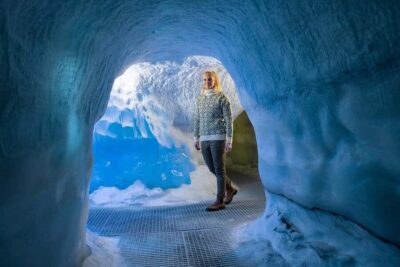
Perlan Museum Wonders of Iceland Entrance Ticket
Read our review →
Hop-On Hop-Off Bus and Perlan Museum Entry Ticket
Read our review →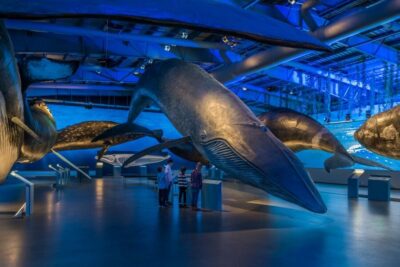

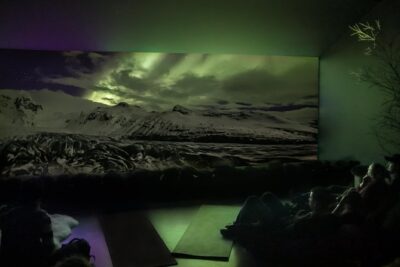
Aurora Reykjavík, The Northern Lights Center Museum Visit
Read our review →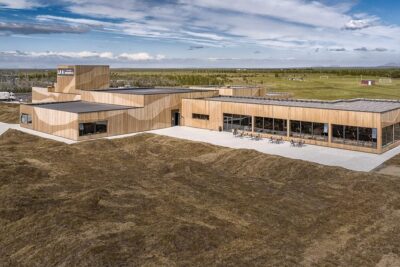
Ancient Historical Site Tour at the Caves of Hella
Read our review →
Browse the lists this tour appears in