
Review · WHALE WATCHING
Whale Watching Cruise on a Yacht in Reykjavik
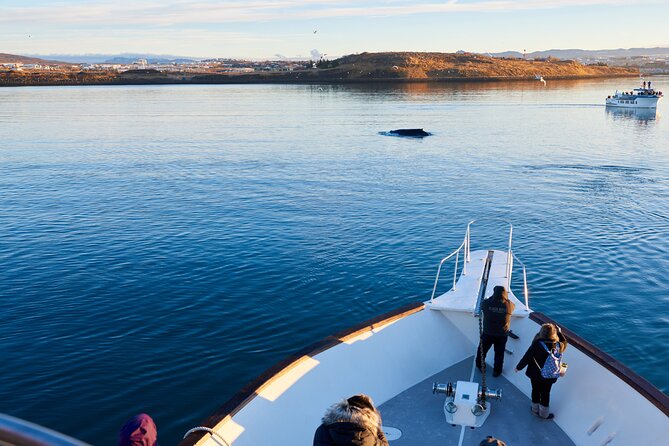
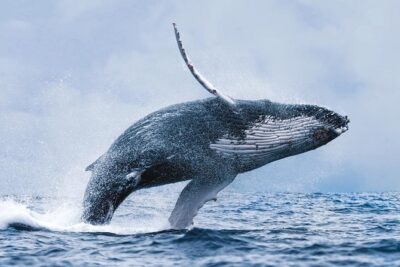
The best part of this three-hour cruise is the setting. You leave Reykjavik’s Old Harbour, pass Harpa’s colorful glass facade, and head into Faxaflói Bay, where humpback whales, minke whales, dolphins, and porpoises may appear beside the boat. On a lucky outing, you might see a humpback breach or swim beneath the yacht.
I like the wide views from the water and the crew’s effort to give you useful information rather than simply point at a fin. I also like the free return cruise if no whales are seen. The main caution is simple: this is wild nature, not a theater show. Some outings find several species, while others spend hours searching and see only a distant tail, or nothing at all.
In This Review
- Key points to know before you sail
- Leaving Reykjavik’s Old Harbour
- Searching Faxaflói Bay for whales
- The islands around the route
- What the yacht is like onboard
- Staying warm and comfortable at sea
- Wildlife sightings are wonderfully unpredictable
- The guide and the learning side of the trip
- Is $102 a fair price?
- Who should book this cruise?
- Should you book the Reykjavik whale cruise?
- FAQ
- Where does the whale-watching cruise depart?
- How long does the cruise last?
- What wildlife might I see?
- What happens if I do not see whales?
- Is the cruise available in English?
- Can I cancel for a refund?
Key points to know before you sail

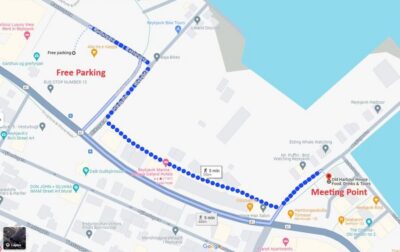
- Departures from the Old Harbour: Meet at Old Harbour House, Ægisgarður 2, close to central Reykjavik and public transportation.
- A broad mix of wildlife: Humpback and minke whales are the usual targets, with dolphins, porpoises, seals, and the occasional orca also possible.
- Comfortable yacht setup: You can watch from outside decks or warm up inside, with toilets and a bar selling hot and cold drinks.
- Cold is the real challenge: Wind over Faxaflói Bay can make the outing feel far colder than Reykjavik, even on a mild day.
- No sighting means another chance: The operator offers a free return cruise if whales are not seen.
- Small enough to remain manageable: The maximum group size is 125 passengers, though the upper viewing areas can still feel busy.
Leaving Reykjavik’s Old Harbour
Your outing begins at Old Harbour House, Food, Drinks & Tours, at Ægisgarður 2. This is a practical starting point because the harbor sits close to Reykjavik’s center, and the departure area is served by public transportation.
The boat sets out along Reykjavik’s waterfront before reaching open water. This first part gives you a pleasant orientation to the city from a different angle. Harpa Concert Hall is especially striking from the sea, with its colored glass facade inspired by Iceland’s basalt formations. From the water, you also get a better sense of how compact Reykjavik is, with the city backed by mountains and open sea in front.
Allow a little patience at the dock. One reported issue was an early arrival time followed by later boarding and departure, so do not plan a tight connection immediately after the cruise. The advertised duration is about three hours, but departure procedures and sea conditions can affect the exact schedule.
More whale watching sailings from Reykjavik:
- Reykjavík: Whale Watching and Marine Life Cruise
★ 4.6 · 9,838 reviews - Reykjavík: Whale Watching Cruise on the Amelia Rose Yacht
★ 4.5 · 2,911 reviews - The Original Classic Whale Watching from Reykjavik
★ 4.5 · 2,626 reviews
Searching Faxaflói Bay for whales
Faxaflói is a large bay on Iceland’s southwest coast. From the Reykjavik side, you may see the Akranes peninsula to the northeast and, on a clear day, Snæfellsjökull far away. The bay has relatively few islands, and most are close to shore, giving the boat a varied route rather than a straight run into empty water.
The crew searches by watching the surface and sharing information about sightings. That matters because whales can travel quickly, disappear for long periods, and surface far from the boat. You are not guaranteed a sighting, and there is no fixed place where the captain can promise to find them.
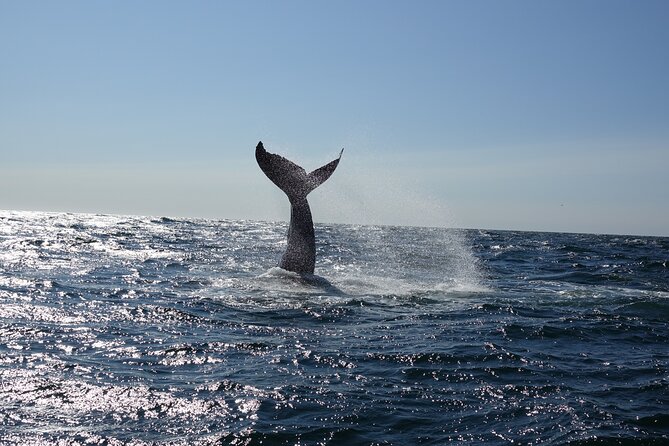
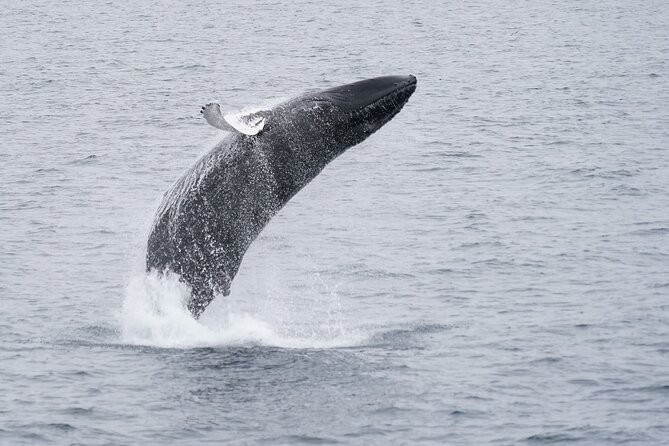
Minke whales and humpback whales are the main possibilities. Humpbacks provide the more dramatic moments, with broad tails, high back arches, and occasional breaches. Minke whales are smaller and can be harder to spot, especially when the sea is choppy. Dolphins and harbor porpoises may appear with less warning, sometimes moving quickly around the vessel.
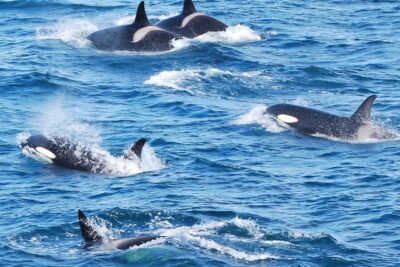
Orcas are possible but uncommon. They should be treated as a fortunate extra, not as a realistic expectation for a single three-hour trip.
This is a visual search, so the guide’s skill matters. Keep your eyes moving across the water, but also listen when the guide directs everyone toward a particular section of the bay. A whale may surface for only a few seconds, and the first person to spot it often sees nothing more than a small puff or a dark back.
The islands around the route
The route can pass among several islands in and around Kollafjörður and Faxaflói Bay. Each adds interest to the cruise, especially during quiet stretches when the animals are not showing themselves.
Engey is the second-largest island in Kollafjörður. It is close enough to Reykjavik to feel part of the city’s wider setting, yet its open, undeveloped character gives you a strong sense of the coastal environment.
Lundey means Puffin Island in Icelandic. This small, uninhabited island lies off Reykjavik’s western coast. Its name points to the bird life associated with the area, although puffins are not the main promise of this cruise. You should see Lundey as a scenic waypoint rather than a dedicated bird-watching stop.
Viðey is the largest island in Kollafjörður. Seen from the boat, it helps explain the shape of the bay and the relationship between Reykjavik’s shore and the open sea. The islands are not formal stops where you disembark. They are part of the moving view as the crew searches for wildlife.
What the yacht is like onboard
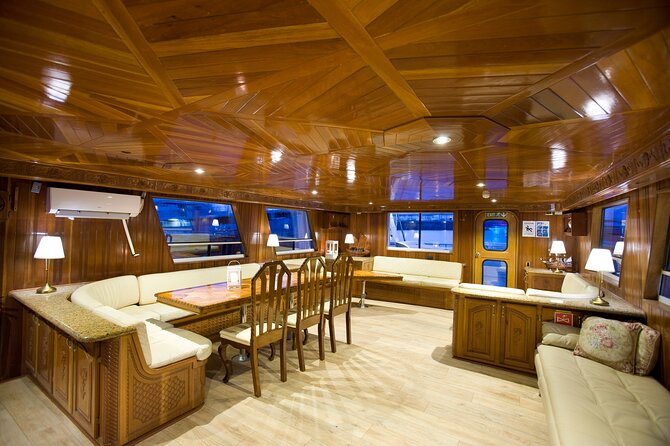
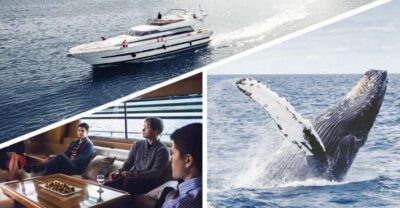
The boat offers indoor seating, outside viewing spaces, toilets, and a bar with alcoholic and nonalcoholic drinks, coffee, snacks, and warm beverages. That combination makes a real difference in Iceland, where even a calm day on land can become very cold at sea.
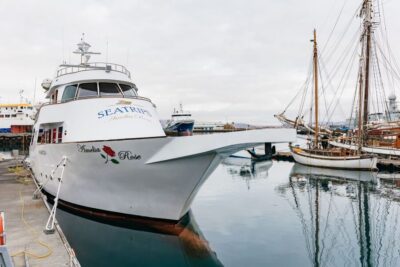
Several accounts describe the yacht as clean, comfortable, and spacious, with good places to sit or stand. The indoor cabin is useful when your fingers go numb or spray starts hitting the deck. You can warm up, have a drink, then return outside when the crew spots activity.
Boat details may not be identical on every departure. The vessel Amelia Rose is specifically associated with some outings, while one passenger reported boarding a smaller, older boat that did not match the vessel shown in promotional images. The practical lesson is to judge the trip mainly by the wildlife search and crew, not by expecting a particular luxury yacht.
On a calm day, the boat can feel like a relaxed coastal cruise. In rougher conditions, it is a different experience. Waves can make the vessel bounce, spray can reach the bow, and standing at the rail becomes harder. One account described passengers getting soaked, with no towels or napkins available afterward. Stay inside or use the sheltered areas when the sea turns rough.
More Reykjavik departures worth comparing
- Reykjavik: Northern Lights Yacht Tour
★ 4.4 · 1,253 reviews - Reykjavik: Whale Watching and Dolphin Watching Yacht Cruise
★ 4.5 · 707 reviews - Whale Watching & Dolphin Yacht Cruise
★ 4.5 · 488 reviews - Northern Lights Yacht Cruise in Reykjavik
★ 4.0 · 428 reviews
Staying warm and comfortable at sea
Pack more clothing than you think you need. Layers, gloves, and a warm hat are not optional extras for most people, especially if you hope to spend the full trip on deck. Wind chill can make the boat feel roughly 15 degrees Fahrenheit colder than the temperature in Reykjavik, according to one detailed account.
A useful approach is to begin with a warm base layer, add an insulating middle layer, and wear a windproof outer shell. Waterproof trousers or an outer layer are sensible if you plan to stand at the front or in exposed viewing areas.
The cabin provides shelter, but you will get better views outside. I would rather carry an extra layer and not need it than spend the best wildlife moments shivering indoors. If you are prone to motion sickness, note that rough water has affected some outings. The crew has provided seasickness tablets on at least one trip, but you should not treat that as a guarantee. Bring whatever medication you normally use.
Wildlife sightings are wonderfully unpredictable
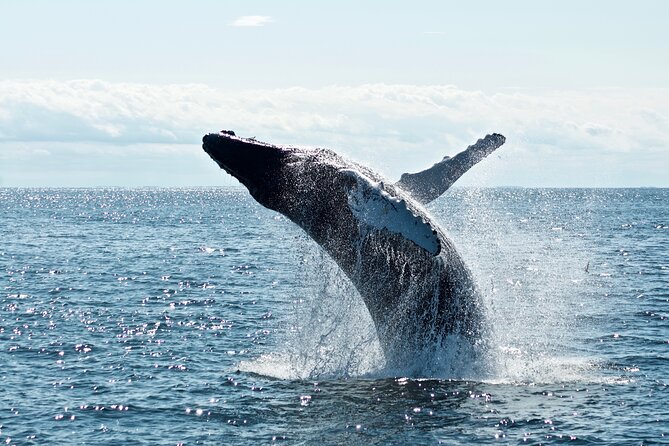
This cruise can produce a memorable hour of repeated humpback sightings, or a long search followed by one brief tail. Both outcomes are possible within the same bay and season.
The strongest outings have included two humpbacks swimming together, tail-waving near the boat, whales passing underneath, and double breaches. Other trips have produced three humpbacks, minke whales, dolphins, porpoises, and seals. A pod of dolphins racing around the yacht can be just as exciting as a distant whale.
The most honest expectation is this: you are buying time in whale habitat, not a guaranteed performance. Autumn and winter may offer fewer visible whales at certain times, and weather can make animals harder to see. Even in good conditions, the crew may need much of the three hours to find activity.
The free return policy softens that risk. If no whales are seen, you can take the cruise again without paying another fare. That is valuable if you have enough time in Reykjavik to use it. It is less helpful if you are leaving Iceland the next morning or have a packed schedule.
The policy is specifically described as a free return cruise if whales are not seen. It does not mean you can automatically repeat the trip because the whales were distant or less active than hoped. Ask the crew how they define a qualifying no-sighting trip if the wildlife appears only briefly.
The guide and the learning side of the trip
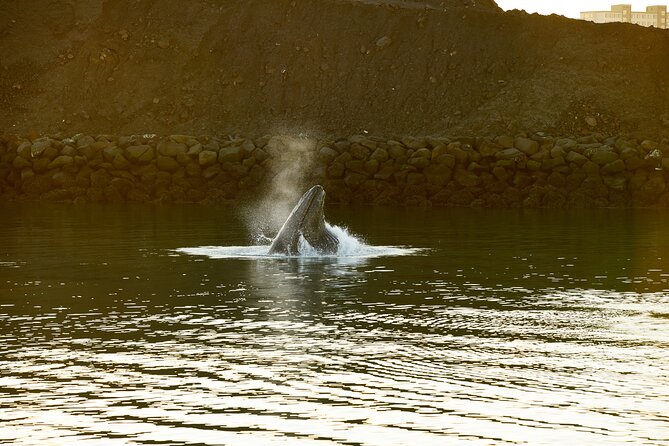
A good whale cruise needs more than a captain and a boat. The onboard guide explains whale behavior, identifies species, and helps you understand why a whale may appear once and then vanish. That information gives shape to the quiet periods.
The guide also points out coastal landmarks and explains the bay’s wildlife. This is especially useful when the sea is empty, because you are still learning about the place rather than simply waiting for a fin.
Several outings have been praised for friendly staff and clear explanations. The crew has also been noted for keeping a respectful distance from whales. That is an important point for me. A close sighting is exciting, but not if the boat crowds an animal or changes its behavior.
The trip appears to rely on experienced spotters and communication among boats rather than a guaranteed sonar-based locating system. That means searching can take time, but it also reflects the need to observe whales without using equipment that may disturb them. You should expect patient looking, not instant results.
Is $102 a fair price?
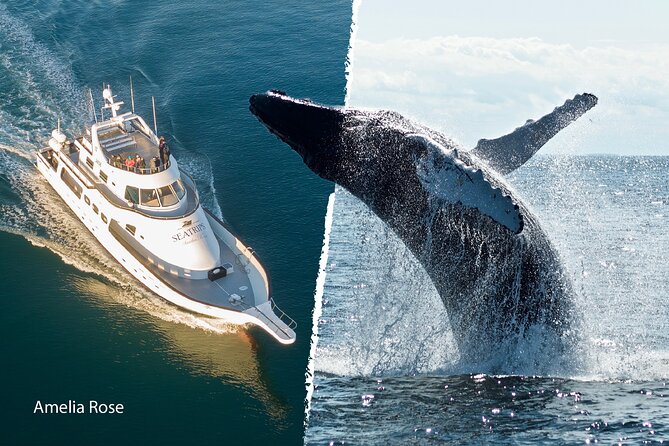
At $102 per person, this is not a cheap harbor ride. You are paying for about three hours on the water, a specialist wildlife search, an onboard guide, the possibility of several species, and the option of a free return cruise if no whales appear.
The value is strongest if you have a flexible Reykjavik schedule and care about seeing wildlife in a natural setting. It also works well if you want a break from museums and city streets, since the cruise combines sea views, islands, coastal scenery, and wildlife information.
The value is weaker if you expect a fast boat, close approaches, or guaranteed whales. One account felt the fare was high after seeing only a single tail for two seconds. That reaction is understandable. Nature trips carry real uncertainty, and a poor sighting can feel expensive.
A maximum of 125 passengers keeps the group within a manageable range, but it does not guarantee an empty viewing deck. If you want the clearest possible view, move outside early and listen for directions from the crew. The best rail position may not remain open once activity is spotted.
Who should book this cruise?
I would recommend it to families, first-time visitors to Iceland, and anyone who wants a relaxed way to see Reykjavik from the sea. Children as young as eight and ten have taken part successfully, and the indoor cabin makes the trip more workable for families than an open speedboat.
It also suits passengers who care about animal welfare. The crew’s stated approach of keeping a respectful distance is a strong reason to choose this kind of outing over a faster, more aggressive chase.
You should think twice if you dislike cold, motion, or uncertainty. A three-hour search can feel long if the water is rough and the wildlife stays hidden. You also need enough time in Iceland to use the free return option if the first trip produces no whale sighting.
The cruise is offered in English, and confirmation is provided at booking. Service animals are allowed, most people can participate, and the activity ends back at the Old Harbour meeting point. Free cancellation is available up to 24 hours before the start time. Poor weather or failure to meet the minimum number of passengers can lead to a different date or a full refund.
Should you book the Reykjavik whale cruise?
Book it if you can accept that nature makes the schedule, dress warmly, and have enough time to use the return option. The best trips can deliver humpbacks breaching, dolphins racing beside the yacht, and a memorable view of Reykjavik from Faxaflói Bay.
I would not book it as your only chance to see a whale if your Iceland schedule is extremely tight. But for a comfortable, informative outing with a fair backup policy and a strong chance of seeing some marine life, it is a sensible choice. Give the sea time, bring gloves, and let the quiet stretches be part of the experience.
FAQ
Where does the whale-watching cruise depart?
The cruise departs from Old Harbour House, Food, Drinks & Tours, at Ægisgarður 2, 101 Reykjavik, Iceland.
How long does the cruise last?
The cruise lasts approximately three hours and returns to the original meeting point.
What wildlife might I see?
The most common sightings are minke whales, humpback whales, dolphins, and porpoises. Seals and orcas are also possible, but no sighting is guaranteed.
What happens if I do not see whales?
You are offered a free return cruise if no whales are seen.
Is the cruise available in English?
Yes. The experience is offered in English.
Can I cancel for a refund?
You can cancel for a full refund up to 24 hours before the experience starts. Changes or cancellations made less than 24 hours before the start time are not accepted for a refund.
Newest write-ups around Reykjavik
- Private Snæfellsnes National Park★ 5.0 · 3 reviews
- Private South Coast tour with Glacier walk★ 5.0 · 3 reviews
- Exclusive Westman Islands Adventure – A Private Day Tour★ 5.0 · 3 reviews
- Blue lagoon Premium and Private Golden circle tour★ 5.0 · 3 reviews
- Private Superjeep Tour To Landmannalaugar and Hekla Volcano★ 5.0 · 3 reviews
- Private South Coast Tour: A Journey to Iceland’s Stunning Shore★ 4.5 · 3 reviews
- Reykjavik: PRIVATE Golden Circle tour with 5 TOP stops★ 5.0 · 3 reviews
- Sólheimajökull Glacier Hiking Tour★ 3.7 · 3 reviews
Whale Watching, compared.
Whale Watching Cruise on the Amelia Rose Yacht
Read our review →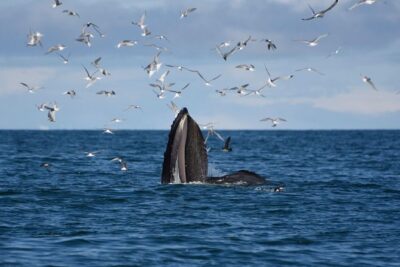
The Original Classic Whale Watching from Reykjavik
Read our review →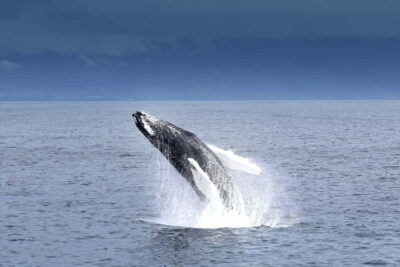
Whale Watching Tour with Professional Guide from Reykjavik
Read our review →
Whale Watching and Dolphin Watching Yacht Cruise
Read our review →Browse the lists this tour appears in