
Review · VOLCANO & LAVA TOURS
Volcano Movie – Experience the Latest Eruptions in Iceland
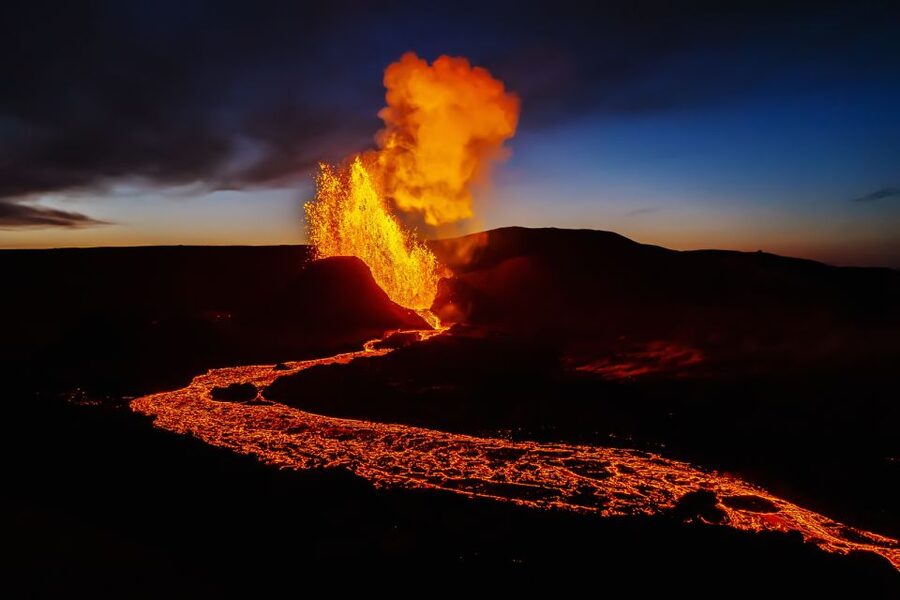
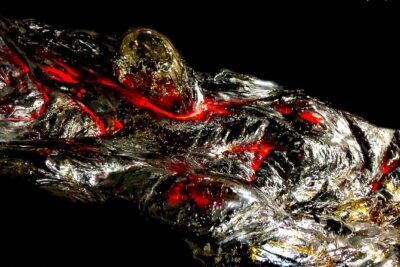
Iceland’s volcanoes are powerful from a distance, but a good film can show you details that are hard to catch safely in person: rivers of lava, ash clouds, glowing craters, and the sheer scale of an eruption. This cinema experience at LAVA Centre in Hvolsvöllur brings together 4K footage of Iceland’s latest eruptions, from Eyjafjallajökull to Fagradalsfjall.
I like the film’s use of natural sound instead of a voice-over, which lets the rumble, crackle, and roar carry the story. I also like the broad historical sweep, beginning with eruptions such as Katla in 1918 and Hekla in 1947 before reaching the events that shaped modern Iceland. The drawback is simple: if you want a guide explaining every scene as it unfolds, this is not that kind of presentation.
In This Review
- Key points to know before you go
- A volcanic story told through images and sound
- Why the lack of narration matters
- The eruptions that give the film its weight
- Eyjafjallajökull and the 2010 air-traffic shutdown
- Holuhraun, 2014 to 2015
- Fagradalsfjall and Fagradalseldar
- High-quality footage is the main attraction
- How the LAVA Centre location fits a South Coast day
- What the $16 admission really buys you
- Food, seating, and practical details
- Who will get the most from this film
- Should you book the Volcano Movie?
- FAQ
- Where does the Volcano Movie take place?
- How much does the experience cost?
- What does the ticket include?
- Is food included?
- Can I bring food or drinks into the cinema?
- Is the film narrated?
- Which eruptions are shown?
- Is the cinema wheelchair accessible?
- Can I cancel my booking?
Key points to know before you go
- 4K eruption footage: See Icelandic volcanic activity in high-quality footage, including Eyjafjallajökull, Holuhraun, and Fagradalsfjall.
- No spoken narration: The film relies on video and natural sound, so expect a visual experience rather than a guided lecture.
- A useful historical timeline: The story moves from Katla in 1918 through major eruptions at Hekla, Askja, Surtsey, the Westman Islands, Krafla, and others.
- A practical South Coast stop: LAVA Centre is the first building on the left when you arrive from Reykjavík or the Golden Circle.
- Good value at $16: The admission gives you a focused volcanic film and free earthquake and volcano information at the entrance.
- Easy for many visitors: English and Icelandic support is available, and the cinema is wheelchair accessible.
A volcanic story told through images and sound
This is not a walking tour to an active crater. It is a cinema presentation designed to give you a clear sense of Iceland’s eruptive past and present without putting you near the hazards of an actual eruption.
The film begins with a short historical overview. That matters because Iceland’s volcanoes are not isolated events. They are part of a continuing pattern that has shaped settlements, roads, farms, air travel, and daily life on the island.
You start with the Katla eruption of 1918, then move through Hekla in 1947 and Askja in 1961. The timeline also includes Surtsey in 1963, the Westman Islands eruption in 1973, and the Krafla volcanic activity that began in 1975.
I appreciate this order. It gives you a frame for the more familiar eruptions later in the film. You do not simply watch spectacular lava and ash. You see how Iceland’s volcanic story has unfolded across generations.
The presentation then turns to more recent events, including the 2010 eruptions at Fimmvörðuháls and Eyjafjallajökull. Eyjafjallajökull became famous around the world when its ash cloud disrupted air traffic across Europe for days.
The film also covers Grímsvötn in 2011 and Holuhraun in 2014 and 2015. Holuhraun is especially interesting because it was a massive eruption that received far less international attention than Eyjafjallajökull. The movie helps put that event back in view and shows how large an eruption can be even when it does not dominate the evening news.
Finally, you reach the recent eruptions at Fagradalsfjall, part of the series known in Icelandic as Fagradalseldar. These events give the film a connection to the volcanic activity that has drawn so much attention to Iceland in recent years.
More volcano and lava days:
- Reykjavik: LAVA SHOW – Immersive Experience Entry Ticket
★ 4.8 · 3,360 reviews - Lava Show Reykjavik Admission Ticket – Optional Premium Upgrade
★ 5.0 · 3,278 reviews - Reykjavik: Red Lava Horse Riding Tour
★ 4.8 · 2,383 reviews
Why the lack of narration matters
Many museum films use a presenter or a steady voice to explain what you are seeing. This one does not. There is no vocal narrative or voice-over, in either English or Icelandic.
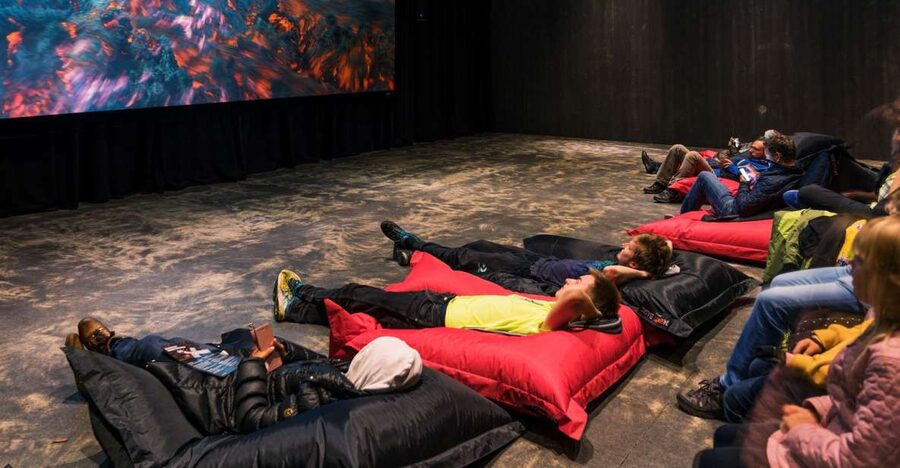
Instead, the film uses pictures and sound to tell its story. That can be very effective. The natural noise of an eruption gives the presentation a direct, physical quality. You are not being told that a scene is dramatic. You hear the eruption and judge it for yourself.
The tradeoff is that you may not always know the details behind each shot unless the film provides them visually. If you prefer clear explanations of geology, dates, and eruption mechanics, you may want to pair this experience with the free information at the entrance or with the wider exhibits at LAVA Centre.
I would think of the film as a visual centerpiece rather than a full classroom lesson. It is designed to leave you with a stronger sense of scale and force, not to explain every scientific term.
The eruptions that give the film its weight
The early historical section gives the experience useful context, but the later eruptions are likely to hold your attention most closely.
Eyjafjallajökull and the 2010 air-traffic shutdown
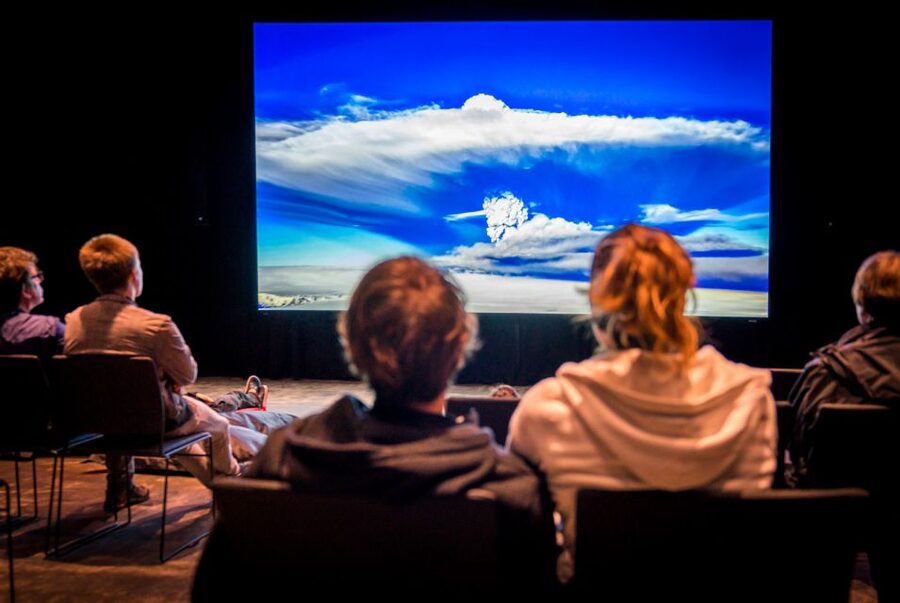
Eyjafjallajökull is the eruption most people outside Iceland remember. Its ash cloud stopped or disrupted air traffic across Europe for days, turning a remote Icelandic volcano into a major international news story.
Seeing the event through high-quality footage helps connect the headlines to the physical event. Ash is not just a gray cloud in the sky. It comes from a major volcanic force with effects that can reach far beyond the eruption site.
The film also includes the Fimmvörðuháls eruption that came before Eyjafjallajökull. This gives you a better sense of the sequence of events rather than treating the 2010 eruption as one isolated burst.
Different weather plan, same pickup point:
- Reykjavik: Golden Circle Full-Day Tour with Kerid Crater
★ 4.8 · 24,485 reviews - Reykjavik Food Walk – Local Foodie Adventure in Iceland
★ 5.0 · 18,952 reviews - Iceland: Northern Lights Bus Tour from Reykjavik
★ 4.1 · 11,161 reviews - Reykjavík: South Coast Waterfalls, Black Sand & Glacier Tour
★ 4.8 · 11,030 reviews
Holuhraun, 2014 to 2015
Holuhraun offers an important contrast. It was a huge eruption, yet many people outside Iceland heard little about it.
That contrast makes the film more useful than a simple collection of famous eruption clips. Iceland’s volcanic activity does not become important only when it cancels flights or fills news reports. Holuhraun shows that an eruption can be massive, remote, and significant without becoming a household story.
Fagradalsfjall and Fagradalseldar
The recent Fagradalsfjall eruptions bring the film close to the present. The name Fagradalseldar refers to the series of eruptions, and including them gives the experience a current feel.
You will not be watching only archival material from the last century. The movie connects Iceland’s older volcanic record with events that have shaped current interest in the country.
High-quality footage is the main attraction
The film uses footage shot in 4K or better. That is a meaningful feature here. Eruptions contain small details that can disappear in poor video: the movement of molten rock, changing textures in the lava, bursts of fire, and the size of the ash or steam rising above the crater.
The quality also helps with scale. A volcanic scene can look impressive on any screen, but sharper footage makes it easier to see the relationship between the glowing material and the surrounding terrain.
You should not expect an interactive attraction or a live demonstration. The value comes from seeing events that are dangerous, remote, or impossible to experience safely at close range.
The film’s sound is equally important. With no voice-over competing for attention, the eruption itself becomes the soundtrack. That approach will suit you if you like atmospheric cinema. It may be less suitable if you want a guide speaking throughout.
How the LAVA Centre location fits a South Coast day
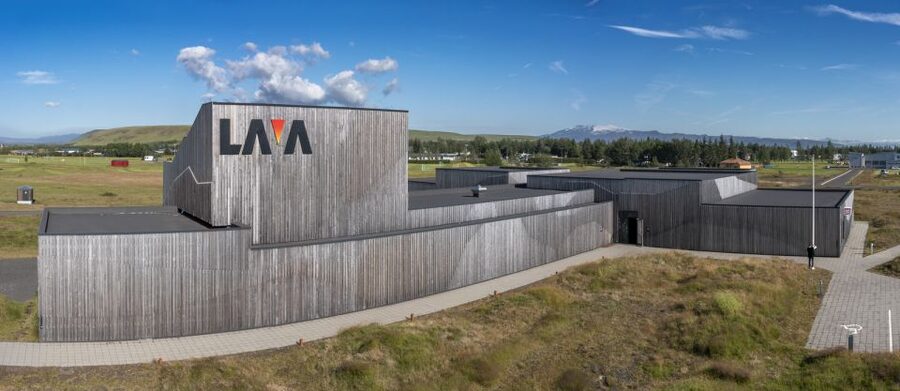
The meeting point is the LAVA Centre at Austurvegur 14 in Hvolsvöllur. Coming from Reykjavík or the Golden Circle, it is the first building on the left, so the location should be easy to find.
Hvolsvöllur is a practical place to stop during a South Coast outing. The film does not require a separate expedition into the countryside. You can add it to a day that already brings you through the area, provided the available starting time fits your plans.
The supplied details describe the activity as valid for one day, with starting times checked through availability. They do not give a specific running time for the movie, so I would confirm the start time before setting a tight schedule around it.
There is no transportation included. You arrange your own way to the LAVA Centre, which makes this easiest if you have a rental car or are already using a South Coast transfer or tour that stops in Hvolsvöllur.
At the entrance, you can also find free information about earthquakes in Iceland and the major volcanoes around LAVA Centre. That material is useful before or after the movie, especially if the visual presentation leaves you wanting a little more explanation.
What the $16 admission really buys you
At $16 per person, this is a modest-cost activity by Iceland standards. You are paying for admission to the cinema, not for transportation, food, a private guide, or a full-day excursion.
The price works best when you are already passing through Hvolsvöllur. As a stand-alone reason to travel a long distance, the film may not offer enough content for every visitor, particularly if your main interest is hiking to an eruption site or seeing a large museum collection.
As part of a South Coast day, though, it can be a sensible use of time. You get a concentrated look at Iceland’s volcanic activity, footage that would be difficult to see safely in person, and free earthquake and volcano information at the entrance.
The film also gives you a better basis for understanding places you may see elsewhere in Iceland. After watching eruptions at Eyjafjallajökull, Holuhraun, or Fagradalsfjall, a quiet volcanic area can feel less empty. You begin to recognize that the island’s calm appearance can change quickly.
Food, seating, and practical details
Food and drinks are not allowed inside the cinema. If you need something to eat, Katla, the in-house restaurant and shop, sells food on site.
That makes the stop convenient, but keep the roles clear. The food is not included in the $16 admission, and the ticket covers only the cinema entrance.
The experience is wheelchair accessible. Host or greeter support is available in English and Icelandic, so you can ask for help with basic arrival information in either language.
Free cancellation is available up to 24 hours in advance for a full refund. You can also reserve now and pay later, which is useful when Icelandic weather or road conditions may force changes to a South Coast plan.
Only one verified rating is provided in the supplied material, a 5 out of 5 score from a German visitor who described the presentation as good, engaging, and interesting. That fits the strongest practical point here: the film is meant to be focused and visually compelling rather than long-winded.
Who will get the most from this film
I would recommend it to you if you want a clear introduction to Iceland’s eruptions without committing to a demanding hike. Families, older visitors, and anyone with limited time can all benefit from seeing the major events in one place.
It also suits anyone who remembers the 2010 air-traffic disruption but never understood what caused it. The film links that familiar news story to the earlier Fimmvörðuháls eruption and to the broader volcanic pattern around Iceland.
Photography and film fans should also appreciate the 4K footage and natural sound. You get a chance to study the eruptions rather than merely pass a sign about them on the roadside.
I would be more cautious if you need detailed scientific instruction. Since there is no spoken explanation, you may find the presentation incomplete on its own. Use the free information at the entrance to add dates and background, or choose a wider museum visit if you want more interpretation.
Should you book the Volcano Movie?
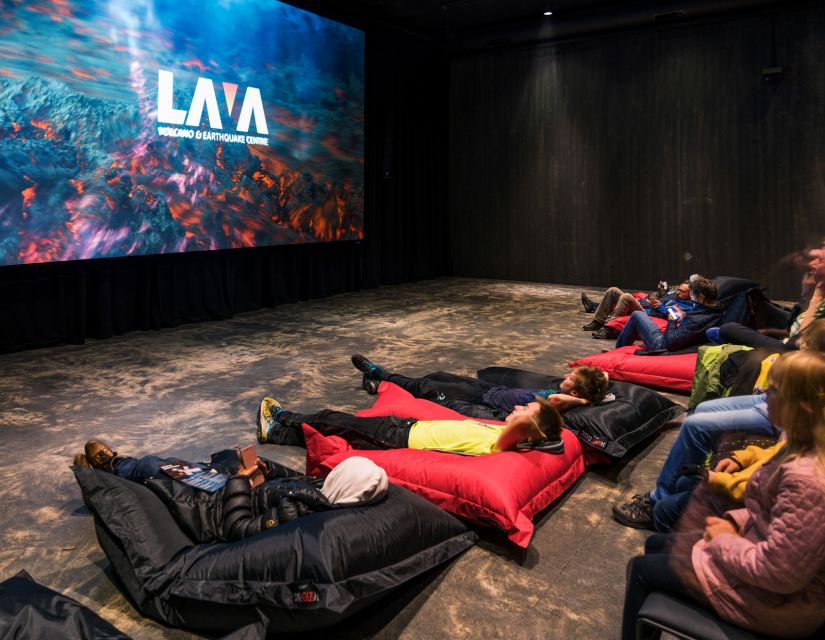
Book it if you are passing through Hvolsvöllur and want an affordable, atmospheric look at Iceland’s eruptions. The $16 price is reasonable for a 4K cinema experience covering everything from Katla and Hekla to Eyjafjallajökull, Holuhraun, and Fagradalsfjall.
Skip it if you are expecting a live volcano visit, a narrated geology lesson, or transportation from Reykjavík. The film is best treated as a focused South Coast stop, one that lets you hear and see Iceland’s volcanic power without standing anywhere near the danger.
FAQ
Where does the Volcano Movie take place?
It takes place at LAVA Centre, Austurvegur 14, 860 Hvolsvöllur, Iceland. It is the first building on the left when coming from Reykjavík or the Golden Circle.
How much does the experience cost?
The listed price is $16 per person.
What does the ticket include?
The ticket includes the entrance fee to the cinema. Free information about earthquakes in Iceland and major volcanoes around LAVA Centre is available at the entrance.
Is food included?
No. Food is not included, but you can buy food at Katla, the in-house restaurant and shop.
Can I bring food or drinks into the cinema?
No. Food and drinks are not allowed inside.
Is the film narrated?
No. The movie has no vocal narrative or voice-over. It uses video and sound to present the volcanic eruptions.
Which eruptions are shown?
The film covers historic eruptions including Katla in 1918, Hekla in 1947, Askja in 1961, Surtsey in 1963, the Westman Islands in 1973, and Krafla from 1975. It also includes Fimmvörðuháls, Eyjafjallajökull, Grímsvötn, Holuhraun, and the recent Fagradalsfjall eruptions.
Is the cinema wheelchair accessible?
Yes. The experience is wheelchair accessible.
Can I cancel my booking?
Yes. You can cancel up to 24 hours in advance for a full refund. A reserve-now-and-pay-later option is also available.
Newest write-ups around Reykjavik
- Private Snæfellsnes National Park★ 5.0 · 3 reviews
- Private South Coast tour with Glacier walk★ 5.0 · 3 reviews
- Exclusive Westman Islands Adventure – A Private Day Tour★ 5.0 · 3 reviews
- Blue lagoon Premium and Private Golden circle tour★ 5.0 · 3 reviews
- Private Superjeep Tour To Landmannalaugar and Hekla Volcano★ 5.0 · 3 reviews
- Private South Coast Tour: A Journey to Iceland’s Stunning Shore★ 4.5 · 3 reviews
- Reykjavik: PRIVATE Golden Circle tour with 5 TOP stops★ 5.0 · 3 reviews
- Sólheimajökull Glacier Hiking Tour★ 3.7 · 3 reviews
Volcano & Lava Tours, compared.
LAVA SHOW – Immersive Experience Entry Ticket
Read our review →
Lava Show Reykjavik Admission Ticket – Optional Premium Upgrade
Read our review →
Golden Circle, Volcano Crater and Blue Lagoon Small-Group Tour
Read our review →
Raufarhólshellir Lava Tunnel: Underground Expedition
Read our review →
Browse the lists this tour appears in