
Review · VOLCANO & LAVA TOURS
Small Group Volcano Hike with a Professional Geologist
Fagradalsfjall gives you a rare chance to walk across ground made by recent eruptions, with a geologist explaining what your boots are standing on. I like the way the guide turns black rocks, fissures, and cooling lava into a readable story. I also like the small-group format, though the hike is harder, longer, and more weather-exposed than the short tour description may suggest.
I especially like the guides’ mix of science and care. Giuseppe, France, Jasmine, and Giovani are praised for explaining complex volcanic forces in plain English, setting a safe pace, and stopping for questions. The tradeoff is simple: this is not a gentle sightseeing walk. Rain, wind, mud, sharp rocks, steep sections, and a total distance that can reach about six miles all matter.
In This Review
- Key points to know before booking
- Walking across Fagradalsfjall’s young lava
- The route to the crater viewpoint
- What your geologist guide adds
- Fresh lava, old heat, and wide views
- The Reykjanes drive back to Reykjavík
- Weather, clothing, and food
- Is $220.19 a fair price?
- Who should book this volcano hike?
- Should you book the Fagradalsfjall hike?
- FAQ
- Where does the volcano hike begin?
- Where does the activity end?
- How long does the tour last?
- How long is the hike to the crater viewpoint?
- Will I see glowing lava?
- What fitness level do I need?
- What should I bring?
- Is equipment provided?
- Can I cancel for a refund?
Key points to know before booking
- You walk on newly formed volcanic ground: See lava fields, fissures, crater areas, and rocks still holding heat below the surface.
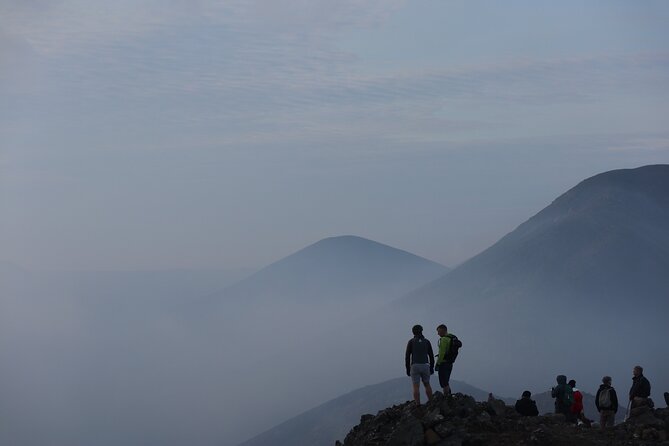
- A geologist leads the hike: Guides such as Giuseppe and France explain lava types, eruptions, tectonic plates, and the Reykjanes Peninsula.
- The crater viewpoint takes 1 to 1.5 hours each way: The route includes steep sections, rough lava, loose stones, and muddy ground.
- The group is meant to be very small: The stated maximum is six, though one departure had eight people.
- Weather can change the whole day: Bring serious rain and wind gear, sturdy hiking boots, food, and water.
- The $220.19 price buys more than transport: You are paying for a specialist guide, safety support, equipment if needed, and close interpretation of the site.
Walking across Fagradalsfjall’s young lava
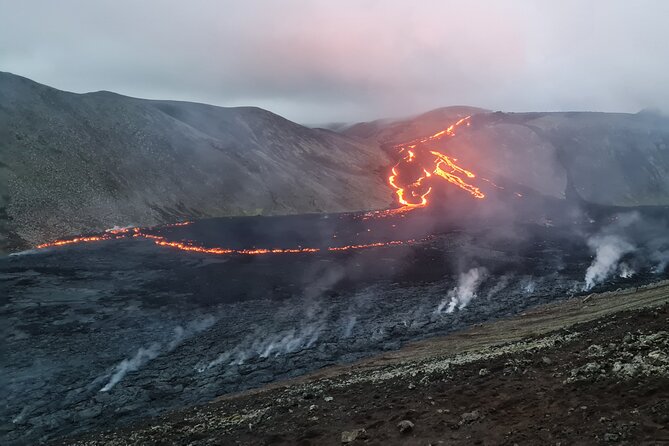
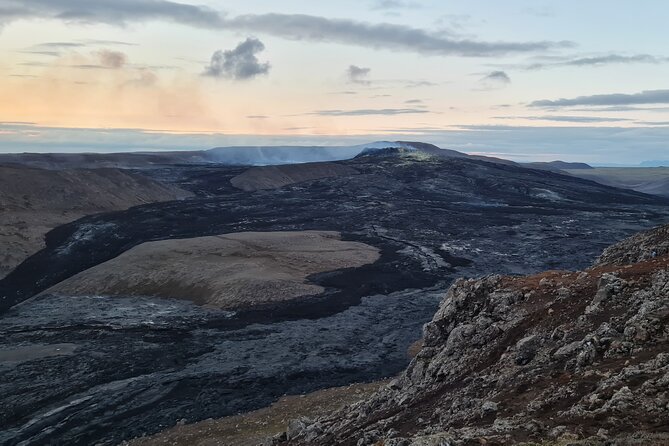
The main attraction here is not simply reaching a viewpoint. It is the chance to walk across volcanic ground formed during recent eruptions at Fagradalsfjall, one of Iceland’s most active modern volcanic areas.
The Reykjanes Peninsula is shaped by the meeting of tectonic plates and repeated volcanic activity. Your guide begins by explaining the early warning signs of the recent eruptions, then connects those events to the rocks underfoot. That makes the hike feel less like a climb to a scenic overlook and more like a field lesson in how Earth builds new ground.
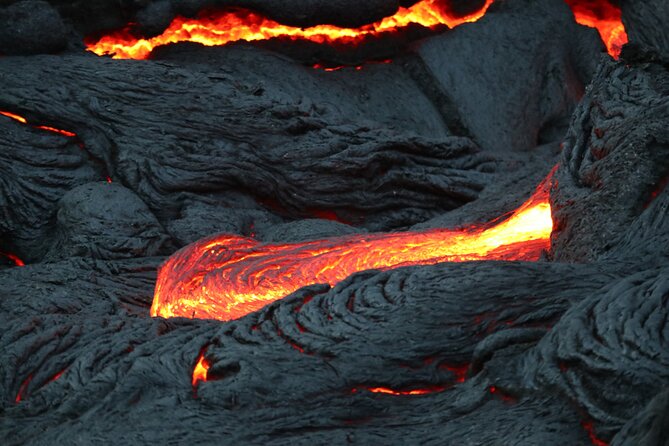
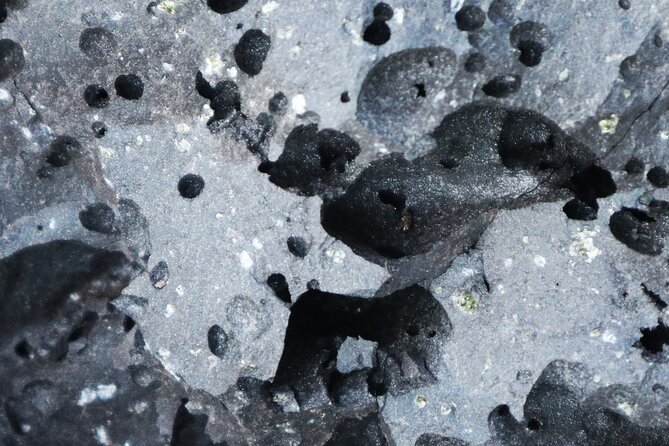
The lava is not all the same. Its texture, color, and shape depend on how it cooled and moved. A guide can point out features you might otherwise walk past, including different lava formations, cracks, and hardened flows. One especially striking detail from the hike is the warmth that can still be felt in cracks and rocks associated with older eruptions. In places, hot gases may rise from the lava field, even when no bright orange lava is visible.
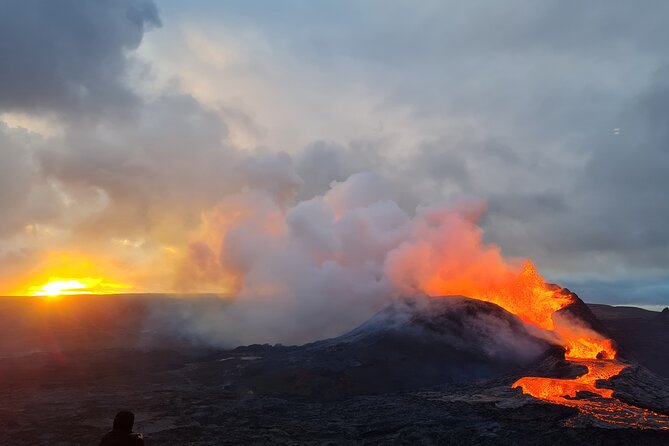
That last point matters. You are not guaranteed to see glowing lava. Volcanic activity changes, and a recent eruption may have ended by the time you arrive. The experience still has value because you are seeing the fresh evidence of eruptions, not merely a distant mountain from a coach window.
More volcano and lava days:
- Reykjavik: LAVA SHOW – Immersive Experience Entry Ticket
★ 4.8 · 3,360 reviews - Lava Show Reykjavik Admission Ticket – Optional Premium Upgrade
★ 5.0 · 3,278 reviews - Reykjavik: Red Lava Horse Riding Tour
★ 4.8 · 2,383 reviews
The route to the crater viewpoint
The walk to the crater viewpoint takes roughly one to one and a half hours each way. The exact effort depends on conditions and the route used, but you should prepare for a solid hike rather than a casual stroll.
The opening section may include dirt and gravel paths, which can feel manageable at first. The route then becomes more demanding, with steep switchbacks, rocky inclines, uneven ground, and sections where you climb over or around lava. Wet weather can turn muddy areas into a slow, slippery negotiation.
Some of the most difficult footing comes on the lava field itself. The rocks can be sharp, loose, and irregular. One section has been described as narrow and awkward, with rough stones underfoot. There may not be a dramatic drop beside you, but anyone uneasy with uneven ground or heights should take time and watch each step.
I appreciate that the guides do not treat the hike as a race. France is praised for letting people set a comfortable pace and for stopping to allow the group to catch its breath. Giuseppe is also praised for explaining what was ahead and planning breaks during steep sections. That kind of pacing can make the difference between an absorbing day and a miserable one.
The total walking distance has reached just under six miles on some outings, with around 16,000 steps. That is a useful figure to keep in mind because the advertised six-hour duration may not tell the whole story. Some departures have returned around 5:15 or 6 p.m. after a 10 a.m. start, rather than finishing in the midafternoon.
What your geologist guide adds
The guide is the heart of this experience. Without one, the lava field can look like a broad spread of black rock. With one, it becomes a record of heat, pressure, movement, and time.
Giuseppe receives especially strong praise for his enthusiasm, humor, and ability to point out unusual volcanic features. France is described as patient, clear, and attentive to the pace of the group. Jasmine is praised for making the sites more understandable through detailed explanations, while Giovani is noted for being caring and informative.
The best guides here do more than recite geological terms. They explain how lava composition affects the rocks and the shape of the ground around you. They discuss fissures, tectonic plates, different lava flows, and the mechanics of eruptions in a way that works for people without a science background.
I also like the personal scale of the teaching. With a group of six, you can ask questions without feeling that you are holding up a large crowd. The guides have been praised for spending individual time with members of the group and adapting the walk when someone needed a break.
The stated maximum is six, but one departure had eight people. That is worth noting if the small-group promise is a major reason you are booking. Even eight is far more manageable than a large coach group, but it may feel less personal, and the route can already be crowded in busy conditions.
Fresh lava, old heat, and wide views
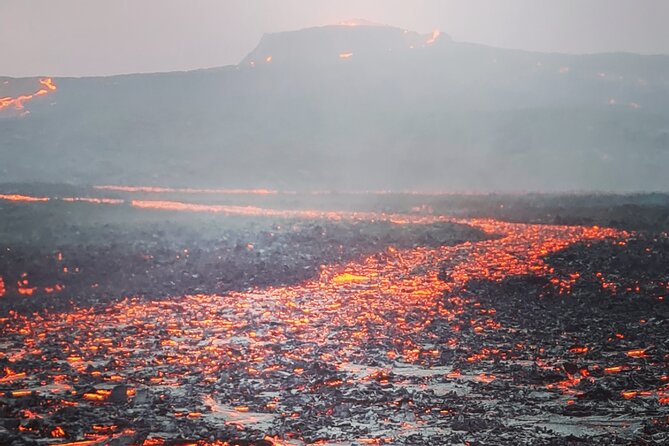
The crater viewpoint is the main visual reward. From higher ground, you can see broad lava fields and the surrounding volcanic terrain. The sight is powerful because the ground below is not an ancient, softened relic. It records eruptions that happened in recent years.
Depending on conditions, you may see signs of heat in the lava field, including gases escaping or warmth in cracks. Some people have placed a hand near a fissure or on warm rocks from an earlier eruption. Follow the guide’s instructions carefully. Volcanic ground can remain hazardous even when it looks solid and quiet.
The absence of visible glowing lava does not make the walk pointless. In fact, a cooled lava field can reveal more of the eruption’s structure. You can inspect the rough surface, compare different formations, and understand how a flow spread and hardened. If the volcano is active, the guide’s safety decisions become even more important, and access may change.
Bring a camera, but do not let photography distract you from your footing. The rocks can be sharp and slippery, particularly after rain. The most memorable part may be the view, but the ground itself is the real exhibit.
More Reykjavik departures worth comparing
- Skaftafell: Ice Cave Tour and Glacier Hike
★ 4.5 · 1,746 reviews - Skaftafell National Park: Falljokull Glacier Easy Hike
★ 4.7 · 1,370 reviews - Reykjavik: Glacier Hike, Waterfalls and Black Sand Beach
★ 4.8 · 1,285 reviews - Sólheimajökull: Guided Glacier Hike
★ 4.7 · 1,123 reviews
The Reykjanes drive back to Reykjavík
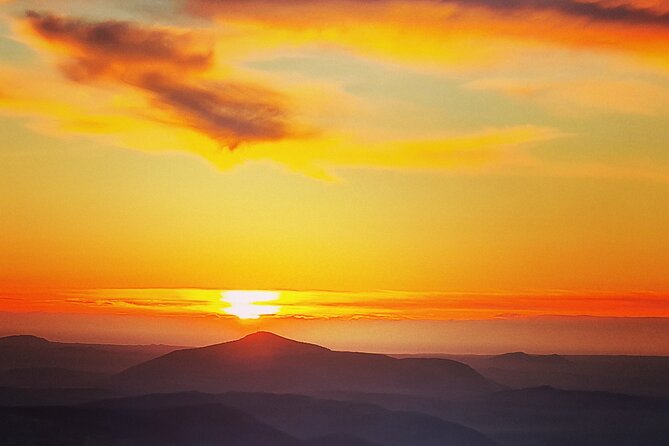
After the hike, the return drive provides a quieter finish. The route across the Reykjanes Peninsula passes geothermal hot springs, crater lakes, and rugged volcanic mountains.
This drive helps place Fagradalsfjall within a larger volcanic region. You get a final look at the Peninsula’s varied terrain while the guide’s explanations are still fresh in your mind. After several hours on rough ground, sitting in an air-conditioned vehicle is welcome.
The transport is practical, but comfort may vary. One person found six passengers crowded into the vehicle, with limited legroom in the back during the roughly 45-minute ride each way. If you are tall or simply need more space, this is a fair point to consider. The vehicle is included, as are parking fees, but hotel pickup and drop-off are not.
The meeting point is Grænaborg, Eiríksgata 2, in central Reykjavík. The tour ends at the same meeting point. It is near public transportation, but you need to arrange your own way there and back.
Weather, clothing, and food
I would treat proper clothing as essential, not optional. Icelandic weather can bring cold, strong wind, rain, and even hail during the same outing. Several people found the conditions manageable because they were prepared, while one outing became far less enjoyable after clothing and boots soaked through.
Wear sturdy hiking boots with good grip. Trail shoes may work in dry conditions, but boots offer better protection on sharp, loose, and muddy rock. Pack waterproof trousers and a waterproof jacket, not just a light rain shell. Warm layers are also important because wind can make exposed ground feel much colder than the temperature suggests.
You need to bring your own food and water. Bottled water and meals are not included, and there is no promise of a meal stop during the long outing. Energy bars or a packed lunch make sense. Eating on cooled lava can be a memorable part of the day, but do not count on finding food along the route.
Crampons and headlamps are supplied if needed. That is useful in icy or low-light conditions, but it does not replace proper footwear or clothing. The tour is not recommended for children under 12, and you should have a moderate level of physical fitness.
Is $220.19 a fair price?
At $220.19 per person, this is not a budget volcano outing. The value depends on what you want from the day.
If your goal is a quick photo stop and a view from near the vehicle, the price is hard to justify. You are also responsible for getting to the central meeting point, bringing food and water, and coping with a vehicle that may feel tight.
If you want to understand the volcanic site, the price makes more sense. You receive a guided hike, an English-speaking geologist, transport from Reykjavík to the trail area, parking, and crampons or headlamps when needed. The small group can also give you more time for questions and personal guidance than a large sightseeing tour.
The specialist guide is the main value. A volcano hike without interpretation can leave you admiring unusual rocks without knowing what makes them unusual. Here, the guide connects the ground, the eruption, and the wider geology of the Peninsula.
The experience has a 4.7 rating from 142 submissions, with 94 percent recommending it. Those figures suggest strong satisfaction, but they should not make you ignore the physical demands or occasional operating problems. A guide’s illness has caused last-minute cancellations, including one cancellation only 40 minutes before departure and another during the night. If this is a once-only highlight on your final day, consider keeping a backup plan.
Free cancellation is available up to 24 hours before the start time. Poor weather or failure to meet the minimum group size can lead to a different date or a full refund, according to the stated policy.
Who should book this volcano hike?
I would choose this tour if you are curious about geology and happy to work for the view. You do not need advanced scientific training, but you do need stamina, balance, and patience on rough ground.
It suits you especially well if you:
- Want a close look at recent volcanic activity rather than a distant viewpoint
- Enjoy asking questions and learning from a specialist guide
- Can handle several hours outside in wind, rain, and cold
- Are comfortable walking steep, muddy, rocky, and uneven sections
- Prefer a small group to a large coach outing
I would think twice if you have limited mobility, dislike exposed weather, or expect a short and easy walk. The hike is not recommended for children under 12, and no big bags or luggage are allowed.
Should you book the Fagradalsfjall hike?
Book it if the idea of walking on newly formed lava excites you more than the promise of perfect weather or glowing magma. The combination of a geologist, young volcanic ground, crater views, and a small group creates a strong experience for anyone interested in how Iceland was made.
Go prepared. Wear real waterproof hiking gear, bring lunch and water, expect the day to run longer than six hours, and allow for difficult footing. If you accept those conditions, the tour offers something a standard sightseeing drive cannot: a direct, informed look at Earth still making itself.
FAQ
Where does the volcano hike begin?
The tour begins at Grænaborg, Eiríksgata 2, 101 Reykjavík, Iceland.
Where does the activity end?
The activity ends back at the same meeting point in Reykjavík.
How long does the tour last?
The stated duration is approximately six hours. Some outings have lasted until around 5:15 or 6 p.m. after a 10 a.m. start.
How long is the hike to the crater viewpoint?
The walk to the crater viewpoint takes about 1 to 1.5 hours each way.
Will I see glowing lava?
Visible glowing lava is not guaranteed. The experience focuses on the volcanic terrain, lava fields, fissures, crater views, and geological explanations.
What fitness level do I need?
You should have a moderate level of physical fitness. The route can include steep inclines, rough lava, muddy ground, sharp rocks, and a total distance of about six miles.
What should I bring?
Bring sturdy hiking boots, waterproof clothing, warm layers, food, and water. Bottled water and meals are not included.
Is equipment provided?
Crampons and headlamps are provided if they are needed. Parking fees and an air-conditioned vehicle are also included.
Can I cancel for a refund?
You can cancel at least 24 hours before the start time for a full refund. Poor weather or an insufficient number of bookings may result in a different date or a full refund.
Newest write-ups around Reykjavik
- Private Snæfellsnes National Park★ 5.0 · 3 reviews
- Private South Coast tour with Glacier walk★ 5.0 · 3 reviews
- Exclusive Westman Islands Adventure – A Private Day Tour★ 5.0 · 3 reviews
- Blue lagoon Premium and Private Golden circle tour★ 5.0 · 3 reviews
- Private Superjeep Tour To Landmannalaugar and Hekla Volcano★ 5.0 · 3 reviews
- Private South Coast Tour: A Journey to Iceland’s Stunning Shore★ 4.5 · 3 reviews
- Reykjavik: PRIVATE Golden Circle tour with 5 TOP stops★ 5.0 · 3 reviews
- Sólheimajökull Glacier Hiking Tour★ 3.7 · 3 reviews
Volcano & Lava Tours, compared.
LAVA SHOW – Immersive Experience Entry Ticket
Read our review →
Lava Show Reykjavik Admission Ticket – Optional Premium Upgrade
Read our review →
Golden Circle, Volcano Crater and Blue Lagoon Small-Group Tour
Read our review →
Raufarhólshellir Lava Tunnel: Underground Expedition
Read our review →
Browse the lists this tour appears in