
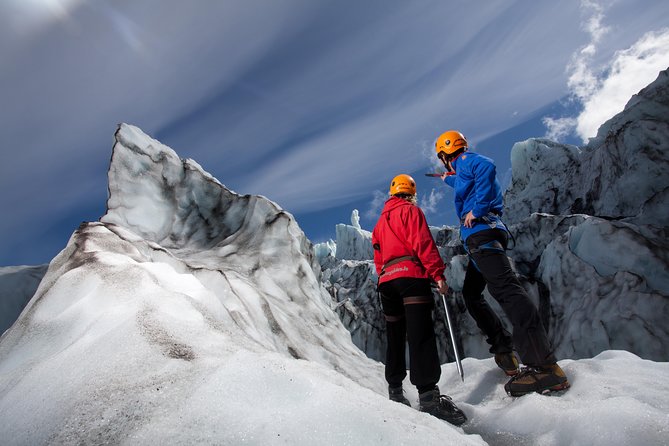
Review · GLACIER TOURS
Skaftafell: Blue Ice Glacier Hike on Vatnajökull
Falljökull is not a frozen park path. It is a living river of ice, marked by blue hollows, sharp ridges, cracks, and the icefall that gives the glacier its name. I like the way this tour gets you onto Vatnajökull without demanding mountaineering skills, and I especially like the careful instruction before you take your first steps.
The two-hour-ish glacier portion gives you time to look around rather than simply pose for a photo and turn back. Small hiking groups after the transfer and guides such as James, Lucy, Nil, Kira, and Thomas have helped make the outing feel safe and personal. The catch is that easy still means three kilometers over uneven ground, with short uphill sections, bulky gear, and weather that can leave you soaked.
In This Review
- Key points
- What walking on Falljökull feels like
- Starting at Skaftafell Base Camp
- The 4×4 ride to the glacier edge
- The 30-minute approach through Vatnajökull National Park
- Crampons, crevasses, and the main 1.5-hour hike
- Guides, safety, and the human side of the tour
- Weather, clothing, and what you must bring
- Returning across the park to Skaftafell
- Is $116 good value for a glacier walk?
- Who should book this Falljökull hike?
- Should you book it?
- FAQ
- Where does the glacier hike meet?
- How long does the activity last?
- How far is Skaftafell from Reykjavík?
- Are hiking boots included?
- What shoe sizes fit the glacier crampons?
- Is previous glacier hiking experience required?
- What equipment is included?
Key points
- Walk on Falljökull: See the icefall and blue formations on an outlet of Vatnajökull.
- Beginner-friendly, not effortless: No glacier experience is needed, but you must manage uneven ground and roughly three kilometers of walking.
- Safety gear is supplied: Crampons, helmet, harness, and ice pick are included.
- Boots are the deal breaker: Sturdy ankle-support hiking boots are mandatory, and crampons fit EU sizes 35 to 50.
- About four hours door to door: Allow time for the base camp briefing, 4×4 transfer, approach walk, glacier hike, and return.
- Guides make the difference: Expect practical instruction, glacier facts, safety checks, and often help with photos.
What walking on Falljökull feels like
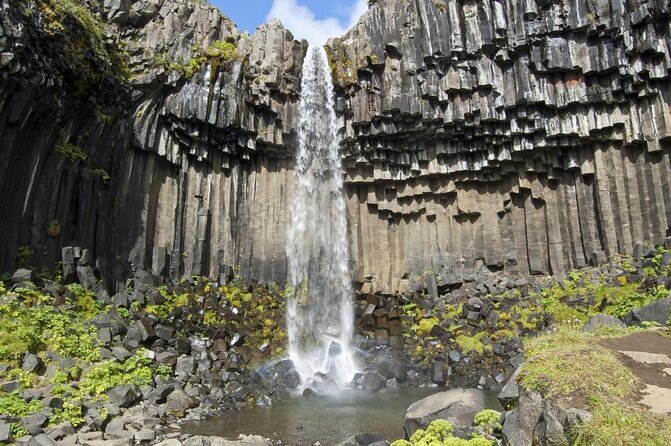
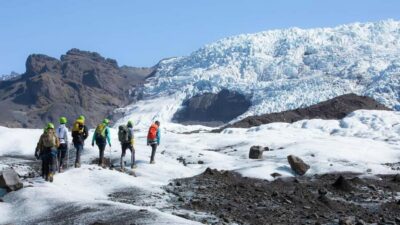
A glacier hike gives you a much closer look at ice than a viewpoint ever can. From a safe route chosen by your guide, you may see blue ice walls, deep crevasses, ridges, meltwater features, and the broken icefall that Falljökull means falling glacier refers to.
The ice is not one smooth white sheet. It changes constantly as the glacier moves, melts, cracks, and reshapes itself. That makes the route interesting, but it also explains why you should never wander away from your guide or treat the glacier like an ordinary hiking trail.
You will learn how to walk in crampons, usually by placing your feet more deliberately and keeping a steady pace. The guide controls the route and decides which formations are safe to approach. You get the thrill of being on the ice without having to make technical decisions yourself.
The setting adds to the drama. Falljökull lies within Vatnajökull National Park, with high peaks and broad views around the ice. The glacier itself is the main event, but the contrast between dark volcanic ground, white snow, and blue ice gives the whole outing a memorable visual edge.
More glacier days within reach of Reykjavik:
- Reykjavík: South Coast Waterfalls, Black Sand & Glacier Tour
★ 4.8 · 11,030 reviews - Skaftafell: Ice Cave Tour and Glacier Hike
★ 4.5 · 1,746 reviews - Skaftafell National Park: Falljokull Glacier Easy Hike
★ 4.7 · 1,370 reviews
Starting at Skaftafell Base Camp
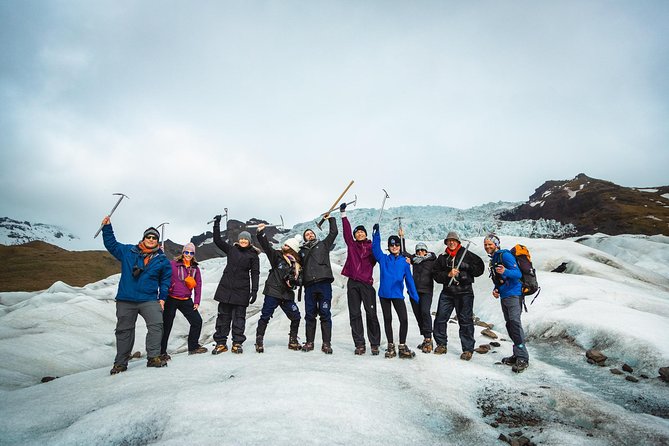
Your meeting point is the Arctic Adventures Booking Hut in Skaftafell National Park. Arrive 10 to 15 minutes before departure. That small margin matters because the group needs to get fitted with equipment and ready for the transfer.
Skaftafell is about 327 kilometers from Reykjavík, or roughly four and a half hours by car in good weather. I would not plan this as a casual side trip from the capital on the same day. The drive is long, and road conditions can change, so this activity fits best into a South Coast road trip or a stay in the southeast.
Parking is available at the Skaftafell parking lot, but a fee applies. Build that into your plan, and do not arrive at the last minute. The booking hut is the practical staging point, not a place to linger over breakfast, so bring food and water with you.
At the base, staff provide the specialist glacier equipment. That includes glacier crampons, an ice pick, a helmet, and a harness. The gear is part of the $116 price, along with the national park fee and the 4×4 ride to the glacier.
The fitting process can take a little time when a full departure arrives together. One useful improvement would be to complete medical information before arrival, but you should still expect an on-site briefing and equipment check. That preparation is worthwhile. A properly fitted crampon is far more important than a quick start.
The 4×4 ride to the glacier edge
After the briefing, you board a 4×4 bus for the trip toward Falljökull. The supplied schedule gives the ride as about 15 to 20 minutes each way. It is not a sightseeing drive in its own right, but it saves you from walking the full approach and gets the group close to the ice.
The transfer also marks a clear change in pace. At the hut, you are dealing with check-in, boots, and helmets. Soon after, you are looking toward a glacier and preparing to walk onto it. That short vehicle ride keeps the four-hour tour focused on the actual experience rather than a long approach.
Group size can vary. Some outings split into smaller groups of about nine or 15 people, while a larger group of around 44 has also been reported for the first part of the activity. A large departure can slow equipment fitting and boarding, though the ice walk itself may be divided among guides.
If you care strongly about a quiet, intimate outing, ask about the expected group size before booking. If you are mainly interested in getting onto the glacier with solid safety support, the group arrangement is less important once you are walking with your guide.
The 30-minute approach through Vatnajökull National Park
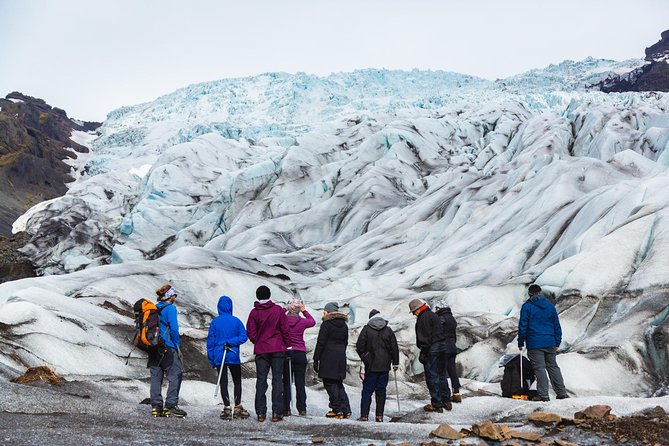
The hike does not begin the moment you leave the bus. The itinerary allows about 30 minutes to walk over uneven ground before reaching the ice. This approach is part of the experience, but it can surprise people who imagine four hours of nonstop glacier walking.
Wear your boots from the start. You need ankle support before the crampons go on, and the approach may involve dirt, rocks, and rough surfaces. This is also where a steady pace helps. You are carrying or wearing extra equipment, and sunny weather can make all those layers feel warmer than expected.
The approach gives you time to get used to the group and your guide. You may hear about the national park, the glacier, and Icelandic conditions before the more unusual part begins. Guides have also added broader facts about Iceland and suggestions for other places to see, which can be useful if this is early in your trip.
Do not mistake the approach for a difficult mountain trek. It is manageable for people who do not hike often, but it is still walking over uneven terrain. If your fitness is limited, tell the guide early rather than waiting until you are tired.
More Reykjavik departures worth comparing
- Reykjavik: Glacier Hike, Waterfalls and Black Sand Beach
★ 4.8 · 1,285 reviews - Sólheimajökull: Guided Glacier Hike
★ 4.7 · 1,123 reviews - Skaftafell National Park: Falljokull Glacier Advanced Hike
★ 4.8 · 1,083 reviews - Reykjavík: Volcano Eruption Site and Reykjanes Hiking Tour
★ 4.6 · 1,066 reviews
Crampons, crevasses, and the main 1.5-hour hike
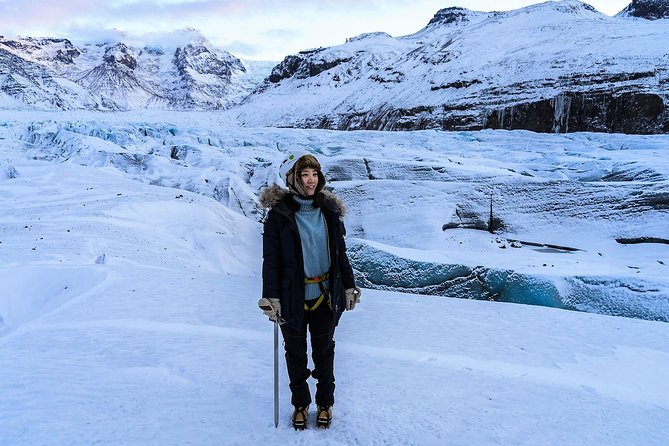
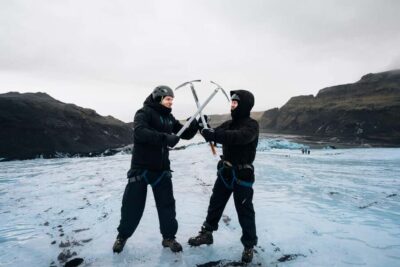
At the glacier, your guide fits and checks the crampons. This is usually the moment when the outing becomes more exciting and more technical, even though the tour is rated easy.
Crampons feel strange for the first few steps. Your guide shows you how to place your feet and move with control. The goal is not speed. Slow, steady walking lets you keep balance and avoid catching a crampon on the other boot.
The guided glacier section lasts about an hour and a half. You walk across the lower parts of Falljökull, stopping for views and explanations. The route is chosen according to current ice and weather conditions, so the exact formations you see can change.
Expect short uphill stretches. Several people have found the hike manageable, but not everyone would call it effortless. The word beginner-friendly means you need no previous glacier skills, not that you can stroll in ordinary shoes.
Your guide may lead you near crevasses and through safe openings in the ice. These cracks are one of the most memorable parts of the activity, but they are also a reminder that the glacier is unstable and powerful. Stay in line, follow every instruction, and do not step across a crack simply because it looks narrow.
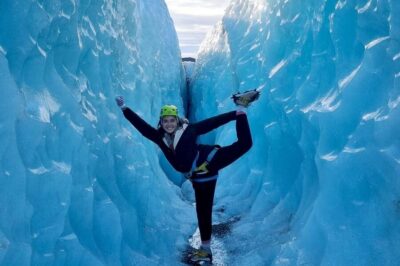
Blue ice is another highlight. Compressed glacier ice can look intensely blue in hollows and walls, especially where light reaches through thicker sections. You may also see layers and textures that reveal the glacier’s movement over time.
The icefall is Falljökull’s signature feature. It is the broken, tumbling section that gives the glacier its name. From a safe position, you can appreciate how much force is packed into the frozen terrain. Your guide will decide how close the group can go.
The scenery changes with the weather. In clear conditions, you get sharper views of the surrounding peaks and the ice itself. In cloud, mist, rain, or wind, the glacier can feel more stark and dramatic. Good weather helps, but do not book this expecting Iceland to provide a calm, dry afternoon.
Guides, safety, and the human side of the tour
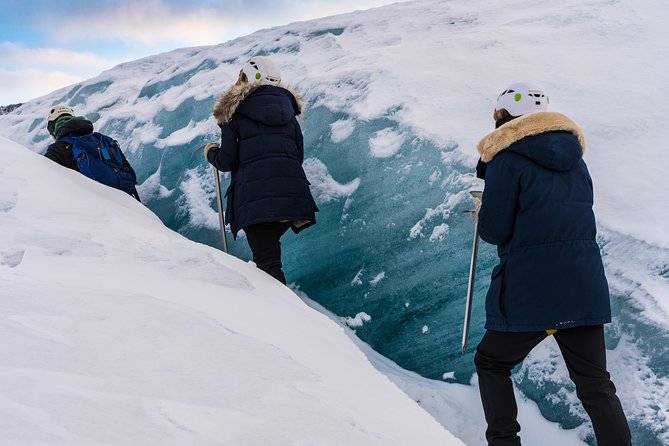
The best part of this experience is not just the ice. It is having someone who knows where to walk and how to make the formations meaningful.
Guides named James, Lucy, Nil, Kira, Thomas, Anya, Josh, Christian, Janek, and others have been praised for clear instruction, humor, patience, and careful attention. Nil, for example, was noted for keeping the route safe while making the glacier’s story easy to follow. James has been especially appreciated for informative commentary and a friendly manner.
You may also get help with photos. Several guides have taken pictures, offered posing tips, or suggested better angles. That is useful because taking a phone photo while wearing gloves and managing crampons is not as easy as it sounds.
Safety checks continue throughout the hike. Guides watch the group’s pace, tighten loose crampons, help people across difficult sections, and respond if someone feels unwell. In one case, a guide carried equipment for a participant who had to turn back. That kind of practical care matters more than a polished speech.
The guide also shapes the pace. A good one gives slower walkers time without making stronger hikers feel held back. The group is there to reach the same safe points together, not to race uphill.
Weather, clothing, and what you must bring
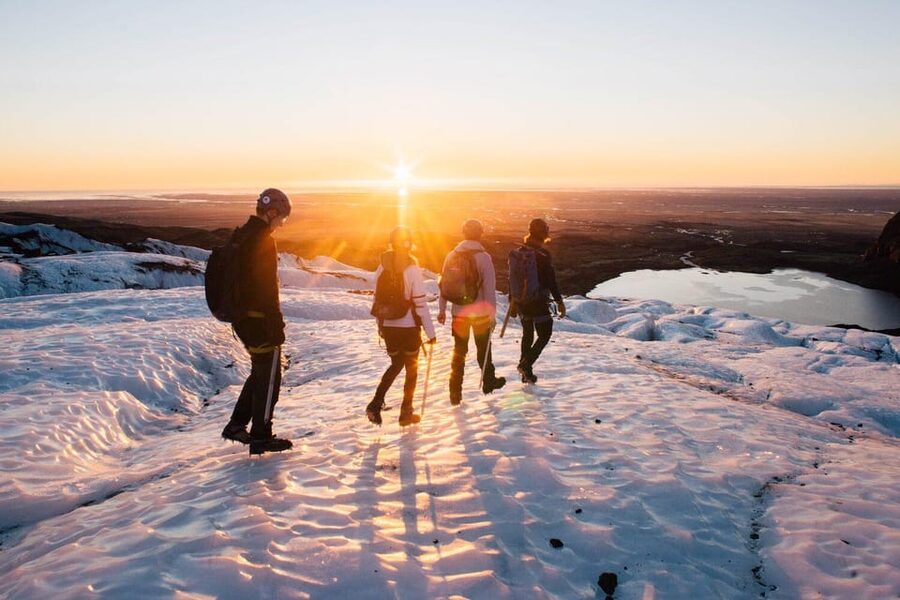
Icelandic weather can change quickly, and the glacier adds cold, wind, and wet surfaces. Bring warm clothing, a hat, gloves, and hiking shoes. Dress in layers, with a waterproof outer layer.
One important lesson from the outing is that a single waterproof jacket may not be enough in stormy weather. You can be drenched by the end, so pack serious rain protection and spare dry clothing in your vehicle or accommodation.
Gloves serve two purposes. They keep your hands warm, and they protect them from sharp ice edges. Sandals and flip flops are not allowed, and open-toed shoes are unsuitable.
Sturdy hiking boots with ankle support are mandatory. If you do not have suitable boots, you can rent them for 1,500 Icelandic króna. Check the sizing before you arrive: the specialized crampons fit EU shoe sizes 35 through 50. The minimum shoe size is 35.
The minimum age is eight. The tour works well for families with older children and teenagers, provided everyone can manage the walk and follow instructions. Young children under eight cannot join.
Returning across the park to Skaftafell
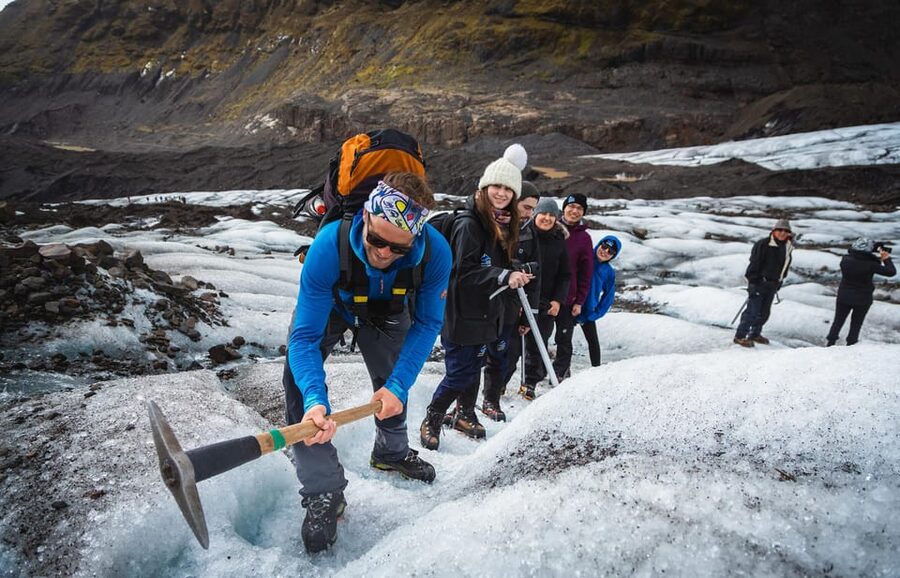
After the glacier walk, you remove the crampons and walk back toward the vehicle, with roughly another 30 minutes on foot. The return can feel easier because the main excitement is behind you, but fatigue may show up here, especially after a warm or wet day.
The 4×4 ride takes you back to the base camp, with the full activity lasting about four hours. Allow a little flexibility around the advertised finish. A large group, slow equipment fitting, or changing conditions can push the return later than planned.
There is no food or drink included. Eat beforehand and bring water and snacks. You will be outside for several hours, and the combination of cold, walking, and heavy clothing can use more energy than expected.
Is $116 good value for a glacier walk?
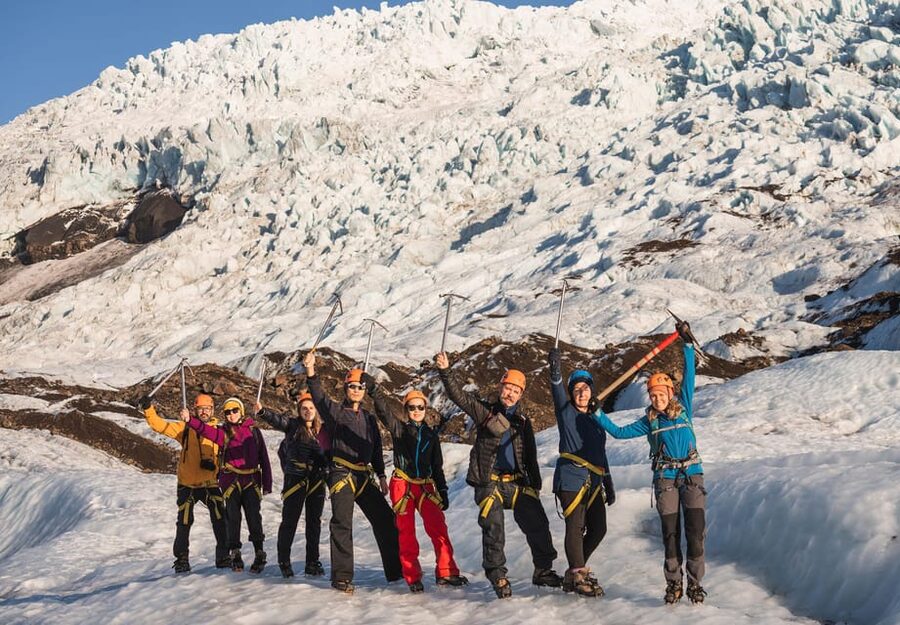
At $116 per person, this is not a cheap walk in the park. You are paying for a certified glacier guide, specialist safety equipment, a national park fee, and a 4×4 transfer into difficult terrain.
I think the price is fair if you want a real glacier experience but do not own crampons or have technical training. Buying or renting all the equipment separately would not make sense for a single holiday activity, and the guide is what makes the crevasses and icefall accessible in a controlled way.
The value is weaker if you mainly want a quick photo near ice. A viewpoint around Skaftafell costs less effort and gives you a broad view, but it cannot show you the texture, sound, and movement of the glacier from under your boots.
Some people may also find the activity pricey for a 1.5-hour glacier section. Keep the full structure in mind: the four-hour outing includes the briefing, gear fitting, transfers, approach walks, and return. If you want a longer or more demanding day on the ice, an intermediate or extreme option may suit you better, but those are not the experience described here.
Free cancellation up to 24 hours before departure and reserve-now, pay-later booking add useful flexibility when Icelandic weather and road plans are uncertain.
Who should book this Falljökull hike?
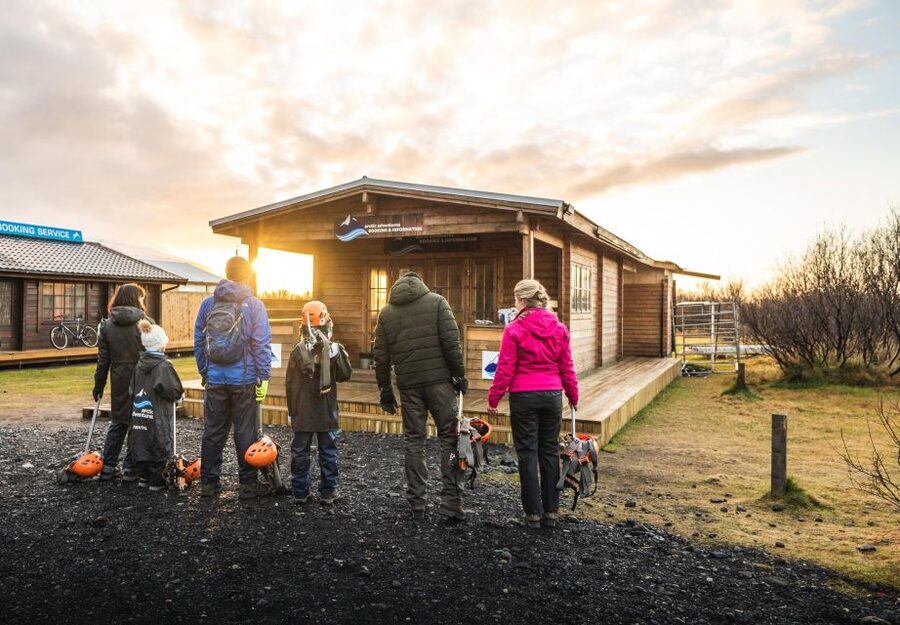
I would choose this for a first glacier experience, a family with children age eight and up, or anyone who wants a guided adventure without prior ice skills. It is also a strong choice for a road-trip stop at Skaftafell, since the meeting point is already inside the national park.
You should be comfortable walking about three kilometers over uneven ground. You do not need to be an experienced hiker, but you should not expect a flat, easy stroll. Short climbs, crampons, cold, rain, and bulky gear are part of the deal.
Photographers will enjoy the blue ice, crevasses, icefall, and mountain views, though protecting your camera from rain is wise. If you want photos of yourself, ask your guide for help at suitable stopping points rather than trying to manage everything while walking.
The tour also suits people who want context, not just scenery. Guides explain how glaciers form, move, and change, and several have connected the ice to Icelandic history and environmental change. The melting glacier can be a sobering subject, but it gives the outing more meaning than a simple outdoor thrill.
Should you book it?
Book this tour if you want to stand on Vatnajökull safely, see blue ice and crevasses up close, and learn how a glacier behaves from a certified guide. The route is accessible to beginners, and the equipment package removes much of the fuss.
Skip it if you dislike wet weather, uneven walking, or group activities, or if you want a long, strenuous glacier expedition. Also check your boots and shoe size before paying. For most visitors building a South Coast itinerary, this is a memorable use of four hours and one of the clearest ways to experience Iceland’s ice rather than simply look at it.
FAQ
Where does the glacier hike meet?
Meet at the Arctic Adventures Booking Hut in Skaftafell National Park. Arrive 10 to 15 minutes before the scheduled departure.
How long does the activity last?
The experience lasts about four hours. That includes the equipment briefing, 4×4 transfers, approach walks, the guided glacier section, and the return to the base camp.
How far is Skaftafell from Reykjavík?
Skaftafell is approximately 327 kilometers, or 203 miles, from Reykjavík. The drive takes about four and a half hours in good weather.
Are hiking boots included?
No. Sturdy hiking boots with ankle support are required, but they are not included. Suitable boots can be rented for 1,500 ISK.
What shoe sizes fit the glacier crampons?
The specialized glacier crampons are available for EU shoe sizes 35 through 50. The minimum shoe size for the tour is EU 35.
Is previous glacier hiking experience required?
No. The tour is beginner-friendly, and the guide teaches you how to walk safely with crampons. You should still be prepared to walk about three kilometers over uneven terrain, including short uphill sections.
What equipment is included?
The tour provides glacier crampons, an ice pick, a helmet, and a harness. It also includes a certified glacier guide, the 4×4 transfer from Skaftafell to the glacier edge, and the Vatnajökull National Park fee.
Newest write-ups around Reykjavik
- Private Snæfellsnes National Park★ 5.0 · 3 reviews
- Private South Coast tour with Glacier walk★ 5.0 · 3 reviews
- Exclusive Westman Islands Adventure – A Private Day Tour★ 5.0 · 3 reviews
- Blue lagoon Premium and Private Golden circle tour★ 5.0 · 3 reviews
- Private Superjeep Tour To Landmannalaugar and Hekla Volcano★ 5.0 · 3 reviews
- Private South Coast Tour: A Journey to Iceland’s Stunning Shore★ 4.5 · 3 reviews
- Reykjavik: PRIVATE Golden Circle tour with 5 TOP stops★ 5.0 · 3 reviews
- Sólheimajökull Glacier Hiking Tour★ 3.7 · 3 reviews
Glacier Tours, compared.
South Coast Waterfalls, Black Sand & Glacier Tour
Read our review →
Skaftafell National Park: Falljokull Glacier Easy Hike
Read our review →
Golden Circle and Glacier Snowmobiling Day Trip from Reykjavik
Read our review →
Glacier Hike, Waterfalls and Black Sand Beach
Read our review →
Browse the lists this tour appears in