
Review · PUFFIN TOURS
Reykjavik: 1-Hour Puffin Watching Tour
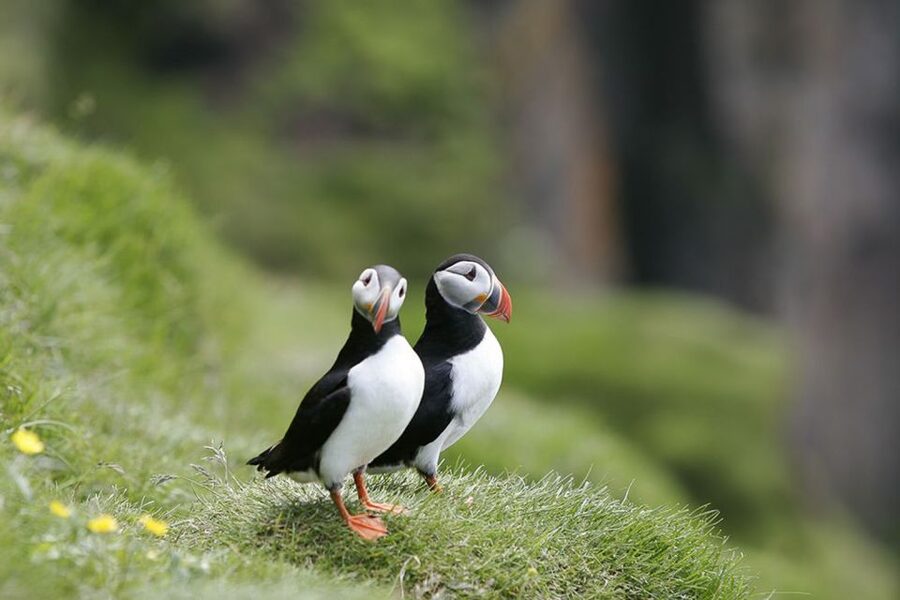
Reykjavik’s puffin tour is a short, focused boat trip to the small islands where these comic-looking seabirds breed. You stay aboard, circle the rocky shores, and watch puffins land, fly, swim, and gather near their burrows. Free binoculars make a real difference because puffins are smaller than many first-time visitors expect.
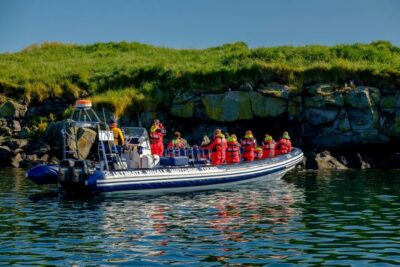
I like the simple setup: the harbor is a short walk from downtown, and the crew supplies warm overalls, raincoats, blankets, and even binoculars. I also like the calm, wildlife-first approach, with guides explaining puffin life and sometimes shutting off the engines so you can hear the birds. The main thing to consider is distance. You get close to the islands, but not necessarily close enough for sharp phone photos with the naked eye, and tides, weather, and the season affect the view.
In This Review
- Key points to know before sailing
- From Ægisgarður 5 to Reykjavik’s bird islands
- Choosing between Akurey, Engey, and Lundey
- Puffin watching from the boat
- More than puffins: the other birds around the islands
- A small boat, open views, and sensible comfort
- Why the environmentally friendly approach matters
- How tides, weather, and season shape the experience
- Is $66 a fair price for one hour?
- Who should book this puffin cruise?
- Should you book it?
- FAQ
- Where does the puffin tour depart from?
- How long does the tour last?
- Which island will the boat visit?
- Can I get off the boat on the islands?
- Are binoculars provided?
- What birds might I see besides puffins?
- What should I wear and bring?
Key points to know before sailing
- The puffins stay on the islands: You watch from the boat rather than walking ashore, which protects nesting birds and keeps the outing easy.
- Akurey, Engey, or Lundey is the target: The captain chooses among these islands based on tides and weather.
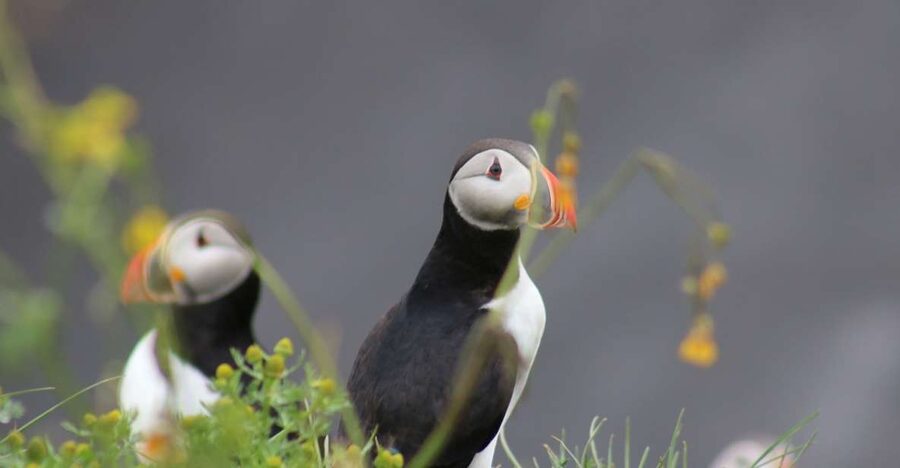
- Binoculars are included: Borrow a pair on board, since puffins can look like small black-and-white dots without them.
- The boat ride is part of the experience: You get harbor and bay views, with roughly 15 minutes out, about 30 minutes watching birds, and roughly 15 minutes back on the stated itinerary.
- Other seabirds add variety: Look for eider ducks, Arctic terns, guillemots, cormorants, fulmars, geese, and oystercatchers.
- Weather decides a lot: Bring proper outdoor clothing, even though warm gear is available on board.
From Ægisgarður 5 to Reykjavik’s bird islands
You check in at Elding’s ticket office at Ægisgarður 5, in the harbor area about 300 meters, or roughly five minutes, from central Reykjavik. This is convenient if you are staying downtown, though parking can be difficult, so I would not leave arrival until the last minute.
The harbor itself gives you something to do before departure. You can look around the Whale Watching Centre, watch short videos, inspect whale skeletons, or browse the information boards and shop. That makes an early arrival worthwhile, especially if you are fitting this trip between other Reykjavik plans.
The boat ride begins with a short run out across the bay. The stated itinerary allows about 15 minutes to reach the bird-viewing area, followed by 30 minutes around the island and another 15 minutes back. The wider description calls it a 1.5-hour cruise, and some departures have lasted around 1 hour 20 minutes, so allow more than exactly 60 minutes when planning your day.
That extra margin matters if you have a museum booking, airport transfer, or another excursion immediately afterward. The central idea is still a compact outing, but boat trips do not always run to the minute.
More puffin boats out of Reykjavik:
- Reykjavik: Puffin Watching Boat Tour
★ 4.6 · 1,052 reviews - Puffin and Volcano Tour with Ebbi
★ 5.0 · 731 reviews - Puffin Cruise with Expert Tour Guide from Reykjavik
★ 4.5 · 636 reviews
Choosing between Akurey, Engey, and Lundey
The captain heads for Akurey, Engey, or Lundey, depending on conditions. These islands are known for birdlife, but the exact island is not something you choose in advance. Tides affect how close the boat can come to the rocky shore, while wind and sea conditions shape the route.
Lundey is listed in the detailed itinerary, but the operation can use any of the three islands. That flexibility is sensible. The best wildlife stop is the one offering safe access and a good view on the day, rather than a fixed promise to visit one particular island.
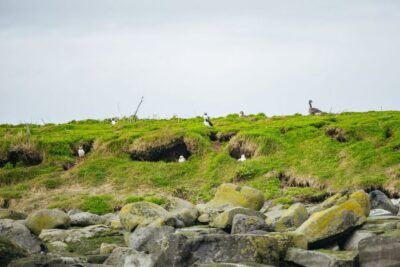
The islands are breeding grounds, not visitor attractions with paths and viewing platforms. You do not land. Instead, the captain positions the boat near the shore while the guide points out birds gathered around burrows, on the water, or in flight.
At high tide, the boat may be able to get closer to the small islands. At low tide, the captain may have to remain farther out. One useful booking tip is to ask which departure times coincide with higher tide if getting near the nesting cliffs matters most to you.
Puffin watching from the boat
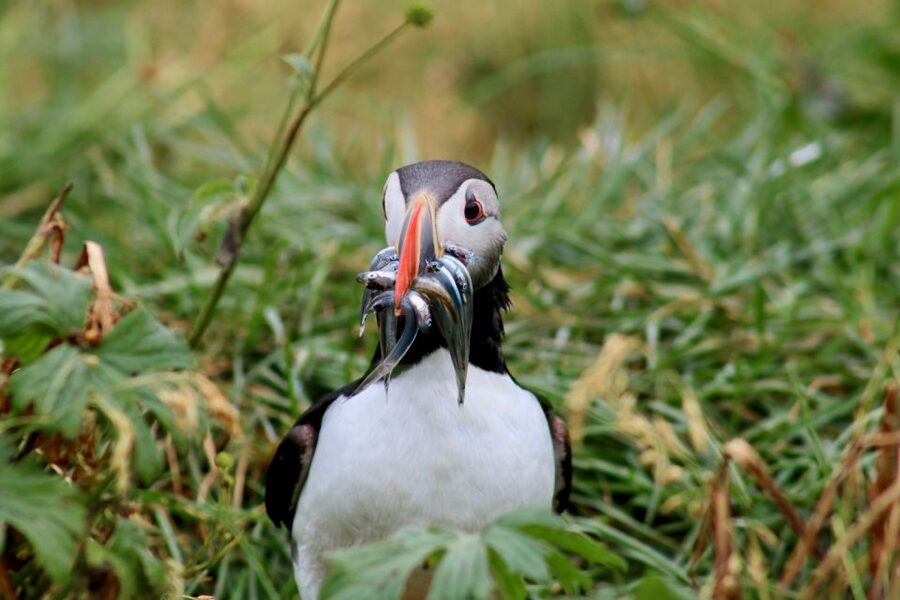
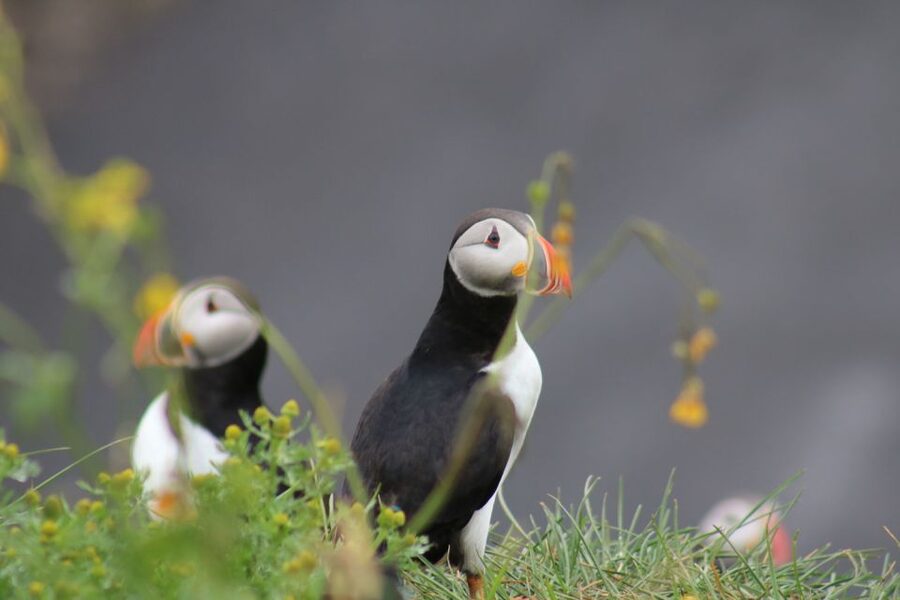
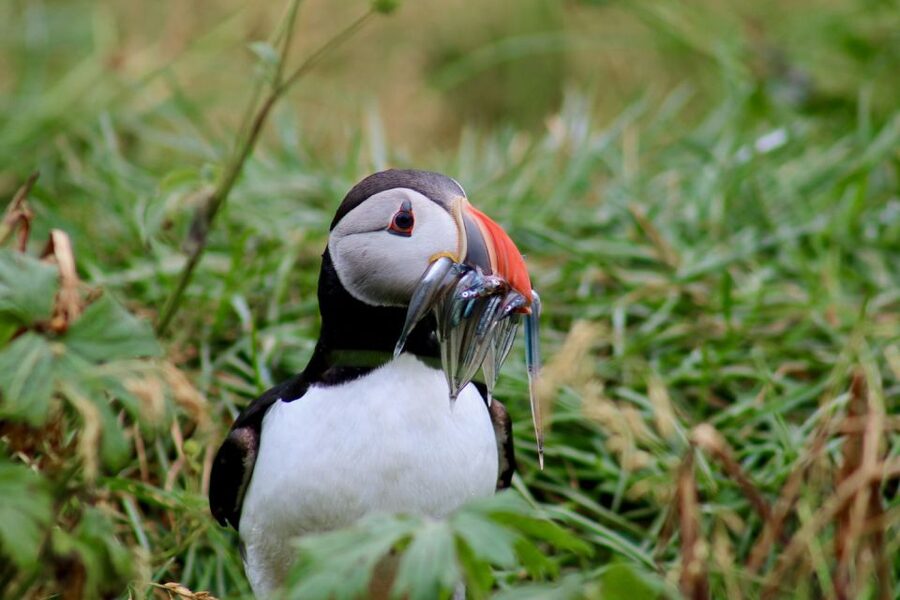
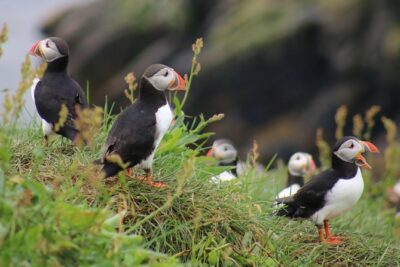
Puffins are the main event, and the best part is seeing their different behaviors rather than only one static view. You might watch them sitting near burrow entrances, skimming over the water, swimming, fishing, or flying close to the boat.
During breeding season, the puffin’s bright bill contrasts with its black-and-white body. The familiar colors are easy to recognize in photographs, but the real birds are surprisingly small. From the boat, the naked-eye view may be more about movement and numbers than fine detail.
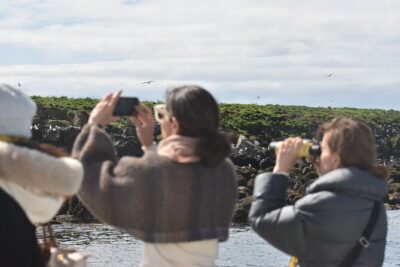
That is why I would borrow the onboard binoculars as soon as they are offered. They let you pick out puffins at the burrows and follow birds moving through the air. A phone held against the binocular lens can produce a better record than a standard phone photo, although keeping the image steady takes patience.
You can also bring your own binoculars and camera. A good camera with a useful zoom is far more helpful than a basic phone, particularly in cloudy weather or when the boat cannot approach closely. Still, do not judge the outing only by the quality of your pictures. The experience is about watching a live colony without stepping into its space.
The guide may take photographs during the trip and share them afterward. That can be a welcome bonus, since it lets you watch the birds instead of spending the whole stop trying to frame a tiny moving subject. If you are counting on guide photographs, ask the crew how they will be distributed before leaving the harbor.
More than puffins: the other birds around the islands
Puffins share these islands with a long list of seabirds. Keep your eyes open for eider ducks, Arctic terns, guillemots, cormorants, fulmars, geese, and oystercatchers.
This wider cast makes the trip worthwhile even during an early or late part of the puffin season, when the number of puffins can vary. One May outing had many other seabirds while puffins were still arriving, and older sightings include birds feeding around the boat and even seals and dolphins.
The naturalist guide gives the birds context. You may hear about what puffins eat, how many eggs they lay, how long they live, how far they can go underwater, and which animals threaten them. Guides also explain what you are looking at, which is valuable when several dark birds are moving across gray water.
Frida, one guide praised for a particularly detailed presentation, combined bird facts with stories about the islands and puffin behavior. The exact guide changes, but the tour is conducted in English and includes a live guide rather than leaving you to identify birds on your own.
More Reykjavik departures worth comparing
- 1-Hour Helicopter Tour in Iceland: The Geothermal Tour
★ 4.9 · 263 reviews - 1-Hour Small Group Sightseeing Boat Tour in Vestmannaeyjar
★ 5.0 · 127 reviews - 1 hour Buggy adventure – From Reykjavik
★ 5.0 · 82 reviews - Was James Bond Icelandic? Ticket with One Hour Lecture
★ 5.0 · 39 reviews
A small boat, open views, and sensible comfort
The boats used for this trip give you room to move around and search for the best viewing angle. Several outings had groups small enough for people to spread out without fighting for a single railing position. The boat is also large enough to feel steady and comfortable, while still allowing a useful view of the islands.
Conditions can change quickly in Reykjavik Bay. A calm, sunny outing may feel easy, but cold drizzle, wind, or a rougher sea can make the same route much less pleasant. The crew supplies warm overalls, raincoats, and blankets, and you can buy refreshments on board. Seaman’s coffee is available as a warming touch, though refreshments are not included in the ticket.
I would still wear layers and weather-ready shoes. The supplied gear helps, but it does not replace a warm base layer, hat, and gloves when the boat is moving. High-heeled shoes are not allowed, and large bags or luggage should be left behind.
If you are prone to motion sickness, plan ahead. Motion sickness pills have been available on some departures, but you should not treat that as a guarantee. The sea can be calm or rough, and the open bay offers little shelter from movement.
Why the environmentally friendly approach matters
The tour keeps you on the boat and avoids sending people onto nesting islands. That is important during the breeding season, when disturbance near burrows can cause problems for birds and their young.
The captain knows where to position the boat along the rocky shore. If conditions allow, the engines may be turned off so you can listen to the bird calls. This creates a quieter viewing moment and reduces unnecessary noise around the colony.
Your ticket also supports summer research projects, responsible tourism, and organizations working to protect wildlife. That does not turn a brief sightseeing trip into a conservation project, but it does give the outing a useful purpose beyond taking pictures.
The best behavior is simple: keep your voice down near the birds, follow crew instructions, and resist the urge to demand a closer approach. A responsible wildlife tour accepts that the animals set the terms.
How tides, weather, and season shape the experience
Puffin watching is not a controlled show. Weather can make the sea rough, cloud the view, or keep the boat farther from shore. Tides can affect the approach, and bird numbers change as the season progresses.
The main viewing season is tied to puffin breeding activity. Early in the season, puffins may still be arriving, while later trips can still produce good sightings even after the busiest period. Recent outings in May, June, July, and August have produced plenty of puffins, though no departure can promise the same number.
Sunny weather helps with photographs, but cloudy skies do not automatically ruin the trip. Puffins remain visible with binoculars, and other seabirds can keep the outing active. The real weak point is not always the number of birds. It is often the distance between your camera and a small bird on a dark, rocky island.
For the clearest expectations, think of this as a good chance to see puffins in their natural setting, not a guarantee of close-up wildlife portraits. If your priority is simply seeing the species, this format works well. If you want frame-filling photographs of puffins standing at your feet, this is the wrong kind of trip.
Is $66 a fair price for one hour?
At $66 per person, this is not a bargain in ordinary terms, but Iceland prices make the comparison more realistic. You are paying for a boat, captain, guide, wildlife interpretation, loaner binoculars, warm gear, and access to breeding islands that you cannot visit independently.
The short length helps if you have only a few hours in Reykjavik. You can add it to a day of city sightseeing without giving up most of your schedule. The tradeoff is that the boat spends much of the outing traveling to and from the islands, leaving about 30 minutes for focused viewing on the stated plan.
I see the value most clearly for first-time puffin watchers and people without their own transport or binoculars. You arrive at the harbor, board, receive the gear you need, and get a guided introduction to several species in one compact trip.
The value is weaker if you already have a longer wildlife cruise booked, own strong binoculars, or want a dedicated photography session. You may prefer a smaller boat for closer photographic angles, but this tour offers a more spacious and comfortable setup.
Who should book this puffin cruise?
I would recommend it to you if you want a quick Reykjavik wildlife outing with a strong chance of seeing puffins and no need to plan a full day around it. Families, couples, solo visitors, and cruise passengers can all fit this easily into a city stay.
It also suits anyone who likes learning while looking. The guide’s stories give meaning to the birds, and the extra species make the trip more than a single-bird hunt.
You should think twice if you need wheelchair access, since the tour is not suitable for wheelchair users. You should also reconsider it if you dislike open-water movement, cannot tolerate cold weather, or need guaranteed close photographic views.
Arrive early, especially if you need to park. Wear outdoor clothing, leave large bags behind, and ask about high-tide departure times if the closest possible island approach is important to you.
Should you book it?
Book this tour if you want to see puffins from Reykjavik in a short, well-supported outing. The free binoculars, warm clothing, friendly guides, and variety of seabirds make it easier and more comfortable than arranging wildlife viewing on your own.
Just set the right goal. You are going to watch a wild colony from the water, not walk among tame birds. With that expectation, the tour offers a memorable look at puffins, good harbor scenery, and a responsible way to visit their breeding grounds for $66.
FAQ
Where does the puffin tour depart from?
Check in at Elding’s ticket office at Ægisgarður 5, 101 Reykjavik. It is about 300 meters, or five minutes on foot, from the downtown area.
How long does the tour last?
The activity is sold as a one-hour tour, with about 15 minutes sailing out, 30 minutes viewing birds, and 15 minutes returning. Some departures can last around 1 hour 20 minutes, while the wider cruise description allows up to 1.5 hours.
Which island will the boat visit?
The boat may visit Akurey, Engey, or Lundey. The captain chooses according to tides and weather conditions.
Can I get off the boat on the islands?
No. You remain on the boat and watch the puffins along the rocky shores of their breeding islands.
Are binoculars provided?
Yes. Binoculars are available to borrow on board. They are especially useful because puffins are small and may be some distance from the boat.
What birds might I see besides puffins?
You may see eider ducks, Arctic terns, guillemots, cormorants, fulmars, geese, and oystercatchers. Seals and dolphins have also been seen on some outings, but they are not guaranteed.
What should I wear and bring?
Bring weather-appropriate clothing. Warm overalls, raincoats, and blankets are available on board, and refreshments can be purchased. High heels, luggage, and large bags are not allowed.
Newest write-ups around Reykjavik
- Private Snæfellsnes National Park★ 5.0 · 3 reviews
- Private South Coast tour with Glacier walk★ 5.0 · 3 reviews
- Exclusive Westman Islands Adventure – A Private Day Tour★ 5.0 · 3 reviews
- Blue lagoon Premium and Private Golden circle tour★ 5.0 · 3 reviews
- Private Superjeep Tour To Landmannalaugar and Hekla Volcano★ 5.0 · 3 reviews
- Private South Coast Tour: A Journey to Iceland’s Stunning Shore★ 4.5 · 3 reviews
- Reykjavik: PRIVATE Golden Circle tour with 5 TOP stops★ 5.0 · 3 reviews
- Sólheimajökull Glacier Hiking Tour★ 3.7 · 3 reviews
Puffin Tours, compared.

Puffin Cruise with Expert Tour Guide from Reykjavik
Read our review →
Classic Puffin Watching Cruise from Downtown Reykjavík
Read our review →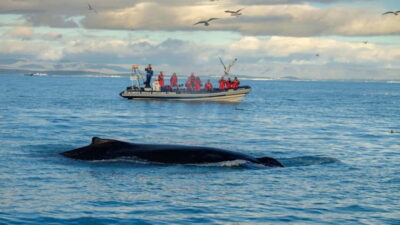
Premium Small-Group Puffin & Bird Watching tour from Reykjavík
Read our review →Browse the lists this tour appears in