
Review · VOLCANO & LAVA TOURS
From Reykjavík: The Lava Tunnel tour with Round-trip Transfer
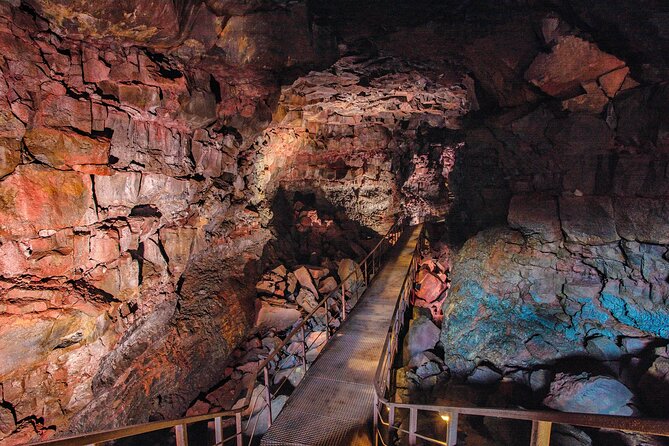
Raufarhólshellir is not a polished show cave. It is a dark, rough lava tube where you may stoop, scramble, and crawl beneath Iceland’s volcanic crust. The best moment comes when the guide switches off every light and you experience total blackness, with only the cave’s silence around you.
I like the simple half-day format and the fact that round-trip transport, a certified guide, helmet, headlamp, and other caving gear are included. I also like the science lesson: the colors, textures, and shapes in the rock help explain how different eruptions shaped the tunnel. The main drawback is physical. Parts of the route are uneven, wet, slippery, and low, so this is not a good choice if you have serious knee or back trouble, poor balance, or a strong fear of tight spaces.
In This Review
- Key points to know before booking
- Why this lava tunnel feels different from a regular cave tour
- The ride from Reykjavík to Raufarhólshellir
- Getting equipped before you enter
- Walking and crawling through the lava tube
- What you see on the walls and ceiling
- The guide and the value of the explanation
- Timing, cost, and what the $114.65 includes
- Who should book this adventure
- Should you book the Raufarhólshellir tour?
- FAQ
- How long does the lava tunnel tour take?
- Where does the tour visit?
- What time does pickup begin?
- Is pickup available from every Reykjavík hotel?
- What equipment is provided?
- What should I wear and bring?
- Is there a minimum age?
Key points to know before booking
- The cave is Raufarhólshellir, about a 45-minute drive from Reykjavík, making this an easy half-day outing.
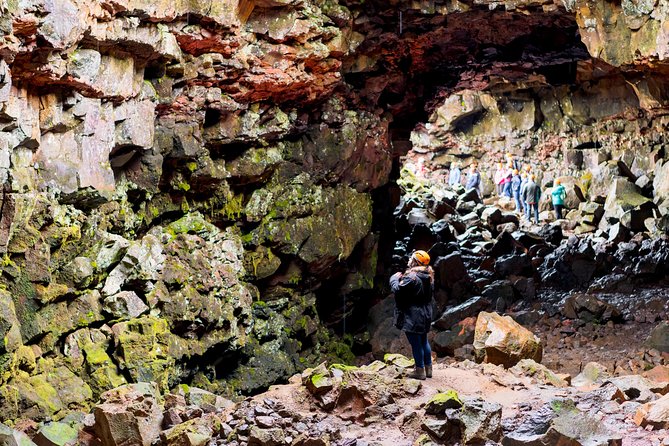
- Expect real caving, including stooping and crawling through some sections, not just a short walk into a large cavern.
- Your equipment is supplied, but you still need sturdy hiking shoes, gloves, and warm waterproof clothing.
- The guide makes the difference, explaining lava tubes, rock types, ice, and Iceland’s volcanic past in English.
- The full experience lasts about three hours, with pickup and return from an approved Reykjavík stop.
- The group can reach 28 people, although some departures are much smaller and feel more personal.
Why this lava tunnel feels different from a regular cave tour
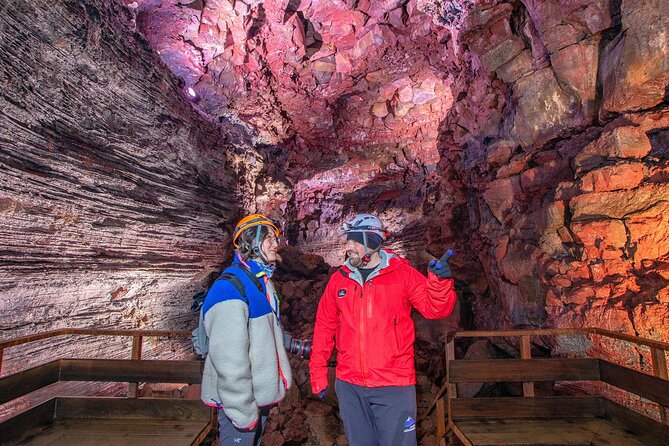
A lava tube forms in a very different way from a limestone cave. During an eruption, the outer layer of lava cools and hardens while hotter magma continues to flow beneath it. When the eruption ends and the molten rock drains away, a hollow passage can remain.
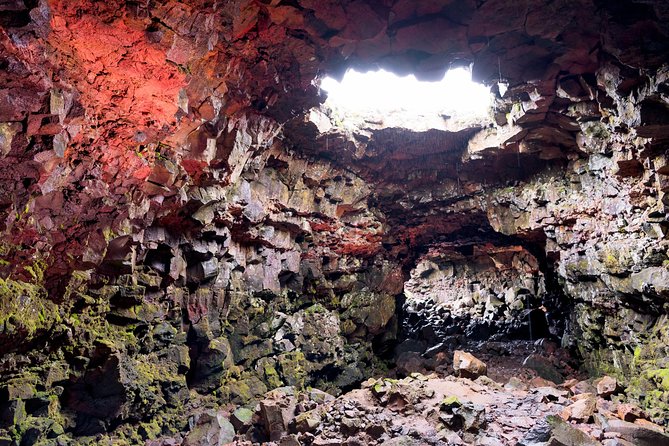
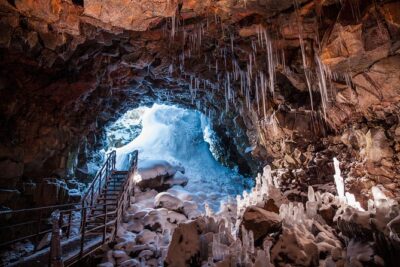
That process explains the look of Raufarhólshellir. You are not walking among smooth, water-carved chambers with grand columns. Instead, you see rough walls, folded surfaces, lava streams, and small formations still taking shape. Some areas may show new stalactites and stalagmites, along with ice created as snowmelt filters down from above.
The cave’s rough surfaces also absorb sound. Do not expect a dramatic echo. In places, the silence feels almost complete, especially when the guide turns off the lights. That short blackout is not a gimmick. It gives you a clear sense of how completely dependent you are on your headlamp underground.
I find the geology more interesting when you look for the signs of different eruptions. Your guide points out changes in color and texture, then connects those details to the way lava moved and cooled over time. The lesson turns an unusual walk into a better way to understand Iceland’s volcanic forces.
More volcano and lava days:
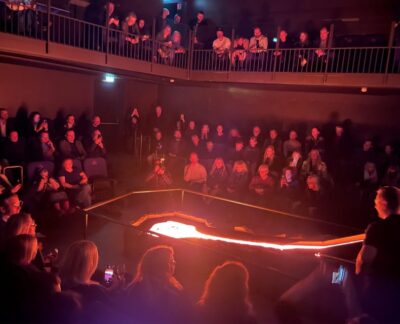
- Reykjavik: LAVA SHOW – Immersive Experience Entry Ticket
★ 4.8 · 3,360 reviews - Lava Show Reykjavik Admission Ticket – Optional Premium Upgrade
★ 5.0 · 3,278 reviews - Reykjavik: Red Lava Horse Riding Tour
★ 4.8 · 2,383 reviews
The ride from Reykjavík to Raufarhólshellir
The tour begins at 8:00 in the morning, with pickup by air-conditioned minivan. The drive to the cave takes roughly 45 minutes, though weather and road conditions can affect the timing. Wi-Fi is available on board, which is useful if you want to check plans for the rest of the day.
Pickup is not available at every Reykjavík hotel. City-center traffic rules prevent direct service to many hotels and private apartments, so you need to choose an approved stop. Options include Hallgrímskirkja, the BSÍ Bus Terminal, City Hall, Höfðatorg, Miðbakki, and several hotels outside the most restricted central area.
Check your pickup point carefully before departure. This is the sort of small detail that can turn a relaxed morning into a sprint across town. If your accommodation is not on the list, select the closest approved stop and allow extra time to get there.
The ride itself is part of the experience. As Reykjavík gives way to open country, your guide explains how the lava field and tunnel were formed. On a foggy or wet morning, the approach can feel stark and atmospheric. On a clear day, the mountains around the cave make a fine backdrop for photographs before you go underground.
Getting equipped before you enter
At the cave, you put on the supplied caving equipment. This includes a helmet with a headlamp, along with other specialist gear suited to the conditions. In winter, crampons may be provided when ice makes the approach or cave floor more difficult.
You still need to dress properly. Bring warm outdoor clothing, a waterproof jacket and pants, headwear, gloves, and good hiking shoes. The equipment protects your head and helps with the conditions, but it does not replace footwear with firm grip or gloves that let you brace yourself against rough rock.
This is not the place for city sneakers. The floor can be uneven, wet, and slippery, and some sections require you to place your hands on the ground. Knee pads are a sensible extra if you have them, particularly if you expect to use the lower passages.
A safety briefing comes before the group enters. Listen closely. The guide explains how to move through the tunnel and what to expect from the narrow sections. The route can be demanding without being an athletic contest. You set a steady pace, follow instructions, and take care with every step.
Walking and crawling through the lava tube
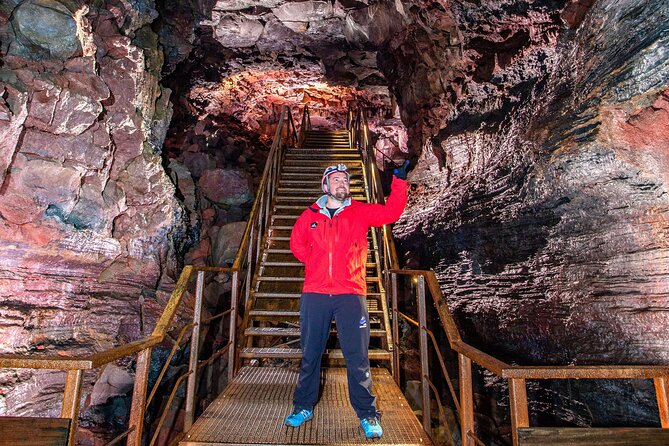
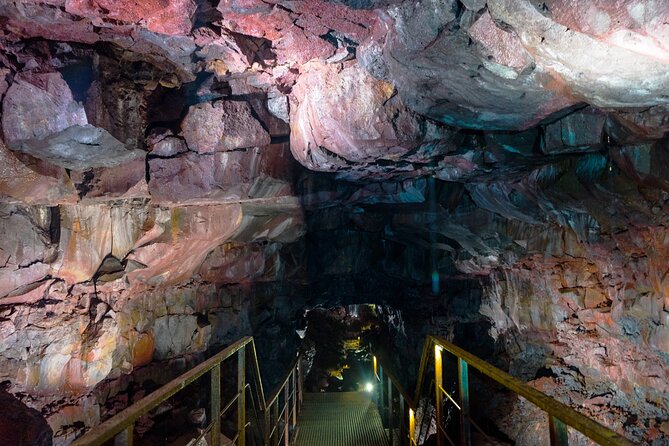
The entrance is close to the visitor center, reached by a short walk across the lava field. A staircase leads down into the tunnel. From there, the route follows a raised path in places, passing fallen rock and hardened lava residue.
Much of the walk may require only mild crouching, and some areas are high enough for you to stand. Still, the route is not uniform. You may spend long stretches hunched over, then come to a low opening where you need to crawl. Some groups have a choice near the end: return by the way they came or take a tighter route that requires getting down on your stomach in a few spots.
That variation is central to the appeal, but it also sets this tour apart from an easy sightseeing stop. If you are over 40, age alone does not rule it out. The more useful questions are whether you can bend, crouch, crawl, and manage rough ground for part of an hour or more. People with back, knee, or joint problems should think carefully before booking.
Claustrophobia also matters. The cave is not narrow at every point, and much of it may feel open enough to stand. Yet the low passages are genuine. Tell your guide if you are nervous. A calm guide can help you through the tighter areas, but no guide can remove the basic nature of the cave.
The small-group promise is worth understanding. The maximum listed group size is 28, though some departures have only four people and others around 13. A smaller group gives you more room underground and makes it easier to hear explanations or ask for help. If the minivan is full, the cave may feel more crowded in its tightest sections.
More Reykjavik departures worth comparing
- Reykjavik: Sky Lagoon Admission with Transfer
★ 4.8 · 2,388 reviews - Reykjavík: Golden Circle Minibus Tour & Blue Lagoon Transfer
★ 4.9 · 546 reviews - Airport Transfer in Iceland from Keflavik Airport to Reykjavik City With Hotel Drop Off
★ 4.0 · 464 reviews - The Lava Tunnel Tour with Transfer from Reykjavik
★ 4.5 · 435 reviews
What you see on the walls and ceiling
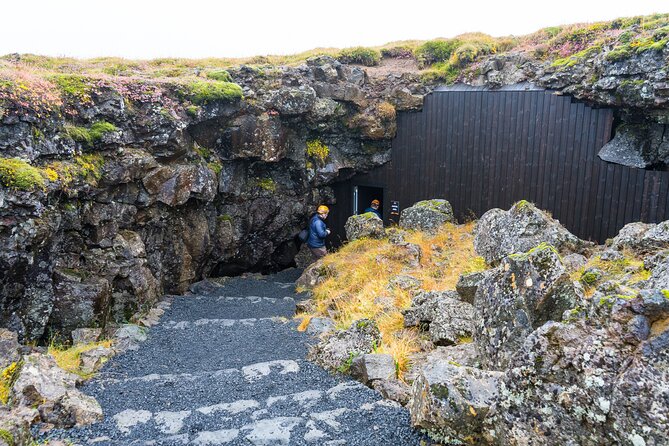
Raufarhólshellir is more about texture and atmosphere than bright color. The rock can appear brown, gray, black, or subtly red, with different lava flows visible in the walls and ceiling. Look for rippled surfaces and hanging shapes that show where molten rock once moved.
You may also see lavatites, ice formations, and small round ice balls formed as snow melts above the tunnel. These details change with the season. Winter can bring more ice and slippery conditions, while a summer visit may offer a different view of the cave without the same covering of snow.
The tunnel is surprisingly quiet. Its irregular walls prevent the clear echoes you might expect, so your group’s voices can fade quickly. When the headlamps go out, even a few seconds in the dark reset your sense of the cave’s size. It is a small feature of the tour, but one of its most memorable.
Photography is possible, though not always easy. You are moving over rough ground, wearing a helmet, and often using both hands for balance. Stop only when the guide says it is safe and be ready for some blurry or dark images. I would treat the camera as a bonus and pay attention to the cave itself.
The guide and the value of the explanation
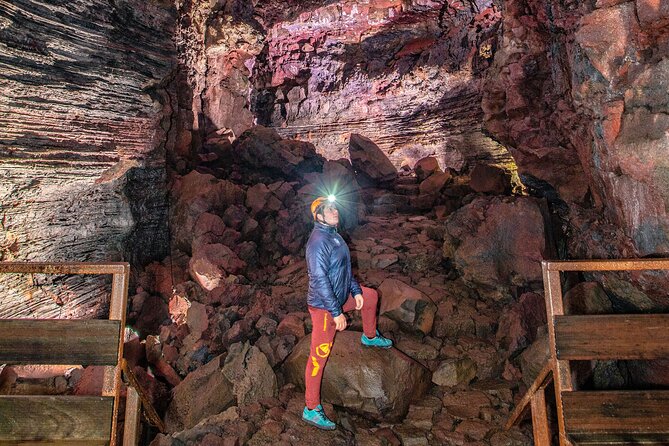
A good cave guide does more than lead the way. The guide explains how the lava tube formed, identifies different rock formations, keeps the group together, and helps you judge each awkward step. Guides associated with this experience include Jonas and Paulina, both noted for combining geology with broader explanations of Iceland.
That wider context is useful during the drive and underground. You learn not only what a particular formation looks like, but also how Iceland’s eruptions have changed the ground beneath the country. The guide may also explain why the cave has ice in one section, how lava residue formed, or why the tunnel does not echo in the way a limestone cavern might.
The strongest part of the guiding is practical. You need someone who will tell you where to duck, where the rock is slick, and when a narrow passage is optional. The supplied headlamps are important, but the guide’s additional torches help illuminate features and make the route easier to follow.
English is the language offered. The tour’s small-group design can make the lesson feel more like a field trip than a large bus excursion. If the full 28-person capacity is reached, that personal feel will be reduced, but the certified guide and safety briefing remain important advantages.
Timing, cost, and what the $114.65 includes
At $114.65 per person, this is not Iceland’s cheapest short outing. The value depends on how much you would otherwise pay for transport, equipment, and a guided activity. Here, the price includes pickup and return, the minivan, Wi-Fi, a certified guide, and all necessary caving gear.
The three-hour length works well for a first or last morning in Reykjavík. You get a volcanic experience outside the city without using a full day, and you should still have time to explore Reykjavík afterward. That short format is a good fit if your schedule includes other major outings.
Food and drinks are not included, so eat before pickup or carry something suitable if you need it. There are no services out in the cave area, so do not expect to buy lunch or refreshments at the site.
The tour is often booked well ahead, with an average booking point of about 47 days in advance. That does not guarantee every departure sells out, but it suggests you should not leave it until the final morning of your trip, especially if you need a particular date.
Free cancellation is available until 24 hours before the start time for a full refund. Changes made inside that 24-hour window are not accepted, and a weather cancellation results in either another date or a full refund.
Who should book this adventure
I would recommend this tour to you if you want an active, unusual outing that stays close to Reykjavík. It suits families with children aged six and older, provided everyone can handle uneven ground and the adults are comfortable supervising young cavers.
It also works well for curious first-time visitors who want more than a scenic drive. You get a clear lesson in volcanic geology, a short walk through a real lava tube, and the odd thrill of moving through darkness with only a headlamp.
You should think twice if you need flat paths, have trouble getting up from the floor, or dislike enclosed spaces. The cave is not simply a few steps inside the entrance. Crawling and prolonged crouching are part of the route, and the floor may be wet and slick.
I would also lower expectations if you have explored many large limestone caves in other countries. Raufarhólshellir is more modest in size and can seem monochromatic beside enormous cave systems filled with elaborate formations. Its appeal is the volcanic origin, the raw ground, the silence, and the chance to see how a lava tube differs from a water-formed cave.
Should you book the Raufarhólshellir tour?
Book it if you want a compact volcanic adventure with transport handled for you and a guide to make sense of what you see. The blackout, rough lava textures, winter ice, and occasional crawling give the outing a stronger sense of adventure than a normal cave walk.
Skip it if you are seeking a grand cavern, a fully accessible path, or a relaxed attraction that requires no bending. Bring proper shoes and gloves, choose your pickup point with care, and be honest about your fitness and comfort in confined spaces.
For the right person, the $114.65 price is fair because it covers the parts that are hard to arrange independently. You are buying not only entrance to the tunnel, but also transport, safety equipment, and an explanation of the strange underground world beneath Iceland.
FAQ
How long does the lava tunnel tour take?
The experience lasts approximately three hours, including transport between Reykjavík and Raufarhólshellir.
Where does the tour visit?
The itinerary visits Raufarhólshellir, an Icelandic lava cave outside Reykjavík.
What time does pickup begin?
The listed start time is 8:00 am.
Is pickup available from every Reykjavík hotel?
No. Pickup is limited to the approved locations on the pickup list. Hotels in the city center and private Airbnb addresses are not served directly because of traffic restrictions.
What equipment is provided?
The tour provides the necessary caving equipment, including a helmet with a flashlight. Crampons may be used in winter conditions when needed.
What should I wear and bring?
Bring warm outdoor clothing, a waterproof jacket and pants, headwear, gloves, and sturdy hiking shoes. Good shoes and gloves are strongly advised because the cave floor is rough.
Is there a minimum age?
Yes. The minimum age is six years old. You should also have a moderate level of physical fitness, since the route includes uneven ground, crouching, and crawling in some areas.
Newest write-ups around Reykjavik
- Private Snæfellsnes National Park★ 5.0 · 3 reviews
- Private South Coast tour with Glacier walk★ 5.0 · 3 reviews
- Exclusive Westman Islands Adventure – A Private Day Tour★ 5.0 · 3 reviews
- Private South Coast Tour: A Journey to Iceland’s Stunning Shore★ 4.5 · 3 reviews
- Blue lagoon Premium and Private Golden circle tour★ 5.0 · 3 reviews
- Private Superjeep Tour To Landmannalaugar and Hekla Volcano★ 5.0 · 3 reviews
- Reykjavik: PRIVATE Golden Circle tour with 5 TOP stops★ 5.0 · 3 reviews
- Sólheimajökull Glacier Hiking Tour★ 3.7 · 3 reviews
Volcano & Lava Tours, compared.
LAVA SHOW – Immersive Experience Entry Ticket
Read our review →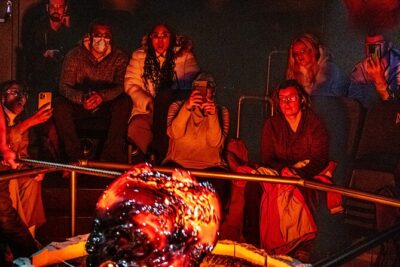
Lava Show Reykjavik Admission Ticket – Optional Premium Upgrade
Read our review →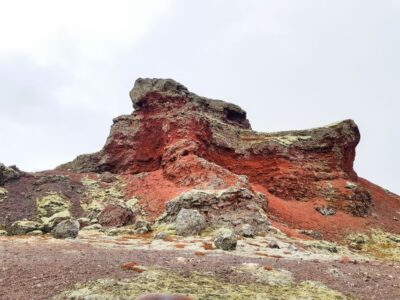
Golden Circle, Volcano Crater and Blue Lagoon Small-Group Tour
Read our review →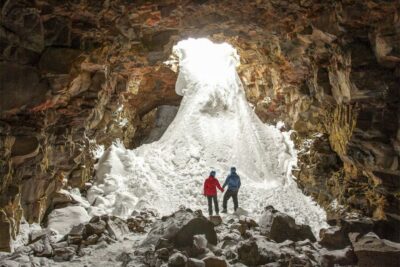
Raufarhólshellir Lava Tunnel: Underground Expedition
Read our review →
Browse the lists this tour appears in