
Review · 7-DAY EXPERIENCES
4, 5, 6 or 7-Day Small-Group Ring Road Tour from Reykjavik
Iceland’s Ring Road is a lot to cover, and this small-group tour takes care of the driving, hotels, and daily route while you watch volcanoes, glaciers, waterfalls, and fishing villages pass by. The seven-day version reaches the country’s major sights without asking you to plan a new hotel every night.
I like the maximum 19-person group, which keeps the bus smaller than a full coach and makes it easier to hear your guide. I also like the range of scenery: one day you are walking behind Seljalandsfoss, another you are beside drifting icebergs, and later you are exploring a lava cave.
The main drawback is the pace. You cover enormous distances, and optional activities can make an already full day tighter. Bring snacks, expect modest minibus space, and accept that weather can change the plan.
In This Review
- Key points to know before you book
- What the $1,479 price really buys you
- Day one: waterfalls, black sand, and a glacier
- Day two: icebergs, fjords, and Vök Baths
- Day three: Lake Mývatn and Iceland’s strongest waterfall
- Day four: Akureyri, sea stacks, and a turf church
- Day five: hot springs, lava waterfalls, and an Icelandic horse farm
- Day six: Snæfellsnes in one long day
- Day seven: Iceland’s classic Golden Circle finish
- Sleeping, eating, and managing the minibus
- Who should book this Ring Road tour?
- FAQ
- How long is the tour?
- How many people are in the group?
- Is hotel accommodation included?
- Are lunch and dinner included?
- Is glacier hiking included?
- Where does pickup take place?
Key points to know before you book
- Seven days gives you the fullest route: The longer version includes East Iceland, Lake Mývatn, Akureyri, the Snæfellsnes Peninsula, West Iceland, and the Golden Circle.
- The bus holds no more than 19 people: You get a more personal setting than a large coach, though the seats and legroom are still limited.
- Hotels and breakfast are included: You sleep in double rooms with private bathrooms, with five breakfasts provided on the seven-day schedule.
- The best extras cost more: Glacier hiking, the Jökulsárlón boat ride, Vök Baths, Forest Lagoon, and whale watching are optional.
- Food takes planning: Lunch and dinner are not included, and some sightseeing days leave little time for a proper meal.
- Weather remains in charge: Stops or activities can be changed or cancelled for safety, with a refund if the replacement costs less.
What the $1,479 price really buys you
At $1,479 per person, this is not a budget bus ride, but the price covers the pieces that are most awkward to arrange independently: transport around the entire Ring Road, hotel rooms, breakfast, an English-speaking guide, Wi-Fi, USB chargers, the Víðgelmir Lava Cave, and Kerið Crater.
You also avoid the cost and worry of renting a car, learning Iceland’s roads, checking weather warnings, and finding a new hotel each night. That matters in Iceland, where wind, snow, road closures, and long distances can turn a simple self-drive plan into hard work.
The value is strongest if you want to see much of the country but do not want to drive. It is less compelling if you prefer slow mornings, long hikes, or choosing your own restaurants and stops. A self-drive trip can give you more control, but it also shifts every navigation and safety decision onto you.
The four, five, six, and seven-day choices let you match the trip to your schedule. The seven-day route described here is the most complete option. Shorter versions necessarily spend less time in certain regions or move at a faster pace, so check exactly which stops belong to your selected length before paying for extras.
More Reykjavik departures worth comparing
- 7-Day Complete Iceland: South Coast, Golden Circle, Akureyri & Snaefellsnes
★ 4.5 · 139 reviews - From Reykjavík: 4, 5, 6 or 7-Day Small-Group Ring Road Tour
★ 4.8 · 24 reviews - From Reykjavík: 7-Day Around Iceland Ring Road & Snæfellsnes
★ 4.8 · 23 reviews
Day one: waterfalls, black sand, and a glacier
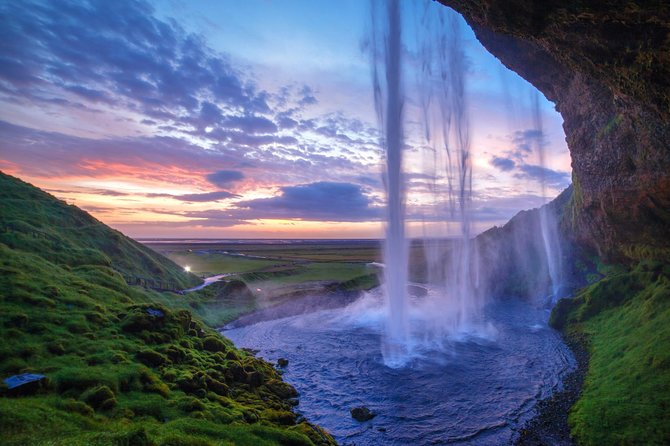
The opening day heads along Iceland’s south coast, where the sights arrive quickly. At Seljalandsfoss, water drops about 60 meters from the cliffs below Eyjafjallajökull, the glacier-volcano made famous by its 2010 eruption.
You get about 45 minutes here. The path allows you to walk around the waterfall, but expect spray and slippery ground. Waterproof clothing is not optional in wet weather. Nearby Gljúfrabúi is smaller and tucked inside a rocky opening, making it a quick but worthwhile stop.
Skógafoss delivers the big, simple drama. A broad sheet of water falls straight down, and the spray can create rainbows on a sunny day. The stop lasts about 30 minutes, enough for photographs and a short look from below.
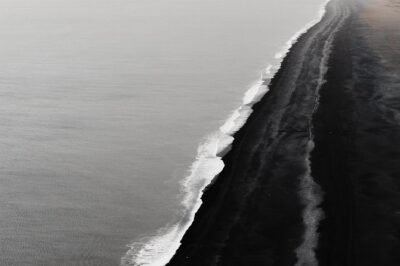
At Reynisfjara, the black sand and basalt formations give the coast a stark, otherworldly look. The Reynisdrangar sea stacks rise offshore, but keep well back from the water. The Atlantic waves here can surge much farther up the beach than they first appear.
Lunch is scheduled in Vík, a small south-coast village with views toward the black beach. Lunch and dinner are your responsibility throughout the tour, so use these stops to buy food when you can.
The day also passes the broad lava fields linked to the Laki eruption of the 18th century. The scenery is stark and rough, a good reminder that Iceland’s beauty often comes from violent earth activity.
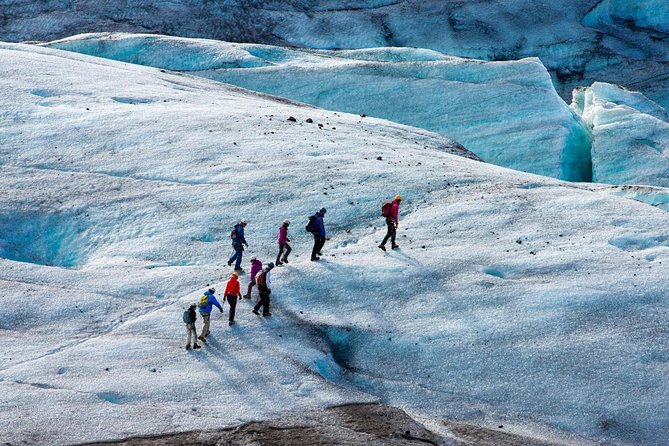
The optional glacier walk at Sólheimajökull is the day’s major add-on. It takes about three hours in total, including safety instruction, with roughly 90 minutes on the ice. You need warm, waterproof clothing and proper hiking shoes. Crampons require a firm stomp rather than a shuffle, especially on slick sections.
This is one of the extras I would seriously consider. It changes the day from sightseeing by road to a close look at glacier ice. But schedule your meal carefully. The glacier activity can fall in the middle of the day, leaving little time for lunch, so carry snacks in your day bag.
Day two: icebergs, fjords, and Vök Baths
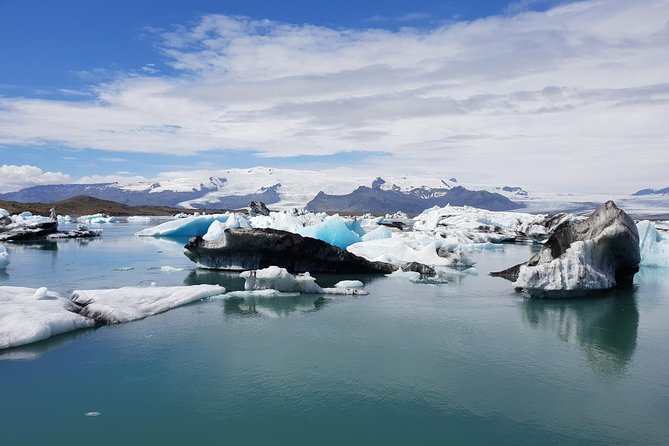
Jökulsárlón Glacier Lagoon is one of the great sights on the Ring Road. Ice breaks away from the glacier and floats through the lagoon before reaching the sea. The two-hour stop gives you time to watch the ice move and take photographs.
An optional amphibian boat ride lets you get among the icebergs. It costs extra, but it can add a closer view of the ice, water, and glacier front. Conditions may affect the activity, so treat it as a bonus rather than the foundation of the day.
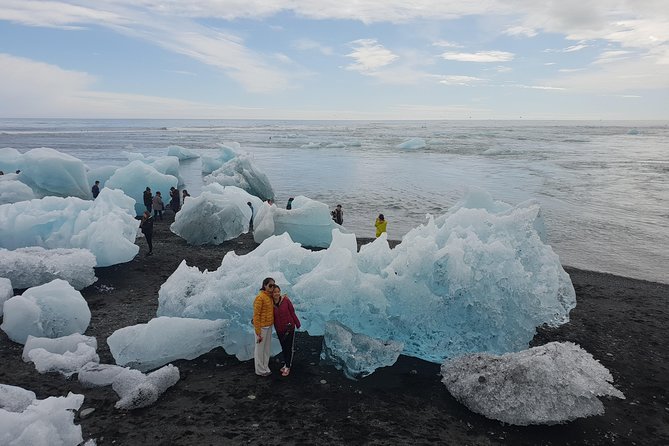
At Fellsfjara, often called Diamond Beach, chunks of ice wash onto the dark shore. The contrast between black sand and clear ice is striking. You get about 20 minutes, which is enough for a short walk and photographs, though not a long beach outing.
Vestrahorn is a fine camera stop, with sharp mountain forms rising behind the coastal plain. The one-hour visit to Djúpivogur offers something different. This fishing village sits beside Berufjörður, where steep mountains meet a narrow fjord.
Take a short walk around the harbor and look for Langabúð, a trading building dating to 1790. Djúpivogur is a useful pause in a long driving day because it gives you a sense of settled East Iceland, not just another scenic viewpoint.
The optional Vök Baths sit on Lake Urriðavatn. Their warm pools are fed by geothermal water rising beneath the lake, and the setting feels open rather than enclosed. Allow about two hours, including time to change and relax.
The bath stops are not interchangeable. Vök offers several pools at different temperatures and access to the lake itself. If you plan to add it, bring swimwear and a small bag that is easy to reach.
Day three: Lake Mývatn and Iceland’s strongest waterfall
Lake Mývatn gets four hours, making it one of the fullest sightseeing sections of the trip. The area combines water, lava formations, geothermal activity, and birdlife.
Dimmuborgir, the dark rock formations near the lake, looks like a jumble of towers and arches. Grjótagjá is a hot-spring cave with a long connection to local bathing, though conditions and access can vary. Krafla and Hverir show the less gentle side of geothermal Iceland, with steaming ground and vivid mineral colors.
Dettifoss is Europe’s most powerful waterfall, and the sound arrives before the full view. A short hike also reaches Selfoss, a broader series of falls upstream. These stops are listed for April through October, so the exact route depends on season and road conditions.
Godafoss, the Waterfall of the Gods, is more graceful and easier to view than Dettifoss. Its curved falls spread across the river, giving you several good angles in a 45-minute stop.
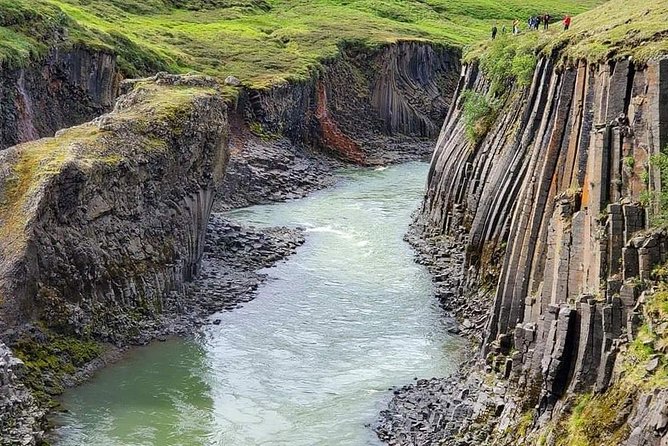
The route also includes Stuðlagil Canyon, where turquoise glacial water runs between tall basalt columns. A short walk from the parking area reaches the view, though the amount of visible water and the access route can vary with conditions.
Forest Lagoon is another optional bath. It has a large pool kept around 37°C, along with a dry sauna and cold pool. Compared with Vök, it feels more enclosed and less open to the surrounding area. Choose Vök if broad lake views and different pool temperatures matter most to you. Choose Forest Lagoon if you prefer a shorter, more contained spa visit.
Different weather plan, same pickup point:
- Reykjavik: Golden Circle Full-Day Tour with Kerid Crater
★ 4.8 · 24,485 reviews - Reykjavik Food Walk – Local Foodie Adventure in Iceland
★ 5.0 · 18,952 reviews - Iceland: Northern Lights Bus Tour from Reykjavik
★ 4.1 · 11,161 reviews - Reykjavík: South Coast Waterfalls, Black Sand & Glacier Tour
★ 4.8 · 11,030 reviews
Day four: Akureyri, sea stacks, and a turf church
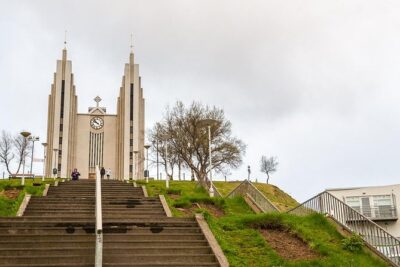
Akureyri is Iceland’s northern capital, set beside a deep fjord. The 30-minute stop focuses on the harbor area, wooden houses, and the church on the hill.
That is enough for a first look, not enough for a full city visit. If you want museums, shops, or a long café stop, this tour will not give you much free time in Akureyri.
Hvítserkur is a sea stack with an unusual shape and a strong place in Iceland’s photo collection. The stop is brief, so plan on a viewpoint and a quick walk rather than a long coastal hike.
Kolugljúfur Canyon adds another waterfall and is accessible from April through October. The route then passes through Varmahlíð to Víðimýrarkirkja, a traditional turf church. Its grass-covered roof and compact shape show how Icelandic buildings once used local materials to handle a harsh climate.
Whale watching from Akureyri is an optional three-hour activity. The area is described as having strong chances to see large whales, but wildlife is never guaranteed. Adding it can make the day especially appealing to anyone more interested in animals than another waterfall, but it also adds to the schedule and cost.
Day five: hot springs, lava waterfalls, and an Icelandic horse farm
Deildartunguhver is Europe’s highest-flow hot spring, sending about 180 liters of water per second from the ground at close to 100°C. Stay on the marked path. This is a powerful natural feature, not a place for casual wandering.
At Reykholt, Snorralaug is a small spring associated with Snorri Sturluson, the medieval poet and political figure. The stop is short, but it adds history to a route otherwise dominated by geology.
Hraunfossar is one of the tour’s most beautiful waterfall stops. Water appears to stream out of a lava field over roughly 900 meters, rather than falling from one single river channel. Barnafoss is only a few minutes away and carries a darker local story about children who fell from a natural stone bridge.
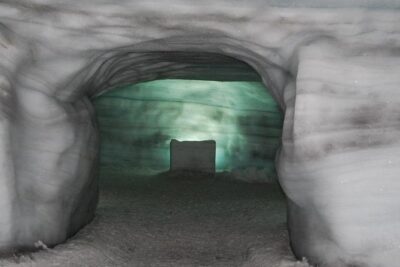
Víðgelmir Lava Cave is the day’s main attraction and is included on the five-day or longer tour. The cave stretches nearly 1,600 meters and contains lava formations, stalactites, and stalagmites. The guided visit lasts about 90 minutes.
Wear shoes with good grip and clothing that can handle cool, damp conditions. The cave offers a close look at what volcanic eruptions leave underground, making it a useful companion to the waterfalls and hot springs seen above ground.
The day ends at Sturlureykir horse farm. You can meet Icelandic horses up close, then try homemade geothermal bread called rúgbrauð with coffee or cold water. This is one of the most personable stops on the route, and it gives you contact with everyday Icelandic food and animals.
Day six: Snæfellsnes in one long day
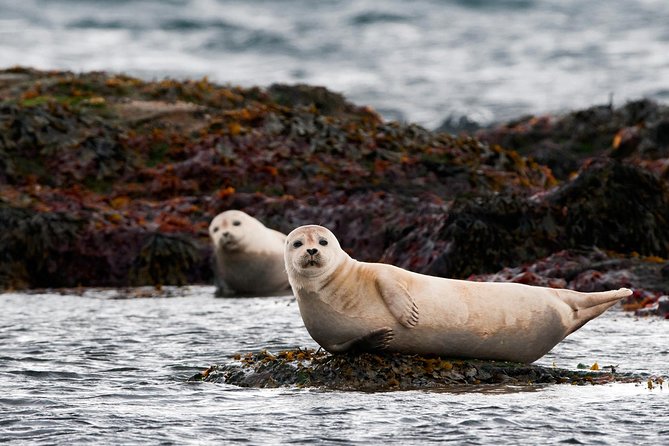
Ytri Tunga is known for its seal colony. You might see seals resting near the shore or playing in the water, but give them room and bring binoculars if you have them.
Arnarstapi and Hellnar offer a coastal walk past cliffs, a natural harbor, and rock formations covered in moss. The 90-minute stop is one of the better chances to stretch your legs. Wear shoes suitable for uneven paths and wind.
The Lóndrangar basalt cliffs are marked by two tall black columns rising from the coast. At Djúpalónssandur, another black beach combines bird-filled cliffs with a story from Iceland’s fishing past.
Four lifting stones sit on the beach. The largest weighs 154 kilograms, while the smallest weighs 23 kilograms. Fishermen once used these stones to test strength, and lifting the 54-kilogram stone was said to qualify a man for work on a fishing boat. Try only what you can handle safely, and do not strain your back for a photograph.
Kirkjufell is the day’s familiar final image, a sharply shaped mountain surrounded by streams and green slopes. It is one of Iceland’s most photographed sights, so expect a popular viewpoint rather than solitude.
Day seven: Iceland’s classic Golden Circle finish
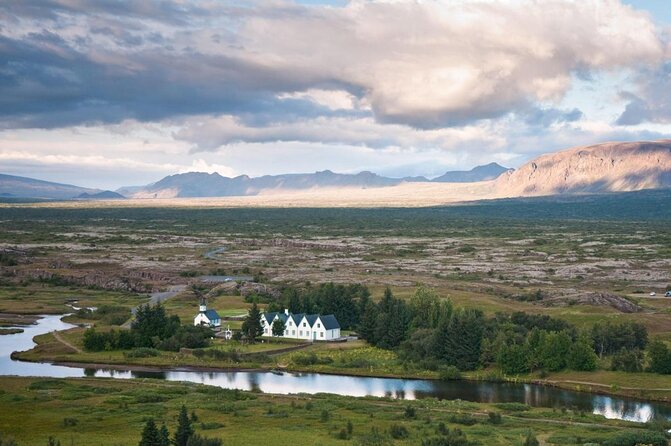
The final day visits Þingvellir, Geysir, Gullfoss, and Kerið. At Þingvellir National Park, Iceland’s early parliament first met in 930. The park also sits in the rift between tectonic plates, and the Almannagjá gorge makes that geology visible.
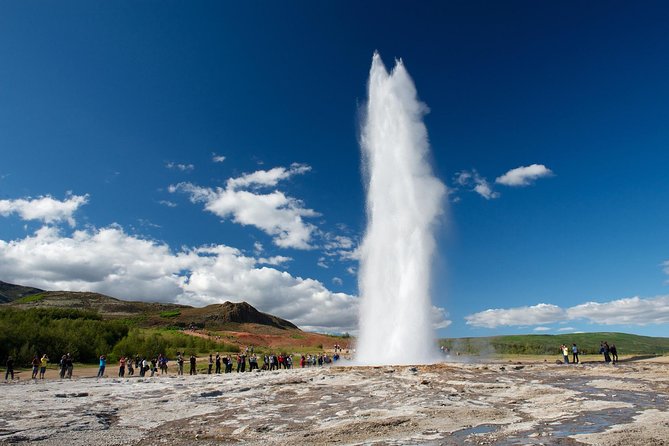
Geysir gave its name to geysers around the world, though it now erupts only occasionally. Nearby Strokkur usually sends a column of water skyward every five to ten minutes, sometimes reaching about 40 meters. Give yourself time to watch several eruptions rather than rushing after the first one.
Gullfoss is Iceland’s most famous waterfall, with water dropping through two major stages into a narrow gorge. The paths can be wet and windy, so keep your outer layer handy even in fair weather.
Kerið is a volcanic crater filled with blue-green water. A ticket is included, and the 30-minute stop is a good final reminder that Iceland’s red, black, and green colors often come from volcanic ground rather than vegetation alone.
The tour typically returns to Reykjavik around 5 p.m. on day seven. Pickup begins between 8:30 and 9 a.m., and you may be assigned the nearest bus stop if your hotel lies in an area where tour buses cannot drive.
Sleeping, eating, and managing the minibus
Accommodation is in double rooms with private bathrooms, and breakfast is included. Hotel quality can vary by town. Rooms may feel small, especially in Akureyri, where storage, lighting, and bathroom space can be limited.
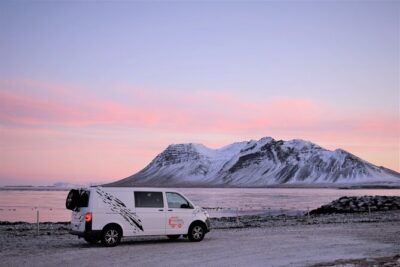
The bus has Wi-Fi and USB chargers, plus room for larger luggage at the back. Your seat is similar to an airplane seat, with limited legroom and only modest space for a day bag. Pack one small, soft bag with gloves, rain gear, medicine, extra socks, and snacks.
Lunch and dinner are not included. The route makes planned food stops, but meal choices can be limited, and some optional activities can leave you eating late. Vegetarian food may be basic at certain stops, so bring backup snacks if your diet is restrictive.
A guide can make a major difference on a route like this. Guides such as Thorey have been noted for mixing useful information with humor and conversation, and a second guide may take over on part of the trip. You should still expect different guiding styles. If you prefer quiet driving, a talkative guide may require some patience.
Who should book this Ring Road tour?
Book it if you want Iceland’s major natural sights without driving, hotel planning, or daily route research. It suits first-time visitors, solo visitors who prefer a group, and couples who want a broad country tour in one booking.
It also works well if you value variety. You get waterfalls, glaciers, lava, geothermal areas, wildlife, villages, a farm visit, and the Golden Circle rather than seven days of similar viewpoints.
Think twice if you need generous legroom, flexible meals, long stays in each town, or private time at the most famous sights. The pace is full, the minibus is not spacious, and weather can force changes.
I would choose the seven-day option if this is your main Iceland trip. Add the glacier walk if you are fit and properly dressed, and choose one geothermal bath rather than automatically booking both. Most important, carry food, keep your waterproof layers close, and leave room in your plans for Iceland to change the day.
FAQ
How long is the tour?
The experience is offered in four, five, six, or seven-day versions. The seven-day option typically returns to Reykjavik around 5 p.m. on the final day.
How many people are in the group?
The minibus holds a maximum of 19 passengers.
Is hotel accommodation included?
Yes. Accommodation in double rooms with private bathrooms is included, along with breakfast. The seven-day package lists five breakfasts.
Are lunch and dinner included?
No. The tour schedules stops where you can buy lunch and dinner, but those meals are not part of the price.
Is glacier hiking included?
The Sólheimajökull glacier walk is optional and costs extra. It takes about three hours in total, including the safety introduction, with about 90 minutes spent hiking on the ice.
Where does pickup take place?
Free pickup and drop-off are offered from hotels within Reykjavik. Some central hotels require pickup at the nearest bus stop because tour buses cannot use certain streets. Pickup is scheduled between 8:30 and 9 a.m., or you can meet at the Nicetravel office before 8:20 a.m. if arranged in advance.
Newest write-ups around Reykjavik
- Private Snæfellsnes National Park★ 5.0 · 3 reviews
- Private South Coast tour with Glacier walk★ 5.0 · 3 reviews
- Exclusive Westman Islands Adventure – A Private Day Tour★ 5.0 · 3 reviews
- Blue lagoon Premium and Private Golden circle tour★ 5.0 · 3 reviews
- Private Superjeep Tour To Landmannalaugar and Hekla Volcano★ 5.0 · 3 reviews
- Private South Coast Tour: A Journey to Iceland’s Stunning Shore★ 4.5 · 3 reviews
- Reykjavik: PRIVATE Golden Circle tour with 5 TOP stops★ 5.0 · 3 reviews
- Sólheimajökull Glacier Hiking Tour★ 3.7 · 3 reviews
7-Day Experiences, compared.
7-Day Complete Iceland: South Coast, Golden Circle, Akureyri & Snaefellsnes
Read our review →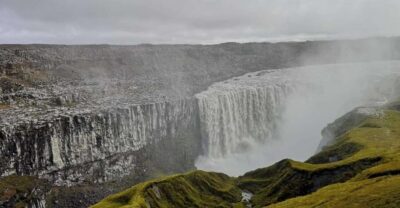
7-Day Self-Drive Private Tour Northern Lights Adventure – Iceland South & West
Read our review →
7 Day Iceland with Reykjavik Northern Light | Blue Lagoon | Golden Circle ……
Read our review →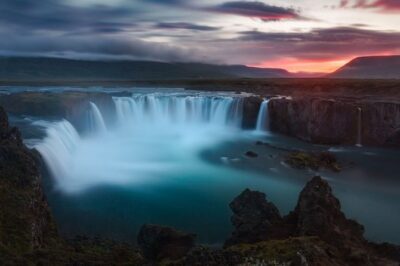
7 Day Iceland with Reykjavik Blue Lagoon Snæfellsnes | Golden Circle | South….
Read our review →Browse the lists this tour appears in