Review · GUIDED
13-Day Iceland Geology Adventure Guided Tour from Reykjavík
Iceland is best understood from the ground up, and this 13-day geology tour does exactly that. Dr. Tamie Jovanelly, author of Iceland: Tectonics, Volcanics, and Glacial Features, leads the trip with her husband, Joe Cook, also known as Joey. You do not need a geology degree. You only need curiosity and a willingness to walk.
I like two things right away: the tour connects famous sights to the forces that formed them, and it includes active outings such as a glacier hike and lava-cave visit rather than limiting you to roadside viewpoints. The small maximum of 16 people also gives the trip a field-trip feel instead of a big coach excursion.
The main drawback is the price: $9,200 per person is a serious commitment. You also need to be comfortable with a full 13-day schedule, changeable weather, long days on the road, and outdoor activity. This is not a quick Iceland sampler.
In This Review
- What makes this Iceland geology tour different
- A field guide to Iceland, led by Dr. Tamie Jovanelly
- Days 1 and 2: Reykjavík, warm water, and recent volcanic ground
- Day 3: Reykjanes geology, geothermal power, and a visible plate boundary
- Day 4: Thingvellir, Gullfoss, and Geysir on the Golden Circle
- Day 5: Hekla and the story of Icelandic volcanism
- Day 6: A glacier hike at Skaftafell
- Day 7: Icebergs, seals, and Diamond Beach
- Day 8: Dettifoss and the power of falling water
- Day 9: Craters and strange lava at Lake Mývatn
- Day 10: Free time in Akureyri
- Days 11 and 12: Stykkisholmur, Snæfellsnes, and a lava tube
- What $9,200 buys you
- Who will enjoy this trip most
- Should you book the 13-day Iceland geology adventure?
- FAQ
- Where does the tour begin and end?
- How long is the Iceland geology tour?
- How many people can join the tour?
- Do I need a geology background?
- Are the excursion fees included?
- Does the tour include a glacier hike?
- What happens if the tour is canceled?
What makes this Iceland geology tour different
- A geologist leads the route: Dr. Tamie Jovanelly has researched and led trips in Iceland since 2006 and uses her own book as a field guide.
- The entire island comes into view: The route links Reykjavík, the Reykjanes Peninsula, South Iceland, the southeast ice lagoons, North Iceland, Akureyri, and the Snæfellsnes Peninsula.
- Active outings are built in: You hike on a glacier, enter Vatnshellir lava cave, walk among lava formations, and visit recent volcanic areas.
- Excursion fees are included: Blue Lagoon, Hellisheidi Power Plant, the glacier outing, Fjallsarlon, Dimmuborgir, Vatnshellir, and Snaefellsjokull National Park are listed as included stops or activities.
- You get science and culture together: Thingvellir links plate movement with Viking settlement, while the Water Museum in Stykkisholmur considers changing glaciers.
- The group stays small: With no more than 16 participants, it is easier to ask questions and keep the experience personal.
A field guide to Iceland, led by Dr. Tamie Jovanelly
The heart of this tour is not simply seeing Iceland. It is learning to read it.
At Thingvellir, you will not just look across a dramatic rift. You will discuss how the North American and Eurasian plates are pulling apart and how that setting affected the early Icelandic settlement. At Dettifoss, the focus turns to the columnar basalt exposed by the waterfall. Around Hverfjall and Skútustaðagígar, you will examine explosion craters and pseudo-craters instead of treating them as mysterious black hills.
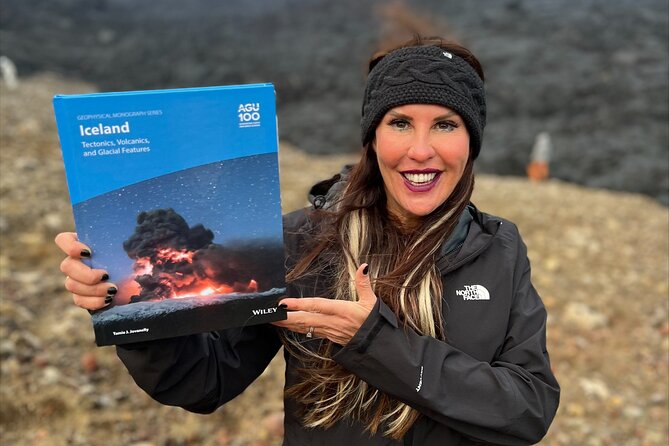
Dr. Jovanelly wrote Iceland: Tectonics, Volcanics, and Glacial Features for Wiley in 2020, and she uses it as the trip’s field guide. That gives the explanations a useful anchor. You can connect what you see outside the vehicle with diagrams, terms, and examples in the book.
I especially like that a background in geology is not required. The subject matter can be technical, but the itinerary gives you repeated chances to see the evidence for yourself. Lava, ice, geothermal heat, and plate movement are not abstract ideas here. They appear in the rock under your boots and the steam rising from the ground.
The strongest praise for the guides centers on their energy, planning, humor, and care. Dr. Jo and Joey are presented as a close team, and the trip is designed to feel like an expedition with friends rather than a formal classroom. A driver named Grohe is also singled out for helping the group move around the island smoothly.
More Reykjavik departures worth comparing
- Reykjavik: Jokulsarlon Glacier Lagoon Full-Day Guided Trip
★ 4.7 · 3,302 reviews - Reykjavik: Whale Watching Tour with Expert Guide
★ 4.2 · 2,307 reviews - Jökulsárlón: Vatnajökull Ice Cave Guided Tour
★ 4.2 · 2,046 reviews
Days 1 and 2: Reykjavík, warm water, and recent volcanic ground
Your first day begins in Reykjavík, with time to explore before the opening meet-and-greet. The group then walks together to dinner. That simple start matters after an international flight. You can see a little of the capital, meet the people in your group, and get a sense of the pace before the road portion begins.
Day 2 eases you into Iceland with a three-hour visit to the Blue Lagoon. It is a sensible first major stop because you have time to relax and adjust to jet lag. The geothermal water also introduces one of the tour’s recurring subjects: Iceland’s heat comes from active geological forces, and that heat is part of daily life.
Later, you visit Fagradalsfjall Volcano, an area known for recent volcanic activity. The scheduled stop is about an hour, so expect a focused field explanation rather than a full-day hike. Conditions and access can affect what you see around an active volcanic area, so your guide’s interpretation is especially valuable here.
The contrast between a polished geothermal bathing site and fresh volcanic ground makes this day work well. One shows how Iceland uses natural heat for leisure. The other shows that the island is still being built.
Day 3: Reykjanes geology, geothermal power, and a visible plate boundary
Day 3 moves through some of the most instructive sites on the Reykjanes Peninsula.
At Hellisheidi Power Plant, you spend about two hours learning how Iceland generates geothermal energy. The stop also covers carbon-capture projects. This is one of the more useful additions to the route because it links geology to modern energy policy. You are not only looking at hot springs. You are seeing how underground heat can serve a working society.
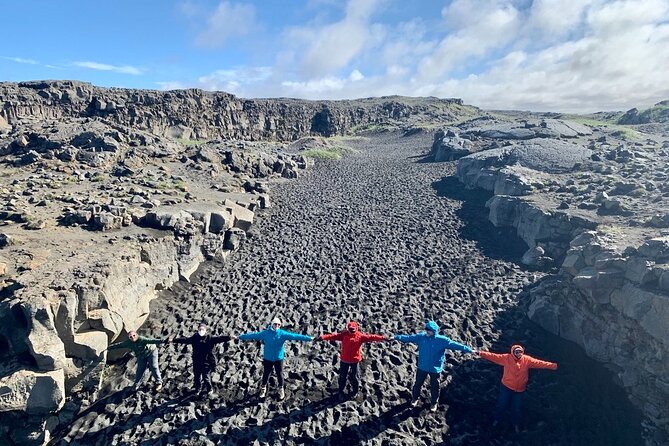
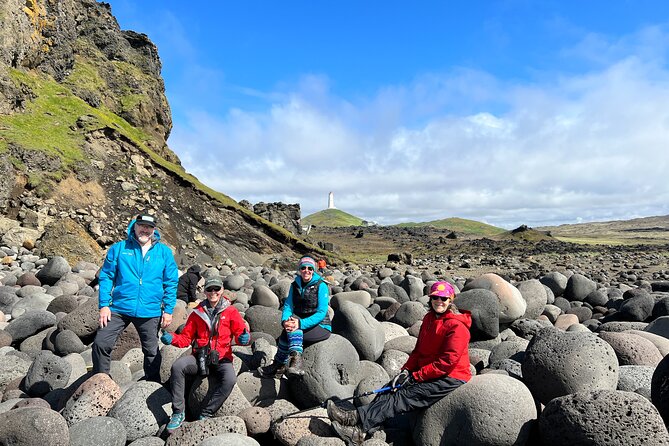
The Bridge Between Continents offers a visual way to discuss the boundary between the North American and Eurasian plates. The name can sound more dramatic than the site itself, but the value is in the explanation. You can stand near the separation and picture the slow movement that helps shape Iceland.
At Stampar, a scoria crater field provides another volcanic setting, with about 30 minutes on site. The tour also includes a look at one of Iceland’s largest and deepest lakes, positioned along a fissure. The itinerary does not name the lake, so your guide’s field talk will give this stop its context.
This is a geology-heavy day, but the sites are short and varied. You will see an industrial use of geothermal heat, a plate-boundary feature, loose volcanic cones, and a fissure-related lake.
Day 4: Thingvellir, Gullfoss, and Geysir on the Golden Circle
Day 4 covers Iceland’s classic Golden Circle sights, but with more attention to how they formed.
Thingvellir National Park gets about two hours. It is one of the trip’s most important tectonic stops, and it also connects geology with Icelandic settlement. The rift is not just a crack in the ground. It helps explain why this place became important to the Vikings and why Iceland’s political story is tied to its physical setting.
Gullfoss follows, with about an hour at one of Europe’s largest waterfalls. The water cuts into volcanic rock and gives you a clear sense of erosion at work. Bring waterproof layers. Even without bad weather, spray can reach viewing areas.
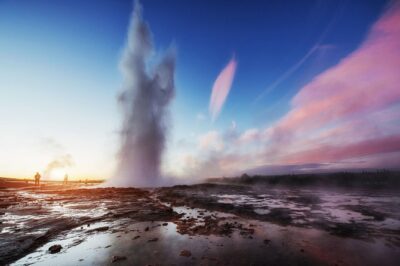
At Geysir, you have another hour among boiling hot spots and geothermal features. The stop completes the day’s pattern: plates pull apart, magma and heat rise, water moves through the rock, and the result is a country of rifts, waterfalls, and erupting geothermal features.
The Golden Circle can feel crowded on a standard day trip. Here, the longer route and geology focus give the stops more meaning, though you should still expect these famous places to be among the busier parts of the trip.
Different weather plan, same pickup point:
- Reykjavik: Golden Circle Full-Day Tour with Kerid Crater
★ 4.8 · 24,485 reviews - Reykjavik Food Walk – Local Foodie Adventure in Iceland
★ 5.0 · 18,952 reviews - Iceland: Northern Lights Bus Tour from Reykjavik
★ 4.1 · 11,161 reviews - Reykjavík: South Coast Waterfalls, Black Sand & Glacier Tour
★ 4.8 · 11,030 reviews
Day 5: Hekla and the story of Icelandic volcanism
The Lava Centre offers an interactive introduction to volcanology. The supplied schedule lists a very short visit time, so confirm the exact time available when booking or before departure. It is best viewed as a compact orientation to Iceland’s volcanic systems, not a substitute for the field stops that follow.
You then spend about an hour near Hekla, one of Iceland’s notable active volcanoes. The attraction is not necessarily an ascent. The point is to sit in the shadow of the volcano and learn how its past activity fits into Iceland’s broader volcanic pattern.
This day should appeal to anyone who wants the science explained before seeing more remote terrain. Hekla also gives you a reminder that Iceland’s volcanoes are not all alike. Their activity, form, and effect on nearby communities can differ widely.
Day 6: A glacier hike at Skaftafell
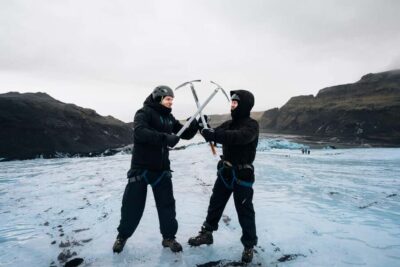
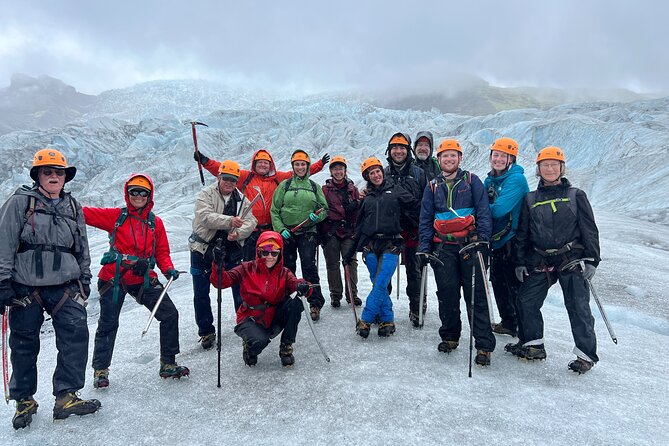
Day 6 is one of the tour’s most active days. At Skaftafell National Park, you take a guided three-hour hike on top of a glacier. With the surrounding time, plan on roughly four hours at the park.
A glacier walk changes how you see ice. From a road, a glacier can look like a broad white mass. On foot, you can pay attention to its surface, cracks, texture, and movement while your guide explains how glacial ice shapes the ground below and around it.
This outing requires more from you than a viewpoint. Good outdoor clothing, sturdy footwear, and comfort with walking are important considerations, though the supplied information does not specify a required fitness level or equipment list. Ask the operator about those details before paying, especially if you have mobility concerns.
After the hike, Dr. Jo and Joey host a wine and cheese reception. It is a small touch, but a useful one. You get time to celebrate the effort, talk with the group, and let the day slow down instead of moving straight to the next scenic stop.
Day 7: Icebergs, seals, and Diamond Beach
The next day shifts from walking on ice to watching it float.
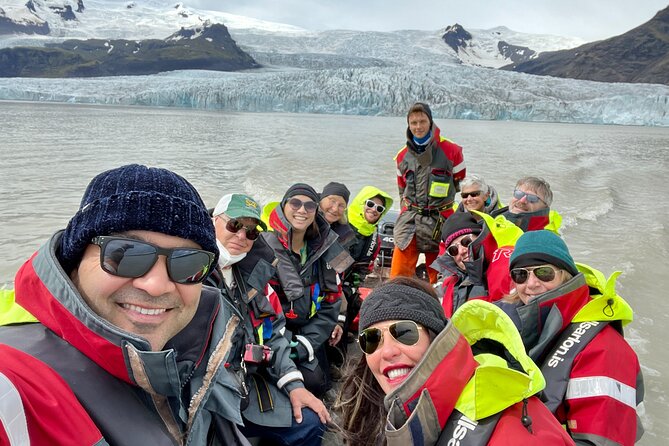
At Fjallsarlon Iceberg Lagoon, you spend about two hours seeing the glacier from the water. The included excursion gives you a different perspective from a roadside visit. Icebergs break away, drift, and change shape, so the lagoon is an active scene rather than a fixed postcard.
Diamond Beach offers another two hours. Pieces of ice wash onto the black shore before moving out to sea. The dark sand and clear ice make this one of Iceland’s most memorable visual contrasts, but the beach is also a place where conditions matter. Waves, wind, and tide shape what is on shore.
Jokulsarlon gets another two hours and adds chances for seal viewing and birding. Food vendors are available, including hot dogs, so this is a practical place to buy something casual rather than expect a formal meal.
Together, the three stops explain the life of glacial ice: it forms inland, reaches a lagoon, floats toward the sea, and sometimes returns to the beach. That sequence is far more satisfying than seeing one lagoon and moving on.
Day 8: Dettifoss and the power of falling water
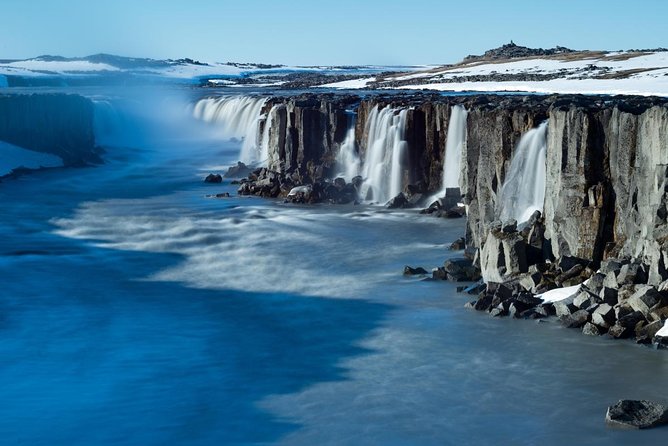
Day 8 centers on Dettifoss, a massive waterfall exposing columnar basalt. You have about two hours to see it and discuss the rock.
Columnar basalt forms when lava cools and contracts, producing the striking vertical shapes visible around the falls. Dettifoss then shows what water can do to those layers over time. The sound and force of the waterfall are impressive, but the rock makes the stop particularly useful for this tour.
The schedule gives only one named stop for the day, which may feel less packed than other days. That can be welcome after the glacier and lagoon sections. Iceland rewards time at major sites, and Dettifoss is not a place to rush through for a quick photograph.
Day 9: Craters and strange lava at Lake Mývatn
Day 9 explores the volcanic features around Lake Mývatn.
Hverfjall is a large explosion crater, with about an hour scheduled. The scale is hard to grasp from photographs. Your guide can explain how an explosive event creates a different form from a lava-flow crater or scoria cone.
At Skútustaðagígar, you learn about pseudo-craters and their connection to the area’s settlement story. These formations are not ordinary volcanic craters, and that difference makes the stop a good example of why labels matter in geology.
Dimmuborgir Lava Formations takes about two hours and includes a guided visit among unusual rock shapes. Their origin is debated, which gives the stop a welcome sense of inquiry. You are not being handed a neat answer for every formation. Instead, you get to consider how scientists interpret evidence.
This is a good day for slow observation. The rock formations can look otherworldly, but the real reward is learning why one volcanic feature is called a pseudo-crater while another is not.
Day 10: Free time in Akureyri
Akureyri provides a break from the tightly planned field days. You have free time to rest, shop, go whale watching, try birding, or choose another activity.
The schedule lists about an hour for the town visit, but describes the day as free, so confirm how much independent time is actually available. This open space is valuable on a 13-day trip. You can catch your breath, process what you have learned, and enjoy a town without having to study every rock formation.
It also gives you some control. If you have spent the trip wanting a different kind of activity, Akureyri is the place to make that choice, within the options available.
Days 11 and 12: Stykkisholmur, Snæfellsnes, and a lava tube
At Stykkisholmur, you visit the Water Museum, an art installation that honors glaciers past and present. This adds a cultural and reflective note to a trip otherwise focused on field observation. It also brings the subject of changing ice into human view.
Day 12 explores the Snæfellsnes Peninsula. Clear weather can reveal Snæfellsjökull, a striking stratovolcano. The phrase clear skies matters. Iceland’s weather can hide mountain views, and you should treat the volcano as a possible reward rather than a guarantee.
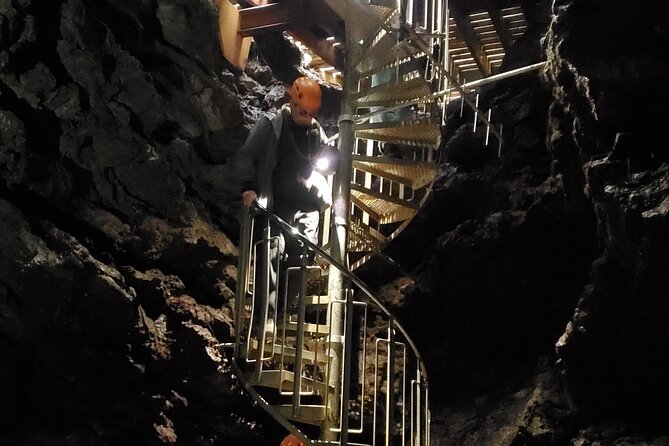
Vatnshellir Lava Cave is one of the trip’s most hands-on geological stops. Over about two hours, you explore a lava tube and learn how it formed. Cave visits can be dark, uneven, and confined, so ask about the physical demands if you dislike tight spaces or have trouble on irregular ground.
The day also includes Snaefellsjokull National Park and Glacier. You get two hours in the park, bringing the trip back to the relationship between volcanoes and ice. The peninsula works as a final field lesson because several subjects from earlier days meet in one area.
Day 13 returns to Reykjavík, where you have time to explore before departure. The tour ends back at the starting point, Gistiheimilið Sunna at Þórsgata 26.
What $9,200 buys you
At $9,200 per person, this tour is priced far above a basic ring-road bus trip. The value depends on what you want from Iceland.
You are paying for 13 days, expert-led interpretation, a small group capped at 16, transport around much of the island, and a collection of included excursions. The glacier hike, Blue Lagoon, Fjallsarlon activity, Dimmuborgir guided visit, Vatnshellir cave, and Snaefellsjokull National Park are not minor add-ons. Paying for them separately would take planning and additional expense.
You are also paying to avoid driving Iceland’s roads yourself. That matters in a country where weather, distance, and changing conditions can complicate a self-drive itinerary. The guides and driver handle the route while you focus on the views and explanations.
Still, the price does not automatically make the trip good value for everyone. The provided information does not specify accommodation, meals beyond the first group dinner and the glacier reception, flights, or every transport detail. Confirm what is included before booking. If you mainly want famous waterfalls, beaches, and hot springs, you could see many highlights for less with a shorter independent trip.
For a person who wants a serious geology theme, active outings, and a carefully connected route, the cost is easier to justify.
Who will enjoy this trip most
I would recommend it to you if you like asking why a place looks the way it does. It suits amateur geologists, earth-science students, teachers, photographers who want stronger context, and curious people who prefer a guided route to a rental car.
You should also enjoy group travel. Sixteen people is small by coach-tour standards, but it is still a shared experience. You will spend many days with the same guides and group, including long stretches between stops.
The tour is not reserved for specialists. The strongest benefit for a beginner is that the explanations repeat key ideas in different settings. You see tectonic movement at Thingvellir, volcanic activity at Fagradalsfjall and Hekla, geothermal use at Hellisheidi, glacial ice at Skaftafell and Jokulsarlon, and basalt at Dettifoss.
Pack for activity and weather. The itinerary includes a glacier hike, a lava cave, national parks, crater fields, and shore visits. Service animals are allowed, the meeting point is near public transportation, and the operator says most people can participate, but you should ask directly about the glacier hike and cave conditions if you have specific access needs.
The tour starts at 7:00 a.m. from Gistiheimilið Sunna in Reykjavík and returns there at the end. Confirmation is issued within 48 hours of booking, subject to availability. The booking is non-refundable and cannot be changed, so travel insurance and careful date planning are sensible. If poor weather or low enrollment cancels the experience, you are offered another date or a full refund.
Should you book the 13-day Iceland geology adventure?
Book this tour if you want Iceland explained as a living system of fire, ice, water, and moving plates. The combination of Dr. Tamie Jovanelly’s field expertise, Joe Cook’s trip leadership, a small group, and active excursions is its main strength.
Skip it if you want maximum independence, nightlife, luxury, or a low-cost overview. The pace is full, the price is high, and some days involve outdoor conditions that are not entirely predictable.
For the right person, this is more than a sightseeing circuit. You return to Reykjavík with a better eye for Iceland’s rocks, craters, glaciers, and geothermal sites. That lasting understanding is the reason to choose it.
FAQ
Where does the tour begin and end?
The tour begins at Gistiheimilið Sunna, Þórsgata 26, 101 Reykjavík, at 7:00 a.m. It ends back at the same meeting point in Reykjavík.
How long is the Iceland geology tour?
The tour lasts approximately 13 days, beginning and ending in Reykjavík.
How many people can join the tour?
The group has a maximum of 16 participants.
Do I need a geology background?
No. A background in geology is not necessary. The tour is designed for people interested in understanding Iceland’s volcanoes, tectonic plates, glaciers, and other physical features.
Are the excursion fees included?
The listed included activities include the Blue Lagoon, Hellisheidi Power Plant, Bridge Between Continents, the Skaftafell glacier tour, Fjallsarlon, Dimmuborgir, Vatnshellir Lava Cave, and Snaefellsjokull National Park. Confirm the full list of inclusions before booking.
Does the tour include a glacier hike?
Yes. At Skaftafell National Park, you take part in a guided glacier hike lasting about three hours, followed by a wine and cheese reception.
What happens if the tour is canceled?
If poor weather causes cancellation, you are offered a different date or a full refund. If the minimum number of participants is not reached, you are offered a different date or experience, or a full refund. Personal cancellations are non-refundable, and the booking cannot be changed.
Newest write-ups around Reykjavik
- Private Snæfellsnes National Park★ 5.0 · 3 reviews
- Private South Coast tour with Glacier walk★ 5.0 · 3 reviews
- Exclusive Westman Islands Adventure – A Private Day Tour★ 5.0 · 3 reviews
- Blue lagoon Premium and Private Golden circle tour★ 5.0 · 3 reviews
- Private Superjeep Tour To Landmannalaugar and Hekla Volcano★ 5.0 · 3 reviews
- Private South Coast Tour: A Journey to Iceland’s Stunning Shore★ 4.5 · 3 reviews
- Reykjavik: PRIVATE Golden Circle tour with 5 TOP stops★ 5.0 · 3 reviews
- Sólheimajökull Glacier Hiking Tour★ 3.7 · 3 reviews
Guided, compared.
Jokulsarlon Glacier Lagoon Full-Day Guided Trip
Read our review →
The Golden Circle Guided Bus Tour from Reykjavik
Read our review →


Northern Lights Guided Bus Tour from Reykjavik
Read our review →